
NAPLES, FL · HEATER REPAIR
Pool heater repair in Naples, diagnosed not replaced
A heater that will not fire is usually a fault, not a funeral. Ignition, control board, pressure switch and gas supply all present the same way from the deck, and they are four different repairs.
In short
What this work actually involves
Pool heater repair covers diagnosing and fixing gas heaters and heat pumps: ignition faults, control boards, pressure switches, sensors and the gas supply feeding the unit. Splash Pools LLC is a Naples, Florida pool contractor owned by Clayton Waggoner, serving Naples, Collier County, Marco Island, Bonita Springs and Estero.
Part one
Why will my heater not fire?
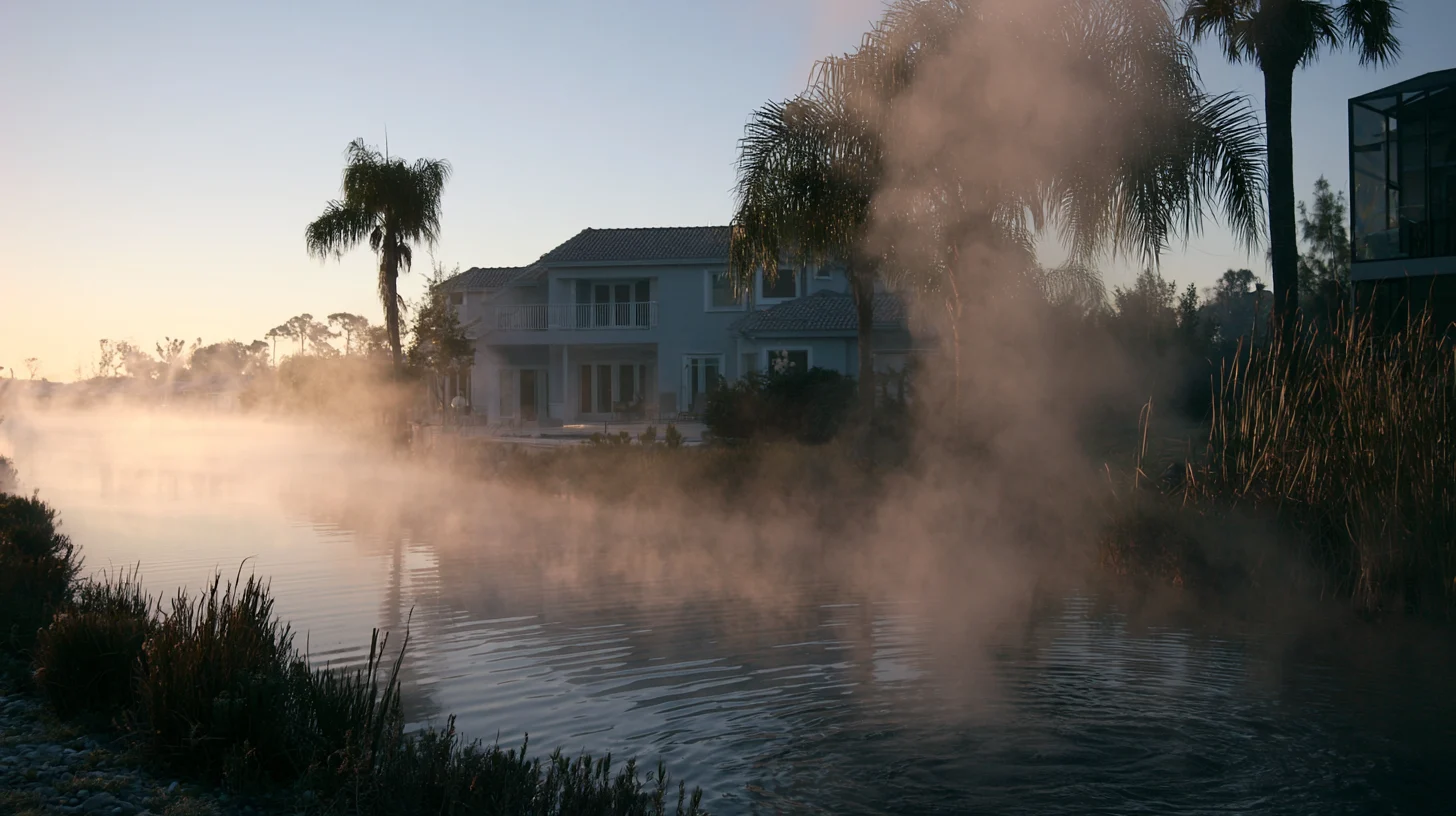
Four common causes that all look identical from the deck: no ignition, a failed control board, a pressure switch that is not seeing enough flow, or gas supply that cannot feed the unit. Flow problems are the sneaky one, because the fault is often the pump or filter rather than the heater at all.
A gas heater lights the same way every time, in the same order, and diagnosis walks that ladder in the same order. Is the heater actually being asked to heat, or is the thermostat satisfied or the unit in the wrong mode? Is power present at the board? Is the gas valve open and the supply live? Does the igniter spark? Does the flame sensor prove the flame and hold the valve open? And is the pressure switch seeing enough water flow to allow any of it?
The ladder is walked in order because each rung can fake the ones below it. A dirty flame sensor looks like a gas problem, because the burner lights and drops out. A part closed valve on the pad looks like an ignition fault, because the pressure switch never closes and the board never tries. Guessing at a rung in the middle is how heaters collect new parts that change nothing.
The pressure switch deserves its own sentence, because it is a safety device doing its job. If the pump is losing prime, the filter is blinded, or a valve is part closed, the switch refuses to let the burner light. Replacing the heater in that scenario buys a new heater that also will not fire.
Gas supply is the other cause that gets misdiagnosed as a heater fault. An undersized or partly obstructed gas run starves the unit, and it shows up as a heater that lights and drops out or never reaches temperature. See gas heater installation for how the full run is checked rather than just the connection at the unit.
A word on the display. When a heater exhausts its ignition retries it locks itself out and shows a code. That code names the symptom, not the cause: an ignition failure code tells you the burner did not light and stay lit, and nothing about which rung of the ladder failed. The code is where diagnosis starts, never where it ends.
Part two
Why does the heater start and then cut out?
A heater that fires and drops out after seconds or minutes is usually a flow problem wearing a heater costume. The pressure switch cuts the burner the moment it stops seeing enough water: a pump losing prime, a blinded filter, a valve part closed. Replacing the heater in that situation buys a new heater that also will not stay lit.
Short cycling is the most misread symptom in pool heating. The heater is protecting itself. Firing a burner or running a compressor without enough water moving through the exchanger would destroy it, so the moment flow sags, the switch opens and the heater stops. The heater is often the only healthy component in the story. The real fault sits upstream: a pump losing prime through a worn seal, a filter so loaded it is throttling the whole system, or a valve someone left part closed after a service visit.
The manufacturers say the same thing about their own equipment. Hayward’s published troubleshooting guide for its heat pumps notes that a pump that is off and a dirty filter account for the majority of its flow and pressure error codes. In other words, when the display blames flow, the first place to look is not inside the heater.
This is where owners get stuck between two trades. The pool company says the heater is broken and the heater company says the pump is fine, and the pool still is not warm. That finger pointing only happens when the heater and the circulation system belong to different contractors. Here they do not. The same licensed pool contractor who opens the heater also owns the pump, the filter and the plumbing, so the diagnosis follows the fault wherever it actually lives.
Part three
Why do pool heaters fail so fast on the coast?
Salt air corrodes them from the inside out. On Marco Island and the barrier island properties a heater can look sound from the outside while the heat exchanger and internal components are going. That is why an external inspection tells you very little and why age alone is a poor guide to whether a unit is finished.
Coastal air moves through the cabinet every hour the unit runs and every hour it does not. The corrosion is on surfaces you cannot see without opening it, which is why a heater on Marco Island and an identical heater eight miles inland age differently. Placement matters too: a unit tucked against a wall breathes its own salt-heavy exhaust, and one on an open pad sheds it.
It also means the failure is often a component rather than the whole unit. A corroded pressure switch or a failed igniter on an otherwise sound heater is a repair, not a replacement, and the difference in cost is considerable. The salt gets the small parts years before it gets the exchanger.
The corrosion pattern is itself a diagnostic. An even white bloom across the cabinet is ordinary coastal weathering and says little about the inside. Rust streaking from the header connections, green crusting on copper, or a burner tray shedding scale each point somewhere specific, and they tell us where to look before a single part comes off. Reading the pattern is faster and cheaper than replacing things in hope.
Connor F. on Marco Island had a heater fixed and came back a second time. That is the useful signal about a heater repair: not that it worked, but that it kept working. You can see more of our work on Marco Island, where salt exposure shapes almost every equipment decision we make.
Part four
Heat pump repairs are not gas heater repairs
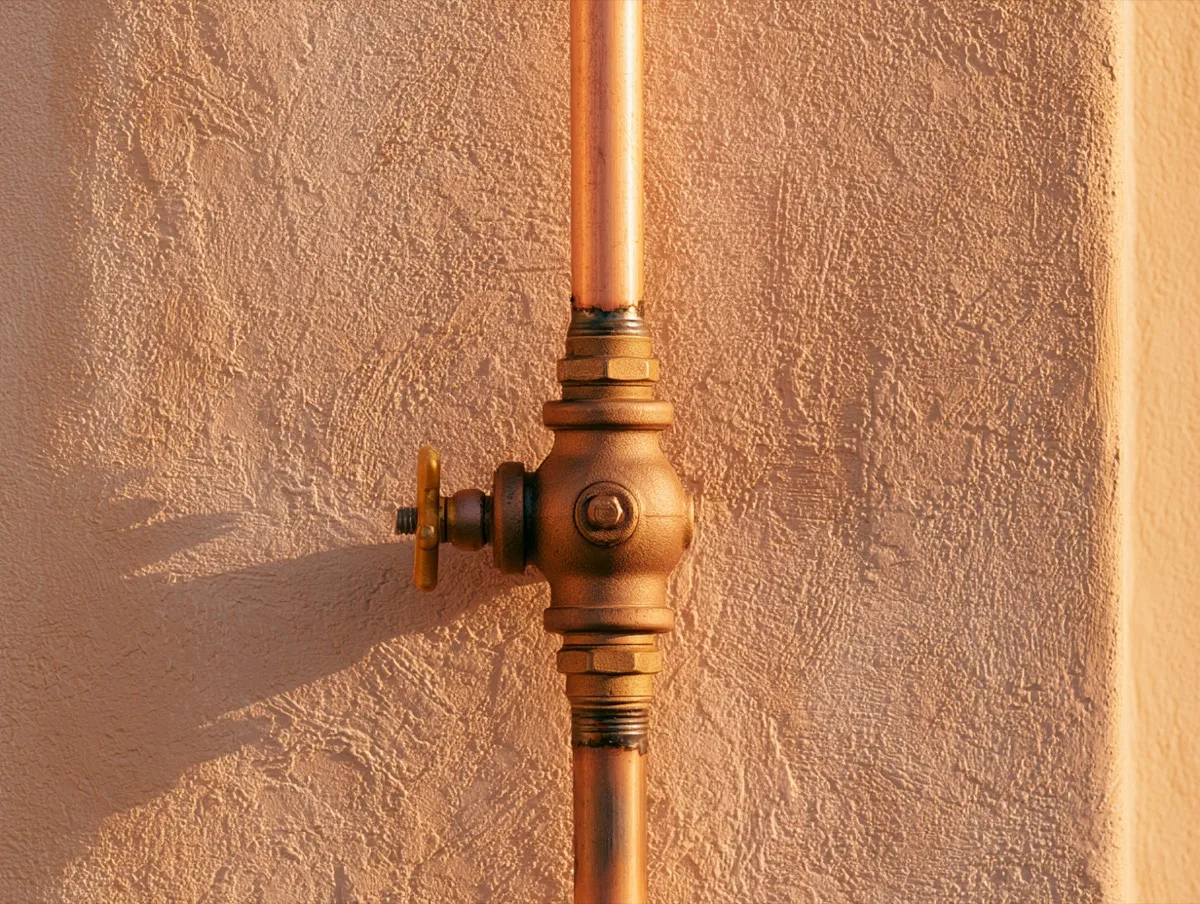
A gas heater fails in its ignition train and heat exchanger. A heat pump fails the way an air conditioner fails: fan motors, capacitors, sensors and refrigerant charge. It also has a condition that looks like failure but is not. On the coldest nights its output genuinely drops, because it harvests warmth from the air. A diagnosis separates the broken from the merely cold.
Roughly half the heaters we see in Naples are heat pumps, and they are a different machine. There is no burner and no gas run. There is a compressor, a fan pulling air across an evaporator coil, a refrigerant circuit, and a family of sensors watching all of it. So the fault families are different: a capacitor that no longer starts the compressor, a fan motor slowing down, a defrost or temperature sensor drifting out of range, a refrigerant charge that has leaked low. The error codes on the display point at sensor and pressure families, and as with gas heaters, the code names the symptom rather than the cause.
Then there is the January phone call: the heat pump runs all day and the pool never gets there. Often nothing is broken. A heat pump moves warmth out of the air into the water, so the colder the night, the less there is to move. On cool nights frost forms on the coil and the unit pauses to defrost itself, which costs heating time. Hayward publishes a minimum operating air temperature of 40 degrees for its HeatPro line and builds in defrost logic precisely because output falls in cold air. A cold snap in Naples sits right in that zone. That is physics, not a fault, and an honest diagnosis says so.
Sometimes the honest finding on a struggling heat pump is that it is undersized for the pool and the season rather than faulty, and no repair will fix arithmetic. Sizing, and the choice between gas and a heat pump, are covered properly on the heat pump installation page.
Part five
Repair or replace?
Repair when the fault is a component and the heat exchanger is sound. Replace when the exchanger has gone, when parts are no longer available, or when the repair cost approaches a new unit on a heater that is already well used. The honest version of that answer requires opening it, not guessing from the badge.
The decision comes down to three questions. What actually failed? Is the heat exchanger sound? And are parts still available for this model? A pressure switch, igniter, sensor or board on a sound exchanger is a repair. A failed exchanger is the heart of the machine, and on most units it settles the question by itself. And a heater whose manufacturer no longer supports it can turn a small fault into a replacement conversation whether anyone likes it or not.
Answering those questions means opening the unit. From the deck, a fifteen year old heater and a five year old heater in a salt corroded cabinet can look identical. Inside, the exchanger, the burner tray and the wiring tell you what the badge and the age never will. Quoting a replacement without opening it is the fastest way to sell a heater and the fastest way to lose a customer.
Diana B. in Naples Park had a broken heater replaced on very short notice and said afterwards that the process was explained clearly at every step. That is the part owners actually remember: not the unit, the explanation.
Where replacement is genuinely the answer, there are two paths, and each has its own page rather than a sales pitch here. A new gas unit lives or dies on the supply line behind it, which is the subject of gas heater installation. Heat pumps work in Naples in a way they do not further north, and the sizing and technology choice is covered under heat pump installation.
Part six
What a heater diagnosis involves here
Flow first, because flow faults imitate everything. Then power and control, then the ignition train, then the gas supply back toward the meter or tank. The finding is shown and explained before anything is quoted, and if the cause is upstream of the heater, you hear that instead of a replacement price.
The order is the method. Flow is checked first because a flow fault can impersonate nearly every heater symptom there is, and no reading taken downstream of bad flow can be trusted. Then power and the control board, because a board that is not commanding anything makes every other component look dead. Then the ignition train on a gas unit, or the compressor circuit on a heat pump. Then the gas supply, checked back toward the meter or tank rather than just at the appliance, because starvation hides anywhere along the run.
Diagnosing in sequence is also what keeps the finding honest. If the third step reveals the fault, there is no reason to sell you the fifth. Sometimes the finding is a heater repair. Sometimes it is a pump seal, a blinded filter or a plumbing restriction, in which case the work continues under pool repair and troubleshooting and the heater is left alone, because it was never the problem.
One more thing, because it involves gas and it matters. Anyone you let open a gas appliance should hold a current Florida contractor license, and you should not have to take their word for it. Ask for the license number, then check it yourself on the Florida DBPR licensee search. We are glad to be checked. The whole approach of this page, diagnose first, explain the finding, quote last, only means something if the person doing it is accountable by name and by license.
Size it yourself
What size heater does your pool actually need?
Pick the pool closest to yours. The math is the same surface-area method a sizing chart uses; the on-site visit confirms it against your gas run or panel.
is the practical gas unit for this pool: holding +15 °F takes only 71k BTU/h of output, but the bigger number is what buys a same-day warm-up instead of an overnight one.
First warm-up from cold, estimated at 8.34 BTU per gallon per degree. A heat pump then holds temperature cheaply; gas sprints. Which one fits is what the on-site visit settles, including whether your gas run can feed it.
Straight answers
Questions Naples owners actually ask
 Clayton Waggoner Owner, Splash Pools LLC
 Clayton · Owner
Usually a flow or pressure problem rather than the heater itself. The pressure switch cuts the unit when it does not see enough flow, which can mean the pump is losing prime, the filter is blinded or a valve is part closed. Those are all cheaper than a heater. Clayton · Owner
Less than the same unit inland, because salt air corrodes the internals whether or not it is running. We will not quote you a number of years, because condition depends on exposure and how it has been maintained, and age alone is a poor guide either way. Clayton · Owner
It depends on what failed. A pressure switch, igniter or control board on a sound heat exchanger is worth repairing. A failed exchanger usually is not. We will tell you which one you have rather than quoting a replacement by default. Clayton · Owner
It depends on which component failed and what it takes to reach it. A pressure switch, igniter or sensor sits at one end, a heat exchanger at the other, and flow problems that were never the heater at all sit outside the heater entirely. That is why diagnosis comes first, and why the finding is explained before anything is quoted. Call 239-450-5933. Clayton · Owner
Yes, that is common. We can diagnose on site and go through the finding with whoever is handling it. If he is on his own with the pool, automation is worth discussing, because it lets heat and pump schedules be checked and adjusted remotely. Clayton · Owner
The property address and gate code if there is one, a phone number for the decision maker, the heater type if known (gas or heat pump), and the symptom in one line: will not fire, cuts out, runs but never warms, or the error code and its text. Diagnosis comes before any quote. Book at booking or call 239-450-5933, and we are glad to report the finding to an owner who is not local. Clayton · Owner
Possibly, but check the gas run first. An undersized or obstructed supply line is the most common reason a brand new heater underperforms, and it is frequently missed because the installer checks the connection at the unit rather than the whole run. Sizing to the pool volume is the other thing worth confirming.Talk to Clayton
Send the details, get a call back.
A sentence or two is enough. You get a call back from the person who does the work, not a dispatcher.
Service area
Where we work
Click any marker. What fails is genuinely different from one neighborhood to the next, and the card says which.
Where we work
Naples and Collier County, plus Marco Island, Bonita Springs and Estero. What fails is different in each, and that is what decides the work.
- Port Royal waterfront, architectural review, deck must match the house
- Old Naples pools built in the seventies and eighties, due for everything at once; original skimmers
- Aqualane Shores canal homes, deck movement near the seawall separates coping
- Park Shore Gulf Shore Boulevard salt air hits the tile line first; seasonal vacancy
- The Moorings direct salt air exposure, waterline tile failure
- Coquina Sands seventies and eighties pools; decks poured over uncompacted fill
- Royal Harbor canal homes, high water table hides leaks; coping separation
- Grey Oaks gated architectural review on anything visible from the street; spa additions
- Quail West natural stone decking matched to the house; spa additions
- Pelican Bay empty April to November; automation and heat pumps for year-round swimmers
- Lely Resort natural gas supply; builder decks aging out; year-round pump runtime
- Fiddler's Creek natural gas heater sizing; builder-era paver decks losing their base
- The Vineyards year-round swimming, heat pumps and variable speed payback
- Naples Park mature landscaping into pool plumbing; original skimmers; storm-loaded filters
- Pine Ridge Estates mature landscaping finds underground pool plumbing
- Vanderbilt Beach equipment pads corrode fast; storm season loads filters
- Golden Gate Estates well water iron staining on marcite; propane rather than natural gas
- Isles of Capri canal water table hides leaks; heavy equipment-pad corrosion
- Marco Island barrier island salt air corrodes heaters from the inside out
- Bonita Springs pool decks and patios on Southwest Florida soil
- Estero deck and patio base engineered for local soil
- Ave Maria newer east-county builds, patios and walkways matched to existing hardscape
Ready when you are
Tell us what the pool is doing.
A sentence or two is enough. You get a call back from the person who does the work, not a dispatcher.