


The Moorings, Florida
Pool remodeling in The Moorings
The Moorings sits directly in the salt air, and that decides the order in which a pool here wears out. Top down: the tile bed first, then the coping joints, then the equipment pad. A remodel scoped in that order holds. One scoped against it gets opened up twice.
Why this area is different
Everything above the waterline ages first
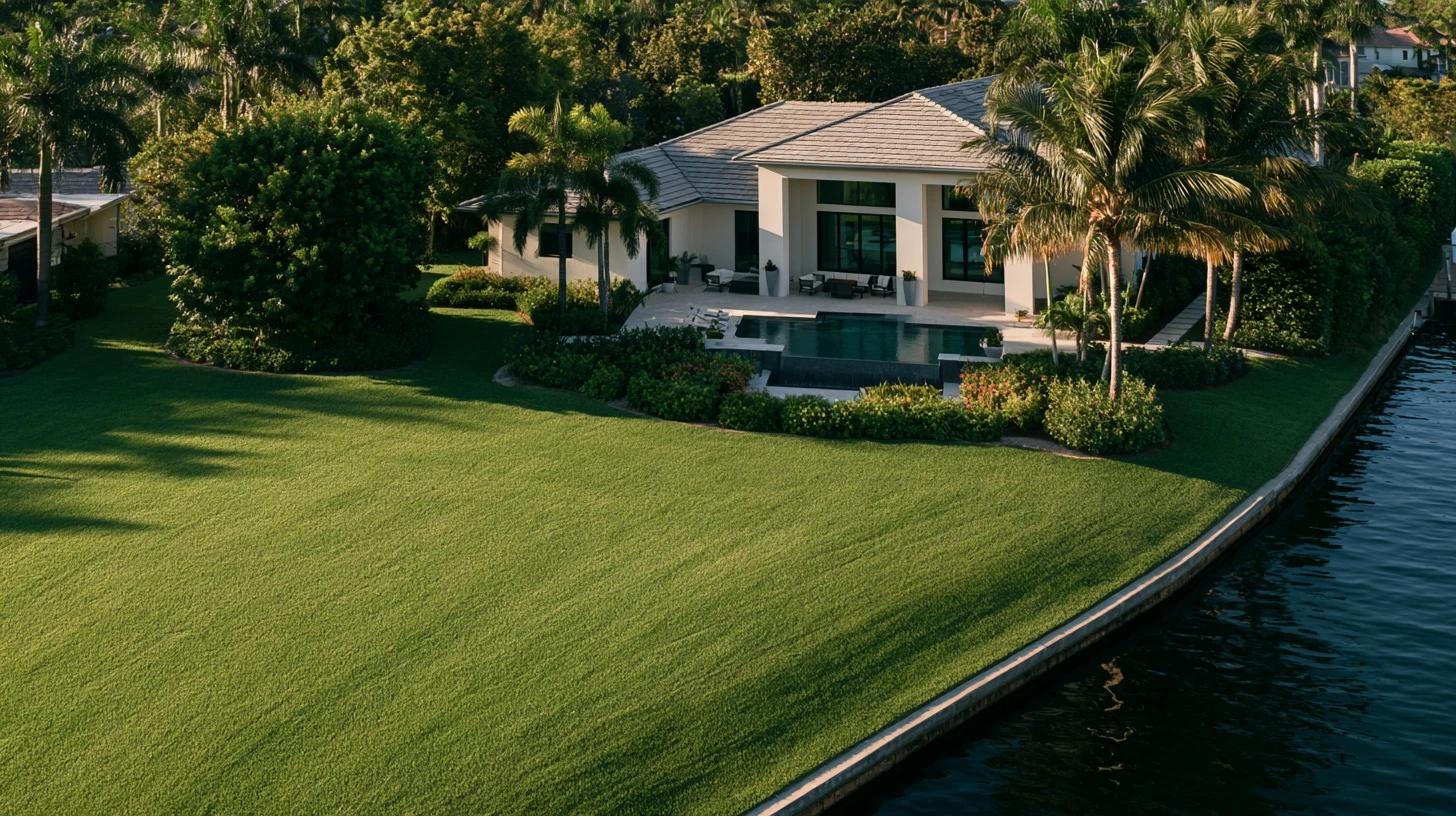
The useful mental model for a pool in The Moorings is that it ages from the top down. The interior surface is under water and largely protected. The tile line, the coping joints, the deck and every metal component on the equipment pad are in the air, and here that air carries salt year round. There is no inland buffer between this neighborhood and the water. Between the beach on one side and Moorings Bay and its canals threading through the other, many properties have salt water at the seawall behind the house as well as salt wind off the Gulf in front of it. The pool sits in the middle of both.
So the sequence is predictable. The mortar bed behind the waterline tile goes first and takes the tile with it. The bed is cementitious and porous, and at the waterline it is wetted and dried hundreds of times a season. Each time salt spray dries there, salt is left behind in the pores of the bed, and over the years that cycle breaks the bed down from the surface inward. The tile itself is fired and glazed and barely notices. It simply loses the thing it was holding onto.
Coping joints open next. The joint between the coping stone and the tile line, and the joint between coping and deck, are the working seams of the pool. Sun and salt stiffen and shrink the material in them until a hairline opens. From that point on, every rain and every splash-out sends water down into the same mortar bed that the salt-dry cycle is already breaking down from the front. The second stage of aging feeds the first.
Metal on the equipment pad corrodes on a schedule of its own, usually invisibly, until a heater or a pump reports a fault that turns out to have been developing for a long time. Fasteners, cabinet seams and enclosure bases show it earliest. By the time a component actually stops, the corrosion is rarely news to anyone who had looked closely at the pad the year before.
A scope written for The Moorings that ignores this order ends up being right about the pool and wrong about the property. Resurfacing a pool whose tile bed is failing means opening the same waterline again shortly afterwards, which is both the more expensive path and the more disruptive one. The order has one more practical consequence that we build every Moorings scope around: the tile line and the coping meet at the same few inches of pool, so both waterline trades belong inside one drain. Drain once, repair the bed, set the tile, reset the coping, then refill. That is the shape of a remodel that respects how this neighborhood actually ages.
Year-round salt exposure with no inland buffer, Gulf on one side and Moorings Bay on the other
Coping joints opening and admitting water to the bed below
Corrosion on the pad developing well ahead of any symptom
Waterline tile: the first casualty in The Moorings
In the top-down order, tile is stage one. Owners here often describe the same discovery: the pool water is clear, the finish looks fine, and then a tap along the tile line sounds hollow where last year it sounded solid. That hollow sound is the mortar bed announcing that it has let go behind tile that still looks perfect. Pushing new adhesive behind the old tile, or sticking replacement tile onto that same spent bed, buys a season or two and then returns you to exactly this spot.
The repair that lasts in this neighborhood is the one that treats the bed as the patient. We pull the failing tile and repair the bed underneath so the repair holds, which means cutting back to sound material, checking the bond beam at the top of the pool wall while it is exposed, and rebuilding the setting bed before any new glass, porcelain or stone goes on. The bond beam check matters more here than inland. If the beam itself has cracked, new tile over it will telegraph that crack within a year, and the time to know is while the waterline is already open.
Material choice at the tile line is genuinely open in The Moorings. Glass, porcelain and natural stone all live happily in salt air once the bed behind them is sound, because the bed was always the weak point. What we steer owners away from is any plan that resets the schedule of the tile without resetting the schedule of the bed.

Coping joints: stage two, and the stage that accelerates stage one
Coping is the cap of stone or concrete that rings the top of the pool wall, and its joints are the part of a Moorings pool we get asked about least and worry about most. A tile problem announces itself. An open coping joint just sits there, a hairline of missing sealant that looks cosmetic, while every rain sends water down into the bed below. The coping stones themselves are usually fine. The failure is the seam.
This is why coping work in The Moorings is rarely a standalone decision. If we are called about coping joints opening and letting water into the bed underneath, the first question is how long they have been open, because the answer usually determines whether the tile bed a few inches below has already been compromised from behind. Joints caught early can sometimes be cleaned and resealed with the coping left in place. Joints that have been open through a few summers of afternoon storms generally mean the bed under the coping has softened, and then resetting the affected stones on fresh mortar is the repair that holds.
The practical takeaway for owners here is a simple habit: walk the pool edge once in a while and look at the seams rather than the stone. In this neighborhood the seam is the early warning, and reading it correctly is the difference between a sealing visit and a rebuild.
The useful mental model for a pool in The Moorings is that it ages from the top down.
The equipment pad: the invisible third stage
The pad is where the top-down order goes quiet. Tile and coping fail where you swim and sit, so you see them. The heater, pump, filter and electrical gear stand off to the side of the house, often on the bay side where the breeze off the canals reaches them all day, and nobody studies them until something stops. In The Moorings, by the time something stops, the story is usually years old.
The reason we treat pad work as its own discipline here is that corrosion on the pad develops well ahead of any symptom. Fasteners rust first because they are small and thin. Cabinet seams and the base of the heater go next, because that is where salt-laden condensation lingers. The electrical enclosure matters most, because corrosion inside it is a safety question and not just a longevity one. None of this shows up in how the pool runs on a warm day.
When a Moorings remodel reaches the pad, the choice is between replacing components one at a time as they fail, each on its own service call, or rebuilding the pad once with equipment, plumbing and bonding brought up together. On a pad where several components show the same stage of corrosion, the rebuild is usually the honest recommendation, because the components share one air and age together. Replacing only the one that failed first means scheduling the next failure rather than preventing it.
Resurfacing, and why the tile rides along with it
Here is the part of the top-down model that surprises Moorings owners most: the interior finish, the surface people assume wears out first, is often the healthiest part of the pool. It lives under water, and the water protects it from the salt air that is dismantling everything above it. We regularly see pools here whose finish has years left while the tile bed above it is finished. Inland, the reverse is common.
That inversion drives one piece of scheduling advice we give on almost every resurfacing call in this neighborhood. When the finish finally does reach the end of its life, the pool is already drained and the waterline already open during a resurface, and that access is worth real money. The tile bed and the coping joints are sitting right there, exposed, at the exact moment a crew is mobilized and the water is out. Handling the waterline trades inside that same drain costs a fraction of what it costs to come back, drain again and stage the same few inches of pool a second time.
So the honest resurfacing conversation in The Moorings starts above the waterline, not below it. We look at the tile bed and the joints first, and only then talk finishes. If the bed is failing, the resurface waits until the scope includes it. That is not an upsell. It is refusing to close up a pool over a problem we could see.
Heater repair: when the invisible stage finally speaks
The heater is usually where the equipment pad breaks its silence. It is the most complex machine on the pad, it has the most metal in the airstream, and it is the one appliance whose failure gets noticed on a specific evening rather than gradually. The classic Moorings call comes in December: the pool has been perfect all year, guests are arriving, and the heater will not hold a flame. Nothing about that failure is sudden except the discovery. A fault that developed slowly presents on the first cold night, because that is the first night the heater is asked to work.
Salt air gives heater faults here a particular character. A heater that fires and then cuts out is often reporting a corroded sensor, a compromised exchanger or a flow problem rather than an ignition one, and the visible clue is usually on the outside: rust at the cabinet base and seams that says the same air has been working on the inside. That is why we diagnose before we quote. Replacing a heater whose actual fault was a sensor wastes the owner's money, and repairing a heater whose exchanger is corroded through wastes it twice.
The pad inspection habit pays off most right here. A heater checked in October, while the weather is still warm, turns the first cold night back into an ordinary evening.

Remodeling The Moorings pool as one project, in the right order
Everything above rolls up into one discipline: a scope written in the order this neighborhood actually ages. Tile bed first, coping joints with it, the equipment pad assessed alongside, and the finish last, because the finish is the one element the salt air has not been able to reach. A full Moorings remodel sequenced this way drains the pool once. The bed is repaired, the tile set, the coping reset and sealed, the pad rebuilt or corrected while the water is out of the way, and the new finish applied as the final act before refill.
The alternative, and we see it in quotes owners bring us, is a scope organized around whatever prompted the phone call. The heater died, so the quote is a heater. The finish looked tired, so the quote is a resurface. Each of those scopes can be correct about its own component and still wrong about the property, because it spends the mobilization, the drain or both without touching the stages that fail next. In a neighborhood that ages in a known order, a scope that ignores the order is a plan to do this again soon.
Our remodel conversations in The Moorings therefore start with an above-waterline walk, not a catalog. Tile line, joints, pad, in that order, and then a scope that matches what the walk found. Your pool should feel effortless, and in this neighborhood, effortless is a sequencing decision before it is a materials decision.
Plan the scope
What would your remodel actually touch?
Pick everything that bothers you about the pool. The tool shows which trades the fix involves and, more importantly, where they meet, because the seams are where split jobs fail.
Your scope so far
A new interior finish dies at the waterline. If the tile above it stays, the joint between old tile and new plaster is the first place the job shows its age.
Tile comes off with demolition that always disturbs the bond beam behind it, which is why tile-only quotes grow once the old mortar bed is open.
Coping sits on the same bond beam the tile hangs from, and the deck butts against its back edge. Three trades meet in a strip about a foot wide.
A settling deck is usually a base problem, not a paver problem. Relaying pavers over a failed base moves the same problem to next season.
The spillover is a plumbing calculation wearing a tile face. Retiling it without checking the flow behind it fixes how it looks, not how it runs.
A remodel is the cheapest moment to right-size the pump and filter. The plumbing is already open and the pool is already down.
More than one trade means sequencing decisions. What gets demolished first, what cures before what goes on top. One contract holds one company responsible for every seam above.
Service area
The Moorings and the neighborhoods around it
The marker on The Moorings is open. Click any other marker for what breaks pools there, because it is genuinely not the same everywhere in Collier County.
Where we work
Naples and Collier County, plus Marco Island, Bonita Springs and Estero. What fails is different in each, and that is what decides the work.
- Port Royal waterfront, architectural review, deck must match the house
- Old Naples pools built in the seventies and eighties, due for everything at once; original skimmers
- Aqualane Shores canal homes, deck movement near the seawall separates coping
- Park Shore Gulf Shore Boulevard salt air hits the tile line first; seasonal vacancy
- The Moorings direct salt air exposure, waterline tile failure
- Coquina Sands seventies and eighties pools; decks poured over uncompacted fill
- Royal Harbor canal homes, high water table hides leaks; coping separation
- Grey Oaks gated architectural review on anything visible from the street; spa additions
- Quail West natural stone decking matched to the house; spa additions
- Pelican Bay empty April to November; automation and heat pumps for year-round swimmers
- Lely Resort natural gas supply; builder decks aging out; year-round pump runtime
- Fiddler's Creek natural gas heater sizing; builder-era paver decks losing their base
- The Vineyards year-round swimming, heat pumps and variable speed payback
- Naples Park mature landscaping into pool plumbing; original skimmers; storm-loaded filters
- Pine Ridge Estates mature landscaping finds underground pool plumbing
- Vanderbilt Beach equipment pads corrode fast; storm season loads filters
- Golden Gate Estates well water iron staining on marcite; propane rather than natural gas
- Isles of Capri canal water table hides leaks; heavy equipment-pad corrosion
- Marco Island barrier island salt air corrodes heaters from the inside out
- Bonita Springs pool decks and patios on Southwest Florida soil
- Estero deck and patio base engineered for local soil
- Ave Maria newer east-county builds, patios and walkways matched to existing hardscape
What that usually means in The Moorings
In the order the causes above tend to drive the work, not in the order of what costs most.
- Waterline tile replacement, starting behind the tile Tile almost never fails on its own. What fails is the mortar bed behind it, and in Naples the salt air reaches that bed long before it touches the tile face. That is why tile set back onto the old bed comes loose again, and why every job here starts with what is behind the tile.
- Pool coping replacement, and the beam underneath it Tap along your coping. Where it sounds hollow, the problem is not the coping and it is not the mortar. It is the bond beam underneath, and setting new stone on top of it changes nothing.
- Equipment pad rebuilds, so the next repair is a part swap Patching one fitting on a pad that is going is how you end up seeing the same contractor four times in two years. At some point the pad itself is the repair.
- Pool resurfacing in Naples, including the part everyone skips Most resurfacing quotes cover chipping out the old surface and troweling on a new one. The part that decides whether it still looks right in ten years is the four weeks after the water goes in, and it is the part most owners are never told about.
- Pool heater repair in Naples, diagnosed not replaced A heater that will not fire is usually a fault, not a funeral. Ignition, control board, pressure switch and gas supply all present the same way from the deck, and they are four different repairs.
- Pool remodeling in Naples, handled as one project Most Naples pools do not fail one piece at a time. The interior finish goes, the waterline tile lets go, the coping sounds hollow, and the deck has been moving for years. Handling that as four separate trades is how a six week project turns into a season. We do it as one.
What to expect when we work in The Moorings
The first visit is an above-waterline assessment, because in this neighborhood that is where the truth is. We read the tile line, the coping joints and the equipment pad before we talk about anything else, and the scope comes out of that walk. If the assessment says the bed is sound and the job really is just a finish or a single component, the scope says so.
Where the work touches the waterline, we plan both waterline trades inside one drain. Tile and coping meet at the same few inches of pool, and scheduling them as one operation, bed repair first, is the single biggest cost and disruption saver available on a Moorings remodel. We will tell you plainly if your project should wait a season so it can be combined rather than split.
Many Moorings homes are seasonal, and that is a logistics note rather than a problem. We routinely coordinate access, decisions and completion photos through a key-holder or property manager, so a remodel can run while the owner is away and be swimmable on arrival. The neighborhood's mix of association streets and private-street sections each comes with its own access and parking arrangements, and we sort those out during scheduling so the first day of work starts with work.
ASK CLAYTON · THE MOORINGS
Questions from The Moorings
These are specific to this area. The general ones are answered on the service pages.
Call 239-450-5933-
Should the tile be done at the same time as resurfacing?
Near the water, usually yes, and the reason is access rather than upselling. The pool is already drained and the waterline is already open during a resurface. Doing the tile later means draining and staging the same few inches a second time. In The Moorings the tile bed is commonly the older of the two surfaces anyway, so checking it before closing up is simply due diligence.
-
How can equipment-pad corrosion be spotted before something fails?
By looking at the things that show it earliest: fasteners, cabinet seams, the base of the heater and the electrical enclosure. Corrosion visible at those points means the components around them are in the same air, and it is a reason to inspect rather than to replace. A pad that looks clean at those four spots has genuinely not started the third stage yet.
-
Why does the finish outlast the tile here when inland it is the reverse?
Because the finish lives under water and the tile bed lives in the air. In The Moorings the air carries salt year round, so the mortar bed behind the tile breaks down while the submerged finish stays protected. Inland there is no salt working on the bed, so the finish, which takes all the water chemistry and sun at the shallow steps, tends to reach the end of its life first.
-
Do open coping joints mean the coping has to be replaced, or can they be sealed?
It depends on what is under them. Joints caught early, before water has been getting into the bed below, can often be cleaned and resealed with the stones left in place. Joints that have been open through a few storm seasons usually mean the bed has softened, and then the affected stones need to be lifted and reset on fresh mortar. The stone itself is rarely the problem.
-
How often should a pool this close to the Gulf get an above-waterline inspection?
Once a year is a sensible rhythm, and the best timing is early fall, before heater season and after the summer storms have tested the joints. Tap the tile line, read the coping seams, look at the pad fasteners and enclosures. After any long absence, add a walk-around on return. The inspection takes minutes and it is what keeps Moorings pools on scheduled work instead of emergency work.
-
What does aging from the top down mean for budgeting a remodel?
It tells you where the money should go first and what moves the total. The condition of the tile bed and coping joints drives the scope more than the finish selection does, the equipment pad is the variable worth assessing before committing, and combining both waterline trades in one drain avoids paying to mobilize and drain twice. Budgeting from the finish backwards is how Moorings remodels end up needing a second phase.
What is the same everywhere we work
The neighborhood changes what fails. It does not change how we work, and pretending otherwise would be the first dishonest thing on this page.
- No price before someone has looked at the pool.
- No schedule before we know what the shell needs.
- The cause gets diagnosed before the repair gets quoted.
- Ask for our license number and check it yourself at the DBPR licensee search. Ask the other quotes for theirs too.
Nearby, and similar
These share the same underlying conditions as The Moorings, which is why the work tends to look alike.
- Port Royal waterfront, architectural review, deck must match the house
- Old Naples pools built in the seventies and eighties, due for everything at once; original skimmers
- Aqualane Shores canal homes, deck movement near the seawall separates coping
- Park Shore Gulf Shore Boulevard salt air hits the tile line first; seasonal vacancy
Talk to Clayton
Tell us what the pool in The Moorings is doing.
A sentence or two is enough. You get a call back from the person who does the work, not a dispatcher.