


Vanderbilt Beach, Florida
Pool remodeling in Vanderbilt Beach
Vanderbilt Beach is towers on the sand and canal streets behind them, and on those canal streets the equipment pad is usually the first thing that says how close the Gulf really is.
Why this area is different
The pad corrodes before the pool complains
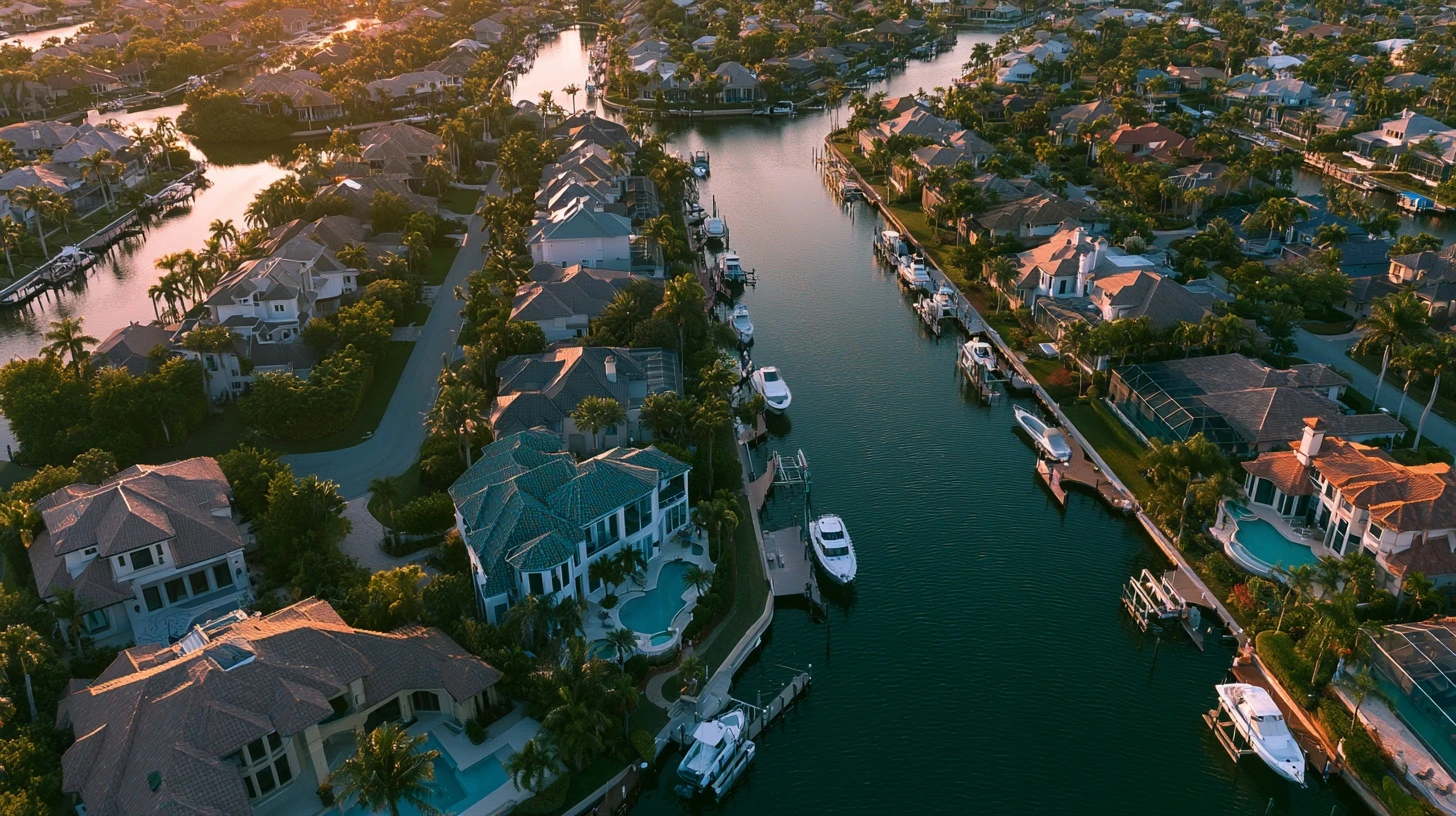
Vanderbilt Beach is really two places wearing one name. On the beach side stand the Gulf-front condo towers, and their pools belong to associations, with budgets, boards and vendors under contract. Behind the towers, between Vanderbilt Drive and the bay, sit the canal streets: single-family homes on tight lots, most with a dock out back and a pool in between. If you own one of those homes, this page was written for you. If you sit on a tower board, some of the mechanics below still apply to your association pool, but the scale and the contracting are different, and we would rather say that plainly than pretend one page fits both.
What the towers and the canal streets share is the air. This close to the Gulf there is no filtered version of salt exposure, no buffer of a mile of rooftops to take the edge off. And the densest concentration of metal on any pool property is the equipment pad. Heater cabinets, pump motors, electrical enclosures, fasteners, valve hardware, the bonding lug itself: all of it sits in beach-grade salt air every hour of every day. Corrosion does its work continuously and quietly, well before any component reports a fault.
That is why pad problems in Vanderbilt Beach present suddenly even though they developed slowly. Nothing on the pad announces that it is most of the way to failing. The heater that spent all year in that air simply does not fire on the first cold night of the season, which is also the night every other heater within two blocks of the beach is being asked to work. The preventable version of that story is a pad looked at before the season, not during it.
Storm season is the second thread. Summer storms push an extraordinary debris load through a pool this close to open water, and that load is what finds a filter element that was already marginal. The signature is worth memorizing: filter pressure climbing while debris returns to the pool through the jets. Those two symptoms together mean water is going around the media instead of through it, and no amount of chemical adjustment will change that, because it is a mechanical fault.
The canal side of the neighborhood adds its own conditions. Lots between Vanderbilt Drive and the bay are narrow, the ground sits low and holds water, and many pools share their yard with a seawall and a dock. One street grid north, Naples Park has a different lead problem, mature roots finding decades-old plumbing, and its page on pool remodeling in Naples Park reads accordingly. Here the pad comes first, because here the pad goes first.
Continuous beach-grade salt exposure on every metal component on the pad
Heater failures that look sudden but carry a full year of salt history
Storm-season debris load exposing marginal filter elements
Tight canal-street lots that shape access, staging and equipment placement
Equipment pad rebuilds two blocks from the Gulf
There is a point on a beach-side pad where repair-by-parts stops making sense. You replace the heater, and the new heater bolts onto corroded unions. You swap the pump, and the new motor wires into an enclosure whose door no longer seals. Every new component inherits the condition of everything around it, and on the canal streets that condition is set by salt, not by age.
That is the argument for treating the pad as one system. A full rebuild replaces the plumbing manifold, the valves, the electrical enclosures and the bonding in one pass, so the next failure is a part swap on a sound pad rather than another patch on a failing one. We wrote up how that works on our page about why pads here corrode faster than almost anywhere in the country, and Vanderbilt Beach is much of the reason that page exists.
Bonding deserves its own sentence. The bare copper conductor that ties the pad together is a corrosion item in beach air, not just a line on an inspection form, and a rebuild is the natural moment to renew it. On a canal-street lot, where the pad often sits in the narrow run between house and property line, the rebuild is also the chance to arrange equipment so it can actually be serviced without moving a fence panel.
Heater repair and the first cold night
The heater call from Vanderbilt Beach almost always comes in the same week the first real cold front does. The unit worked last winter, sat quietly through the summer, and now will not fire. From the owner's side that looks like a sudden failure. From the pad's side it is the end of a long story, because that cabinet has spent every day since last winter in beach-grade salt air.
The temptation in that moment is to buy a new heater over the phone. We resist it on purpose. Ignition components, control boards, pressure switches and gas supply problems all present as a heater that will not fire, and each one is a different repair with a different cost. Our approach to heater repair is diagnosed before quoted, because several outcomes are not a replacement, and that discipline matters most on the night everyone else within earshot of the surf wants a heater too.
When replacement is the honest answer, the pad environment shapes the installation. Placement, clearances and cabinet condition all get considered against the salt exposure that ended the last unit, because installing a new heater onto an unexamined beach-side pad is how the same phone call happens again.
Vanderbilt Beach is really two places wearing one name.
Filters after a canal-street storm season
Ask a canal-street owner what August does to their pool and you will hear about debris: what the storms strip off the neighborhood and what the wind carries in off the water. All of it goes through the skimmer, and all of it lands on the filter. A filter element that would have lasted years inland gets worked far harder two blocks from the Gulf, and storm season is when the marginal ones give up.
The tell is specific. On the filter page we put it plainly: climbing pressure with debris blowing back means torn elements, not chemistry. When those two symptoms arrive together, water has found a path around the media, through a tear or a failed seal, and the pool is receiving back what the filter was supposed to keep.
The useful habit here is checking the filter after the clean-up, not just the pool. Once the deck is cleared and the water looks right, a pressure reading and a look at the elements tells you whether the filter carried the load or quietly lost to it. Finding a torn element in October is a repair. Finding it next June, at the start of another storm season, is a summer of cloudy water.

Pumps, motors and bonding in beach air
A pool pump is an electric motor living outdoors, and in Vanderbilt Beach it is an electric motor living outdoors in salt. Terminal connections, capacitor housings, cooling fins and the fasteners that hold the whole assembly down all feel that, and a motor that would run a decade inland can be forgiven for retiring earlier this close to the water.
Replacement done properly here is more than swapping like for like. A new pump on a canal-street pad gets installed, bonded, and programmed to your schedule, and the middle word is the one we would underline. The bonding connection is the pump's tie into the pad's grid of bare copper, and in beach air that copper and its clamps corrode like everything else. Renewing the bond at the pump is cheap at replacement time and expensive to retrofit as an afterthought.
Programming earns its place in that sentence too. Canal-street pools carry a heavy seasonal debris load, and a variable-speed pump scheduled around when the pool actually needs turnover, rather than left on a factory default, filters better through storm season without running flat out around the clock.
Waterline tile, briefly, because the salt is in the water too
The pad takes the airborne salt, but the waterline takes the wet kind, and on Vanderbilt Beach pools that shows up over years as tile that sounds hollow or lets go in sheets. The mechanism is easy to misread, because the tile itself is nearly saltproof. As we explain on the tile page, the mortar bed behind the tile takes the salt, not the tile, and once that bed weakens, no adhesive applied from the front will fix it.
On the canal streets this is a secondary concern next to the pad, and we would sequence it that way in a remodel: mechanicals first, finishes after. But if your tile line is already shedding, the service page walks through how a proper rebed differs from the regrout-and-hope version.
Leak detection on low, wet canal lots
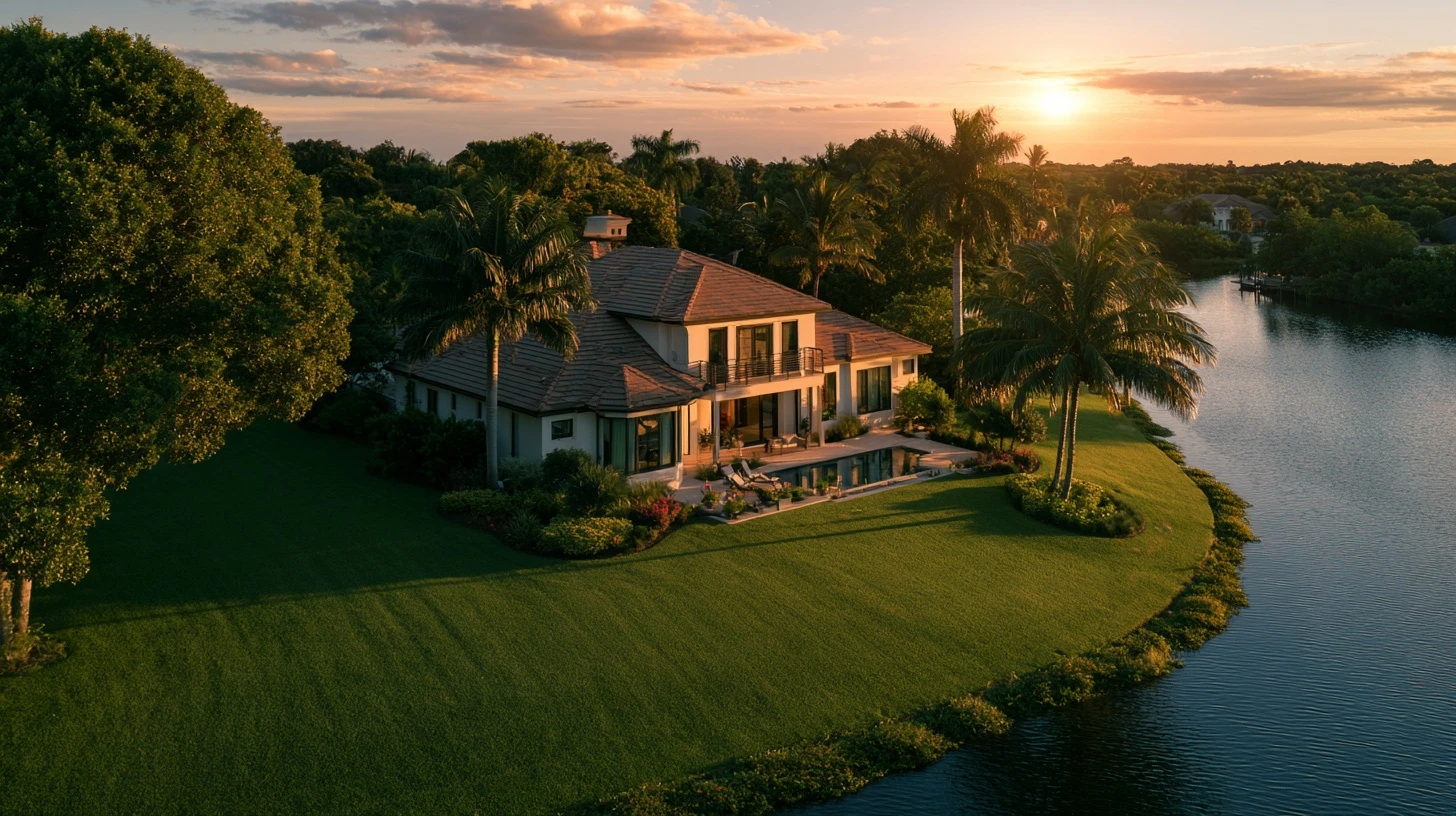
Leak detection has a particular wrinkle on the streets between Vanderbilt Drive and the bay: the ground is already wet. On an inland lot, a plumbing leak often advertises itself with a soft green stripe of lawn or a damp patch that should not be there. On a low canal lot that stays saturated for much of the year, that surface evidence simply does not show, and a pool can lose water for months with nothing visible in the yard.
So the process here leans harder on measurement than on observation. Isolating lines, testing them individually, and producing a written finding before anyone digs is the whole method, and it matters most exactly where the yard refuses to testify. On a narrow lot with a seawall at the back, digging in the wrong place is not a small mistake, so we do not dig until the finding says where.
Plan the scope
What would your remodel actually touch?
Pick everything that bothers you about the pool. The tool shows which trades the fix involves and, more importantly, where they meet, because the seams are where split jobs fail.
Your scope so far
A new interior finish dies at the waterline. If the tile above it stays, the joint between old tile and new plaster is the first place the job shows its age.
Tile comes off with demolition that always disturbs the bond beam behind it, which is why tile-only quotes grow once the old mortar bed is open.
Coping sits on the same bond beam the tile hangs from, and the deck butts against its back edge. Three trades meet in a strip about a foot wide.
A settling deck is usually a base problem, not a paver problem. Relaying pavers over a failed base moves the same problem to next season.
The spillover is a plumbing calculation wearing a tile face. Retiling it without checking the flow behind it fixes how it looks, not how it runs.
A remodel is the cheapest moment to right-size the pump and filter. The plumbing is already open and the pool is already down.
More than one trade means sequencing decisions. What gets demolished first, what cures before what goes on top. One contract holds one company responsible for every seam above.
Service area
Vanderbilt Beach and the neighborhoods around it
The marker on Vanderbilt Beach is open. Click any other marker for what breaks pools there, because it is genuinely not the same everywhere in Collier County.
Where we work
Naples and Collier County, plus Marco Island, Bonita Springs and Estero. What fails is different in each, and that is what decides the work.
- Port Royal waterfront, architectural review, deck must match the house
- Old Naples pools built in the seventies and eighties, due for everything at once; original skimmers
- Aqualane Shores canal homes, deck movement near the seawall separates coping
- Park Shore Gulf Shore Boulevard salt air hits the tile line first; seasonal vacancy
- The Moorings direct salt air exposure, waterline tile failure
- Coquina Sands seventies and eighties pools; decks poured over uncompacted fill
- Royal Harbor canal homes, high water table hides leaks; coping separation
- Grey Oaks gated architectural review on anything visible from the street; spa additions
- Quail West natural stone decking matched to the house; spa additions
- Pelican Bay empty April to November; automation and heat pumps for year-round swimmers
- Lely Resort natural gas supply; builder decks aging out; year-round pump runtime
- Fiddler's Creek natural gas heater sizing; builder-era paver decks losing their base
- The Vineyards year-round swimming, heat pumps and variable speed payback
- Naples Park mature landscaping into pool plumbing; original skimmers; storm-loaded filters
- Pine Ridge Estates mature landscaping finds underground pool plumbing
- Vanderbilt Beach equipment pads corrode fast; storm season loads filters
- Golden Gate Estates well water iron staining on marcite; propane rather than natural gas
- Isles of Capri canal water table hides leaks; heavy equipment-pad corrosion
- Marco Island barrier island salt air corrodes heaters from the inside out
- Bonita Springs pool decks and patios on Southwest Florida soil
- Estero deck and patio base engineered for local soil
- Ave Maria newer east-county builds, patios and walkways matched to existing hardscape
What that usually means in Vanderbilt Beach
In the order the causes above tend to drive the work, not in the order of what costs most.
- Equipment pad rebuilds, so the next repair is a part swap Patching one fitting on a pad that is going is how you end up seeing the same contractor four times in two years. At some point the pad itself is the repair.
- Pool heater repair in Naples, diagnosed not replaced A heater that will not fire is usually a fault, not a funeral. Ignition, control board, pressure switch and gas supply all present the same way from the deck, and they are four different repairs.
- Pool filter repair, when it is not a chemistry problem Debris blowing back into the pool while the pressure climbs is not a water chemistry problem. It is a torn element, and no amount of balancing will fix it. This page is the triage: how to tell chemistry from circulation from media, and what Naples does to every interval printed on a filter box.
- Pool pump replacement in Naples, programmed not just installed A variable speed pump left running one fixed speed is an expensive single speed pump. The saving is in the programming, and the programming is the part that gets skipped.
- Waterline tile replacement, starting behind the tile Tile almost never fails on its own. What fails is the mortar bed behind it, and in Naples the salt air reaches that bed long before it touches the tile face. That is why tile set back onto the old bed comes loose again, and why every job here starts with what is behind the tile.
- Pool leak detection in Naples, with a finding before a shovel A leak on a canal lot rarely shows itself. The ground takes the water, nothing goes soggy, and the first sign is the bill or the auto-fill running more than it used to.
- Pool repair in Naples, diagnosed before it is quoted Something is wrong and nobody can tell you what. The pump loses prime, the heater will not fire, the breaker trips, the water keeps dropping. The job is finding the cause, not swapping parts until it stops.
What to expect on a canal-street job
The lots between Vanderbilt Drive and the bay are narrow, and the working space beside a house is often a single walkway shared with air conditioning equipment and a fence line. We plan access and staging before the first day, so materials, old equipment and any excavation spoil have a place to be that is not your neighbor's driveway. Where a gate or fence panel has to come off to reach the pad, that goes back the way it came.
Timing matters more here than in most of Naples. The right month for a pad inspection is before heater season, because the failure that gets caught in October is a scheduled repair and the same failure in December is a cold pool during the exact week demand peaks. Storm season sets the other clock: after a big blow, filter and debris calls from the beach neighborhoods arrive all at once, and we work through them in the order they come. We will not promise a response window we cannot control, and we would be wary of anyone who does in the week after a storm.
One more honest note on scope. Association pools in the towers involve boards, budgets and commercial equipment, and the right first conversation there is about scope and approvals, not symptoms. For the single-family pools on the canal streets, the first conversation is simpler: tell us what the pool is doing, and we will look before we quote.
ASK CLAYTON · VANDERBILT BEACH
Questions from Vanderbilt Beach
These are specific to this area. The general ones are answered on the service pages.
Call 239-450-5933-
Our house is on one of the canal streets off Vanderbilt Drive and the pad looks rusted through after only a few years. Is that normal this close to the beach?
Unfortunately, yes. Beach-grade salt air works on every metal surface continuously, and the pad is where the metal is. The useful question is not whether corrosion is normal but what is structural and what is cosmetic. Surface rust on a cabinet is one thing; corroded bonding connections, seized unions and failing enclosures are another, and telling those apart is exactly what a pad inspection is for.
-
Every summer after the storms our filter pressure climbs and debris blows back into the pool. Is that the filter or something bigger?
That symptom pair usually is the filter: pressure rising while debris returns through the jets means water is bypassing the media through a torn element or failed seal. It is mechanical, not chemical, so balancing will not fix it. We would still look over the rest of the pad while we are there, because a filter carrying storm loads two blocks from the Gulf rarely fails in isolation.
-
The heater worked fine last winter and will not fire now. Do we just need a new one?
Not necessarily, and this is why we diagnose before we quote. Ignition parts, control boards, pressure switches and gas supply all present as a heater that will not fire, and several of those outcomes cost a fraction of a replacement. What is true near the beach is that the whole unit has spent a year in salt air, so whatever we find, we also look at the pad it sits on.
-
We are in one of the towers on the beach side. Do you work on association pools?
The honest answer is that association pools are a different kind of project: commercial-scale equipment, board approvals and vendor contracts rather than a homeowner and a pad. The mechanics of salt exposure are the same, so the conversation is worth having, but it starts with scope and decision-makers. This page is written for the single-family pools on the canal streets, because that is where our Vanderbilt Beach work concentrates.
-
What actually drives the cost of a pad rebuild on a lot like ours?
The main drivers are how much of the pad is being renewed rather than reused, the condition of the electrical and bonding, which components are staying and which are at end of life, and access on a narrow lot. Corrosion depth matters too, since it decides what can be unbolted versus what has to be cut out. We price after looking, never from a description over the phone.
-
When should we have the pad looked at, and how often, this close to the water?
More often than an inland pool, and the timing matters as much as the frequency. The valuable inspection is the one before heater season, in the early fall, because whatever it finds becomes a scheduled repair instead of a cold-night emergency. After any serious storm, add a filter check once the clean-up is done. What we are looking for is corrosion at fasteners, seams and bonding connections, since those show trouble first and speak for everything around them.
-
Everything on our pad is only a few years old and already looks rough. Did we buy bad equipment?
Probably not. Equipment ratings assume something like average exposure, and the canal streets are nowhere near average. The same cabinet that stays presentable for a decade inland shows salt bloom in a couple of seasons here. What changes the outcome is not the brand so much as the installation details, drainage under the pad, sound bonding, sealed enclosures, and a pre-season look before small corrosion becomes seized fittings.
What is the same everywhere we work
The neighborhood changes what fails. It does not change how we work, and pretending otherwise would be the first dishonest thing on this page.
- No price before someone has looked at the pool.
- No schedule before we know what the shell needs.
- The cause gets diagnosed before the repair gets quoted.
- Ask for our license number and check it yourself at the DBPR licensee search. Ask the other quotes for theirs too.
Nearby, and similar
These share the same underlying conditions as Vanderbilt Beach, which is why the work tends to look alike.
- Naples Park mature landscaping into pool plumbing; original skimmers; storm-loaded filters
- Pine Ridge Estates mature landscaping finds underground pool plumbing
- Golden Gate Estates well water iron staining on marcite; propane rather than natural gas
- Isles of Capri canal water table hides leaks; heavy equipment-pad corrosion
Talk to Clayton
Tell us what the pool in Vanderbilt Beach is doing.
A sentence or two is enough. You get a call back from the person who does the work, not a dispatcher.