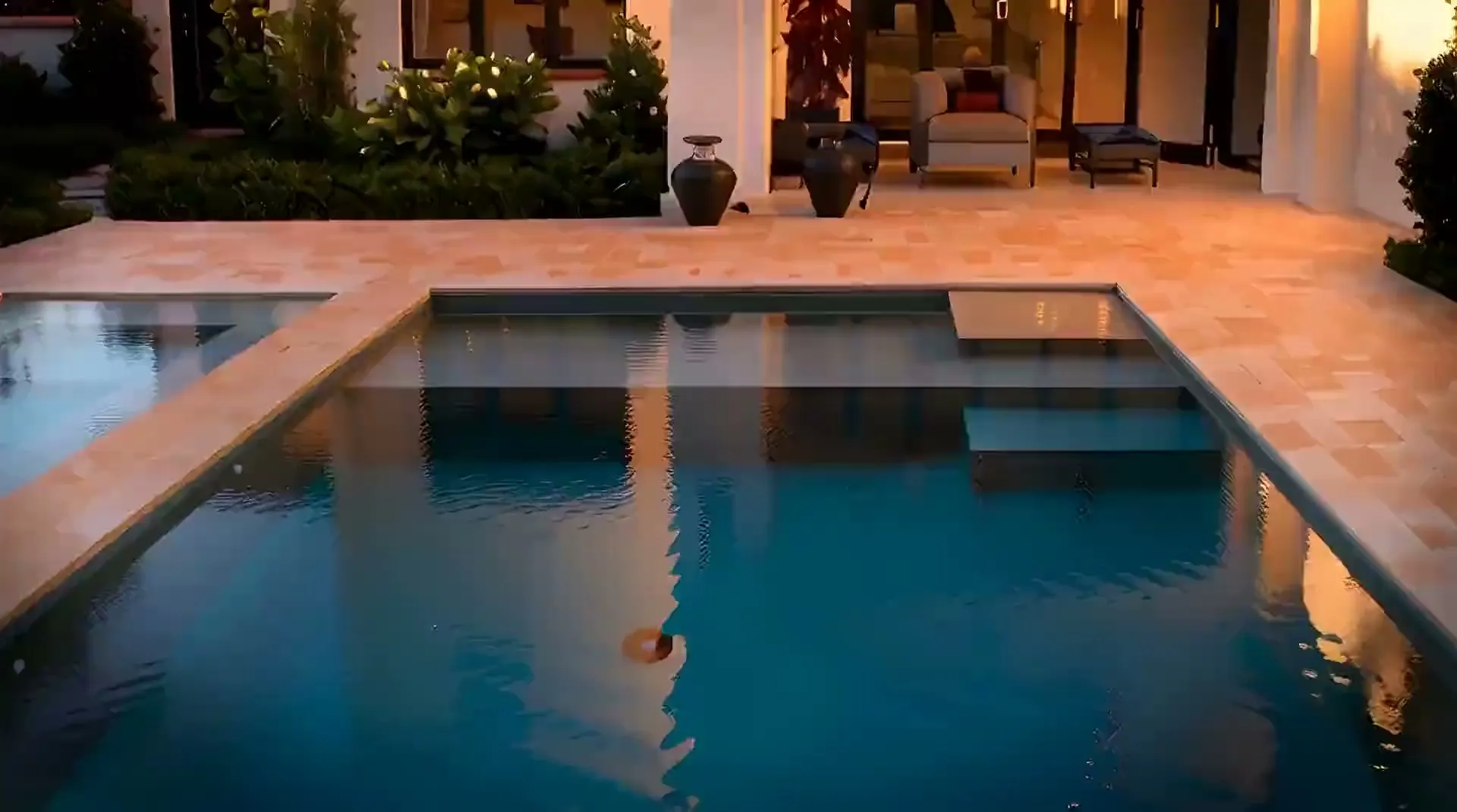


The Vineyards, Florida
Pool remodeling in The Vineyards
The Vineyards is a community where people actually live, and a pool that is swum most weeks of the year is a different engineering problem from one that waits out the summer. Two things follow from that: operating cost matters more than peak output, and the original 1990s pools are now arriving at their first real remodel.
Why this area is different
A year-round pool in a 1990s community
The Vineyards was built out largely through the 1990s as a master planned community off Vanderbilt Beach Road, and unlike much of coastal Naples it is home to a high proportion of people who stay through the summer. That single fact, the pool gets used every week rather than every winter, quietly rewrites the specification for almost every piece of equipment on the pad. A seasonal pool is sized for a sprint. A Vineyards pool is sized for a marathon it never finishes.
Hours are the reason. A pump that runs every day of the year accumulates wear at several times the rate of one that idles from May to November, and a heater that has to hold a swimmable temperature through the cool months does far more work than one that fires for a holiday visit. When the hours are that high, the question stops being which machine is most powerful and becomes which machine costs the least to run. Efficiency claims that are academic on a vacation pool turn into real line items on your electric bill here.
The second thing happening in The Vineyards right now is age, and it is specific to this community's era. A pool finished in the mid nineties is past the working life of its original plaster. Its waterline tile is a style two fashions ago and its adhesive and grout are as old as the finish. Its equipment, if it has been replaced piecemeal, is a mix of generations, and if it has not, it predates variable speed pumps, modern heat pumps and automation entirely. These pools are not failing dramatically. They are simply arriving, house by house and street by street, at the first point in their lives where patching stops making sense and a full remodel starts to.
That first full cycle is a different kind of project from the touch-up work these pools have had so far. It is the one chance in roughly a generation to correct things the nineties got wrong for how the pool is used today: a single speed pump chosen when electricity was an afterthought, a heater sized for occasional use, a finish specified for looks rather than for the chemistry of a pool that never rests. Done thoughtfully, the remodel resets the clock on the surfaces and resets the running cost at the same time.
So the work we do in The Vineyards clusters around those two facts. Residents want the pool to cost less per month to own, because they are the ones paying every month. And a growing number of them are standing at the edge of an original pool wondering where a first full remodel even starts. The rest of this page walks through both.
Year-round residency, so operating cost outranks peak capacity
Original 1990s finishes, tile and equipment reaching their first full remodel
High annual runtime making pump and heater economics material
Heating a pool that never really closes
A heater in The Vineyards spends almost its entire life doing one job: holding a temperature. Gas excels at the other job, recovering a cold pool quickly, which matters most when a pool is allowed to go cold between uses. When the household swims every week, the pool rarely gets cold enough to need rescuing, and the economics flip toward a heat pump, which moves heat from the Naples air instead of generating it and does the holding work for a fraction of the running cost.
The catch is honest and worth stating: a heat pump slows down as the air cools, because the air is where the heat comes from. On the handful of genuinely cold Naples mornings each winter it works hardest for the least return. For most Vineyards households that trade is easily worth it, since those mornings are few and the holding savings run all year. A household that insists on fast recovery in January can pair technologies, or choose gas heater installation with open eyes about the fuel bill.
Sizing matters as much as fuel. A heat pump that is efficient at holding a temperature for months, sized to volume and actual usage will outperform a bigger unit chosen from a brochure, because an oversized machine short cycles and an undersized one never catches up. We size from your pool's volume and your family's real swimming pattern, not from a chart.
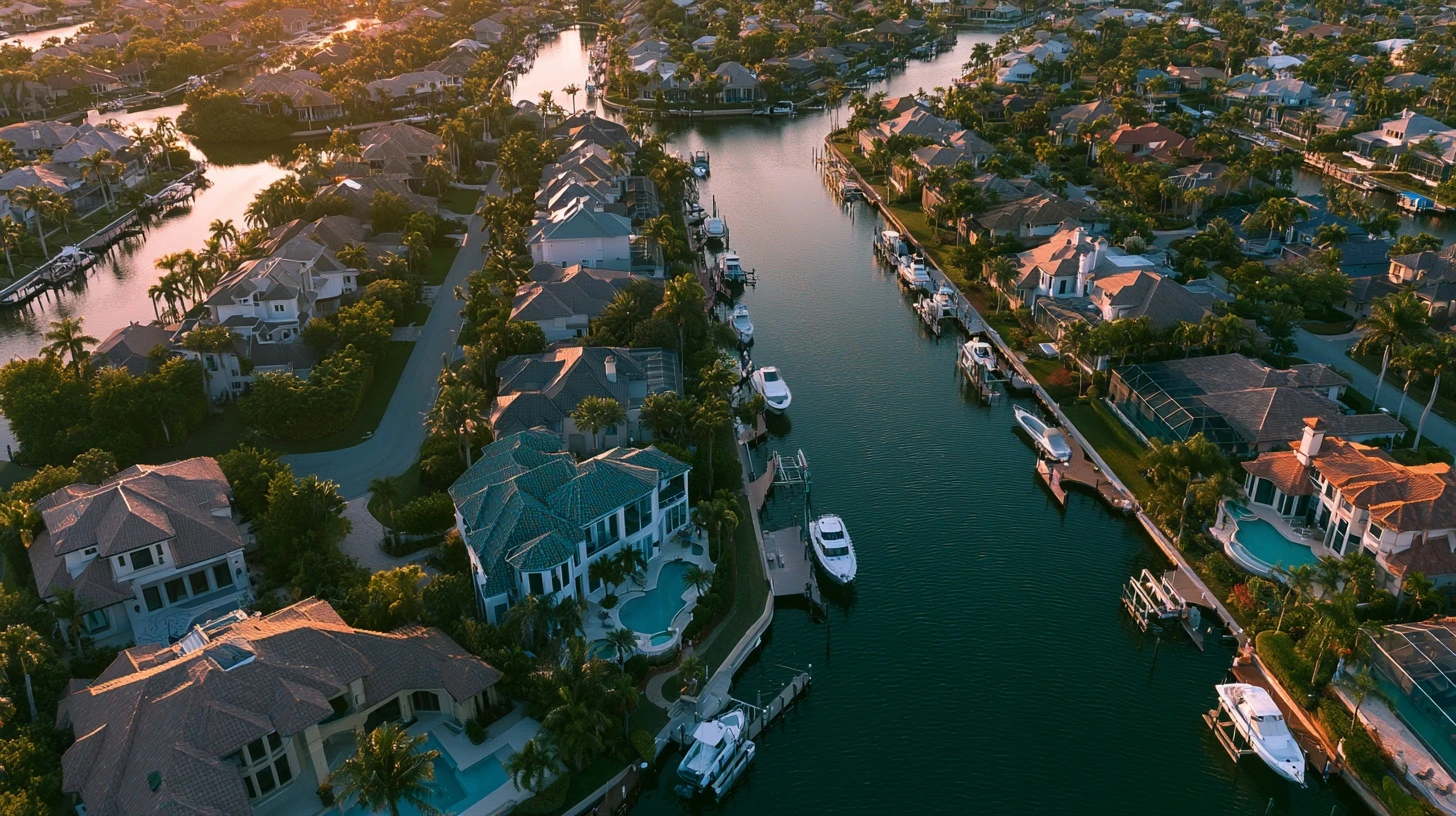
Pump replacement where the payback is real
Every pool company in Naples will tell you a variable speed pump saves money. In The Vineyards the arithmetic actually closes, and the reason is runtime. The savings come from a physical relationship: power draw falls far faster than flow when speed drops, so moving the same water more slowly over more hours costs a fraction of moving it fast for a short burst. That relationship pays by the hour. A pool circulating a few weeks a year banks pennies. A Vineyards pool that circulates every day of the year banks the difference month after month, which is why the upgrade recovers its cost here on a schedule a seasonal pool never matches.
We will also tell you what the sales pitch usually skips: variable speed is a choice, not a legal obligation. The federal efficiency rule for pool pumps sets a performance floor rather than mandating a technology, and there are compliant single speed pumps at the small end. If your pump is original to the nineties, though, you are not comparing like with like. You are comparing a motor from before the efficiency era with one designed for exactly the duty your pool runs. On a high runtime pool, we think the honest recommendation and the self-interested one happen to agree, and we would rather show you the arithmetic than assert it.
Automation for a household that actually swims
In The Vineyards the pool is in use and the people who own it are home, so the case for automation is not the one on the brochure. Here it earns its keep as discipline. A controller runs the pump at the low speed for the long hours that make the efficiency math work, ramps up for the skimming and cleaning windows, and holds the heater to a schedule that matches when your family swims rather than heating water nobody is in.
Left to manual timers, most pools drift. The pump schedule set in March is still running in November. The heater setpoint crept up for a visit and never came back down. Each drift is small and each one costs money every single day on a pool that runs every single day. Automation is how the operating cost engineering from the sections above stays engineered instead of decaying back toward the default.
The right system for a Vineyards pool is usually modest: schedules, heat and lights tuned to how the household actually swims, integrated with the variable speed pump and the heat pump so the three act as one system. It is also the natural moment to add it. If a remodel is already touching the equipment pad, the wiring and plumbing for a controller cost far less than they would as a standalone visit.

Resurfacing an original 1990s finish
Plaster from the nineties has had a long life, and in The Vineyards it has had a hard one, because a used pool ages its finish faster than an idle pool does. Every swim stirs the chemistry, every chlorine dose and acid adjustment works on the surface, and a family in the water most weeks notices roughness underfoot and staining at the waterline that an absent owner would not see for years. The cosmetic grace period a snowbird pool enjoys simply does not exist here.
By this age the signs are usually past subtle: a surface that grabs at feet and swimsuits, mottled gray where the finish has thinned, stains that return within weeks of every cleaning, and small hollow spots where plaster has separated from the shell. None of these are chemistry problems to be balanced away. They are the finish reporting that it is done, and on an original surface the report is trustworthy.
Resurfacing done properly is a short, decisive project: chip out the failed surface, repair the shell, manage the start-up. The chip out matters because a new finish bonded over a failing one inherits the failure. The shell inspection matters because this is the one moment in decades when the concrete is bare and honest. And the start-up matters because a modern finish cures in the water, and the first weeks of chemistry decide how the next twenty years look.
The first full remodel, sequenced as one project
Across the older streets of The Vineyards, the finish, the waterline tile and the equipment are reaching the ends of their lives within the same short span of years, because they all started life together in the nineties. Handled reactively, that becomes three or four separate projects: a resurfacing this year, a tile job eighteen months later, a pump when the old one dies, each with its own drain down, its own crew, its own weeks of disruption for a family that uses the pool weekly and feels every one of them.
The first full remodel is the alternative: treat finish, tile, coping and deck as one project on one schedule, so the pool is drained once, opened up once, and given back once. Sequencing is the entire trick. Tile and coping work happens while the pool is already empty for the chip out, waterline tile goes on before the new finish rather than being cut in after, and the equipment upgrades land while the pad is already a work zone. A family loses the pool once, not three times.
For a nineties pool there is a second dividend. A combined remodel is the natural moment to make the operating cost corrections this page keeps returning to, because the pump, heater and controller decisions are being made anyway. The pool that comes back is not just renewed. It is respecified for the way your household actually uses it.
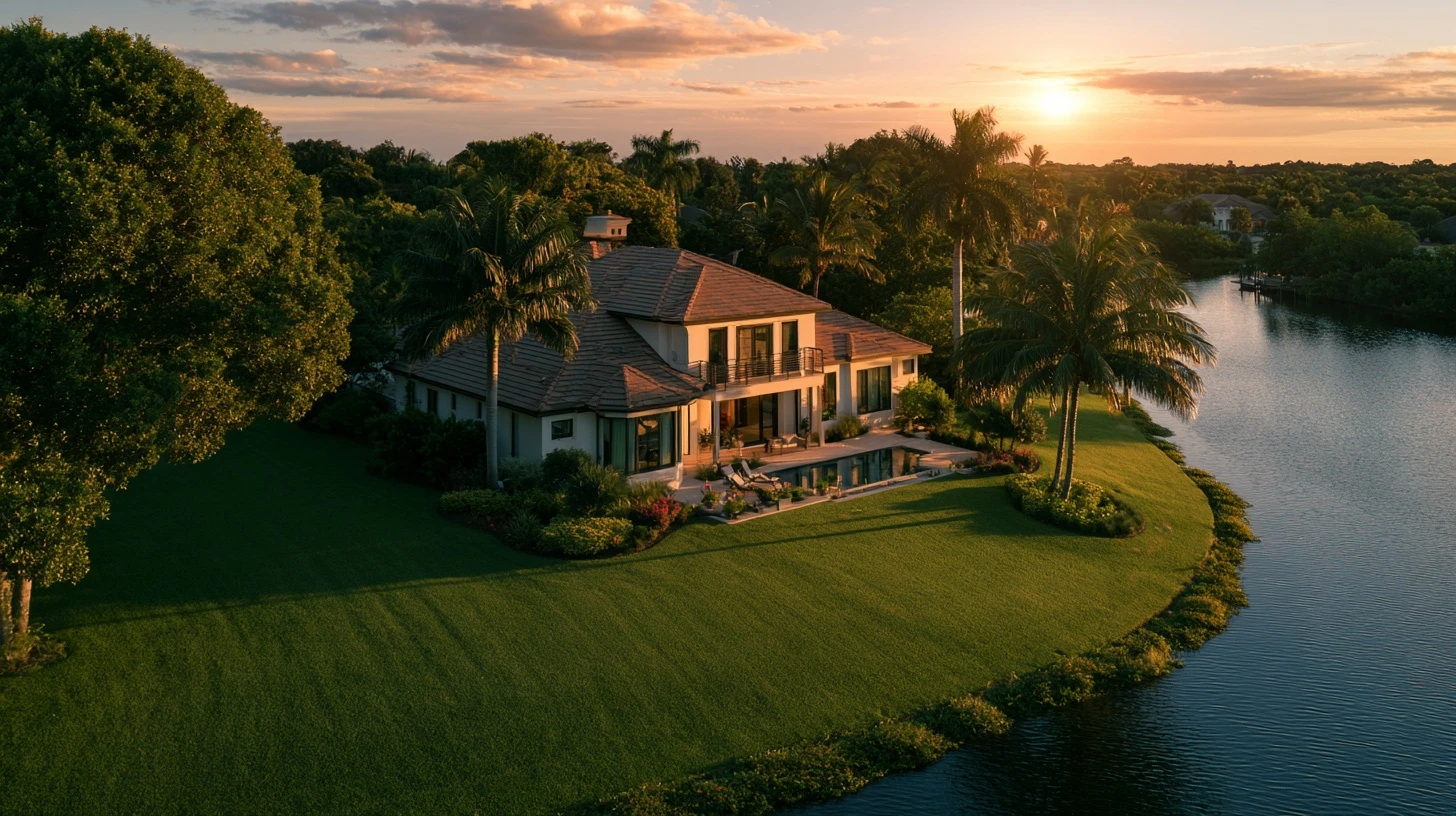
Patios and surrounds in an established landscape
Hardscape in The Vineyards has a constraint newer communities do not: everything around the pool is mature. The landscaping has had decades to grow in, the lanai and walkways are original, and any new paver work has to sit beside surfaces that have thirty years of Florida sun in them. A patio that ignores that context looks like what it is, a new project stapled onto an old one, and you will look at that seam every day, because in this community the outdoor space is not a photo backdrop. It is where the household actually lives.
The answer is to design the extension from what exists: patios and surrounds that match instead of reading like two projects. Sometimes that means selecting pavers that sit comfortably against the originals in tone and scale. Sometimes it means the honest conversation that the existing surround is at the end of its own life, and that extending it means renewing it, so the whole surface reads as one decision. Either way the goal is the same, an outdoor room that works as hard as the pool does, laid out for daily use, drained properly, and finished to the standard of a space that gets walked barefoot every morning of the year.
Plan the scope
What would your remodel actually touch?
Pick everything that bothers you about the pool. The tool shows which trades the fix involves and, more importantly, where they meet, because the seams are where split jobs fail.
Your scope so far
A new interior finish dies at the waterline. If the tile above it stays, the joint between old tile and new plaster is the first place the job shows its age.
Tile comes off with demolition that always disturbs the bond beam behind it, which is why tile-only quotes grow once the old mortar bed is open.
Coping sits on the same bond beam the tile hangs from, and the deck butts against its back edge. Three trades meet in a strip about a foot wide.
A settling deck is usually a base problem, not a paver problem. Relaying pavers over a failed base moves the same problem to next season.
The spillover is a plumbing calculation wearing a tile face. Retiling it without checking the flow behind it fixes how it looks, not how it runs.
A remodel is the cheapest moment to right-size the pump and filter. The plumbing is already open and the pool is already down.
More than one trade means sequencing decisions. What gets demolished first, what cures before what goes on top. One contract holds one company responsible for every seam above.
Service area
The Vineyards and the neighborhoods around it
The marker on The Vineyards is open. Click any other marker for what breaks pools there, because it is genuinely not the same everywhere in Collier County.
Where we work
Naples and Collier County, plus Marco Island, Bonita Springs and Estero. What fails is different in each, and that is what decides the work.
- Port Royal waterfront, architectural review, deck must match the house
- Old Naples pools built in the seventies and eighties, due for everything at once; original skimmers
- Aqualane Shores canal homes, deck movement near the seawall separates coping
- Park Shore Gulf Shore Boulevard salt air hits the tile line first; seasonal vacancy
- The Moorings direct salt air exposure, waterline tile failure
- Coquina Sands seventies and eighties pools; decks poured over uncompacted fill
- Royal Harbor canal homes, high water table hides leaks; coping separation
- Grey Oaks gated architectural review on anything visible from the street; spa additions
- Quail West natural stone decking matched to the house; spa additions
- Pelican Bay empty April to November; automation and heat pumps for year-round swimmers
- Lely Resort natural gas supply; builder decks aging out; year-round pump runtime
- Fiddler's Creek natural gas heater sizing; builder-era paver decks losing their base
- The Vineyards year-round swimming, heat pumps and variable speed payback
- Naples Park mature landscaping into pool plumbing; original skimmers; storm-loaded filters
- Pine Ridge Estates mature landscaping finds underground pool plumbing
- Vanderbilt Beach equipment pads corrode fast; storm season loads filters
- Golden Gate Estates well water iron staining on marcite; propane rather than natural gas
- Isles of Capri canal water table hides leaks; heavy equipment-pad corrosion
- Marco Island barrier island salt air corrodes heaters from the inside out
- Bonita Springs pool decks and patios on Southwest Florida soil
- Estero deck and patio base engineered for local soil
- Ave Maria newer east-county builds, patios and walkways matched to existing hardscape
What that usually means in The Vineyards
In the order the causes above tend to drive the work, not in the order of what costs most.
- Pool heat pumps, which genuinely work in this climate Heat pumps have a mixed reputation nationally and a good one here, for one reason: they move warmth out of the air, and Naples air stays warm enough to keep giving it up through most of the winter.
- Pool pump replacement in Naples, programmed not just installed A variable speed pump left running one fixed speed is an expensive single speed pump. The saving is in the programming, and the programming is the part that gets skipped.
- Pool automation, for a house that sits empty half the year Plenty of Park Shore and Pelican Bay sits empty from April to November. Automation is what turns that from a risk into a non-event: the pump, the heater, the lights and the spa run on schedules you can see and change from a phone, and a fault gets noticed the day it happens rather than the day you fly back.
- Pool resurfacing in Naples, including the part everyone skips Most resurfacing quotes cover chipping out the old surface and troweling on a new one. The part that decides whether it still looks right in ten years is the four weeks after the water goes in, and it is the part most owners are never told about.
- Pool remodeling in Naples, handled as one project Most Naples pools do not fail one piece at a time. The interior finish goes, the waterline tile lets go, the coping sounds hollow, and the deck has been moving for years. Handling that as four separate trades is how a six week project turns into a season. We do it as one.
- Paver patio and walkway installation in Naples, pitched the right way Every patio sheds every storm onto something. The two things it must never shed onto are your house slab and your pool. Most patio and walkway problems in Naples start with where the water was sent.
What to expect when we work in The Vineyards
The first thing we plan around is the fact that you use the pool. On a seasonal property, work can sprawl into an empty calendar. In The Vineyards it cannot, so we sequence the disruptive stages tightly, tell you before we start how many days the pool will be out of service, and treat that number as a commitment rather than an estimate. Where phasing lets you keep swimming, we phase.
Visible exterior work in the community may need approval before it starts. The associations here maintain standards for what work is done and how it looks, and we prepare whatever documentation the approval process asks for, from scope descriptions to material selections, so the review happens once and cleanly. Build that step into your timeline at the front, not the middle.
Staging is the quiet skill on established streets. Mature landscaping, finished driveways and close neighbors mean equipment, demolition debris and material deliveries all need a plan rather than a pile. We stage to protect what three decades of growing in cannot be quickly replaced, keep the street clear, and leave the site tidy at the end of each day, because we are working in a neighborhood that is fully lived in, and it shows when a contractor forgets that.
ASK CLAYTON · THE VINEYARDS
Questions from The Vineyards
These are specific to this area. The general ones are answered on the service pages.
Call 239-450-5933-
We swim all year and the electric bill shows it. What actually cuts the running cost, the pump or the heater?
Usually both, and in that order. The pump is the steady drain, running every day, so replacing a single speed unit with a variable speed pump on long low speed hours is the biggest single cut. The heater is the seasonal spike, and a correctly sized heat pump holds temperature for far less than gas. Automation then keeps both on the schedules that made the arithmetic work.
-
Will a heat pump keep the pool warm in January?
On most Naples winter days, yes, comfortably. A heat pump extracts heat from the air, so its output falls as the air cools, and on the coldest mornings it works hardest for the least return. Because it holds temperature continuously rather than rescuing a cold pool, a year-round household rarely notices. If fast recovery on cold days matters to you, gas or a combination fills that gap.
-
Is a variable speed pump legally required when we replace ours?
No. The federal standard for pool pumps sets an efficiency floor rather than mandating a speed technology, and some smaller single speed pumps comply. Variable speed is a choice. On a Vineyards pool with high annual runtime it is usually the right one, because the savings scale with hours, but we would rather walk you through that arithmetic than tell you the law requires something it does not.
-
Our pool is original to the house from the nineties. Where does a first full remodel actually start?
Start with the shell and finish, because their condition sets the scope for everything else. From there the sequence is finish, waterline tile and coping as one drained down phase, then equipment. We assess what is genuinely at end of life versus what has years left, and build the project around one closure of the pool rather than several, so your family loses it once.
-
What decides the cost of a full remodel here?
Scope first: whether the project is finish only, or finish plus tile, coping and deck. Then the finish material itself, since plaster, quartz and pebble sit at different points. Then the equipment decisions, because a nineties pool often jumps several generations of pump, heater and controls in one project. Access and any shell repairs found at chip out round it out. We price the specific pool, not a formula.
-
Can we keep using the pool while the work happens?
For equipment work, mostly yes. Pump, heater and automation changes keep the pool full and cost you days at most. Resurfacing and tile work are different, since the pool must be drained and stay empty through chip out, installation and cure. We tell you the out of service window before work starts, sequence the drained phases together, and hand the pool back once, ready to swim.
What is the same everywhere we work
The neighborhood changes what fails. It does not change how we work, and pretending otherwise would be the first dishonest thing on this page.
- No price before someone has looked at the pool.
- No schedule before we know what the shell needs.
- The cause gets diagnosed before the repair gets quoted.
- Ask for our license number and check it yourself at the DBPR licensee search. Ask the other quotes for theirs too.
Nearby, and similar
These share the same underlying conditions as The Vineyards, which is why the work tends to look alike.
- Grey Oaks gated architectural review on anything visible from the street; spa additions
- Quail West natural stone decking matched to the house; spa additions
- Pelican Bay empty April to November; automation and heat pumps for year-round swimmers
- Lely Resort natural gas supply; builder decks aging out; year-round pump runtime
Talk to Clayton
Tell us what the pool in The Vineyards is doing.
A sentence or two is enough. You get a call back from the person who does the work, not a dispatcher.