


Park Shore, Florida
Pool remodeling in Park Shore
Park Shore pools take Gulf air directly, and many of them sit unused for months at a stretch. Those two things combine into a specific pattern of failure, and the pattern decides what the work here looks like.
Why this area is different
Salt air plus a quiet season
Nothing in Park Shore is far from salt water. The high-rises on Gulf Shore Boulevard stand between the beach and Venetian Bay, and the single-family streets that branch off Crayton Road and Park Shore Drive are only a few blocks behind them. Every pool in the neighborhood lives in air that carries salt, and the ones near the boulevard live in a lot of it. That exposure does not act on a pool evenly. It picks two targets, and it picks the same two on almost every street.
The first target is the waterline, and not the tile itself. Tile is essentially glass, and glass shrugs salt off. What gives way is the mortar bed the tile is set into, a cementitious layer that wets and dries with every change in water level and every onshore breeze. Salt rides the moisture into the bed, crystallizes in its pores as it dries, and slowly breaks the bed's grip from behind. That is why waterline tile in Park Shore lets go in runs rather than one piece at a time, and why regluing the fallen pieces onto the old bed buys a season or two before the same stretch fails again on roughly the same clock.
The second target is the equipment pad. Heater cabinets, pump housings, fasteners and electrical enclosures corrode from the outside in when they sit this close to the Gulf, and the damage runs ahead of the symptoms. A heat exchanger can be well along before the heater misses a single morning. A heater that lights and then shuts down a few minutes later is usually reporting an exchanger or flow problem, not an ignition problem, and treating it as an ignition problem wastes the service call.
Then the calendar multiplies both. A large share of Park Shore is a winter address, and from April to November many of these pools run with nobody living behind them. A weeping return line, a torn filter element or a pump bearing on its way out is a small item when someone hears it, sees it or pays the electric bill that reflects it. The same item running unattended through a Gulf summer, with daily storms feeding the pool debris and the chemistry drifting week after week, comes back in November as a project.
That is the real argument for automation in this neighborhood, and it is not convenience. It is remote visibility of a pool nobody is standing next to. The owner in Chicago who can see that the pump ran today and the salt cell is producing has a fundamentally different summer than the owner who finds out in the fall.
Gulf Shore Boulevard exposure: mortar bed behind the waterline tile fails first
Equipment-pad corrosion, including heat exchangers, ahead of visible symptoms
April to November vacancy turns small faults into large ones
Waterline tile: replace the run, not the piece
This is the signature Park Shore job, and the diagnosis matters more than the tile. When three or four tiles drop off the same stretch of waterline, the temptation is to fix those tiles. But tile loosens in runs because the mortar bed fails, not the tile, and the bed does not fail in tile-sized units. It fails along whatever length of beam took the most wetting and drying, which on a boulevard pool is usually the side facing the Gulf breeze.
So the first thing we do on a Park Shore waterline call is tap our way along the whole band, not just the gap. Hollow sounds behind tile that is still attached tell us where the bed has already let go. If the hollow zone is short and the rest rings solid, a local repair holds and we say so. If the salt has worked along a run, the honest repair is to strip that run back to the bond beam, rebuild the bed with materials suited to this exposure, and set new tile into it. Anything less schedules the next failure.
The same corridor of exposure continues south into The Moorings, so if a neighbor down the boulevard describes the same loose-tile story, that is not coincidence. It is the same air doing the same thing to the same layer.
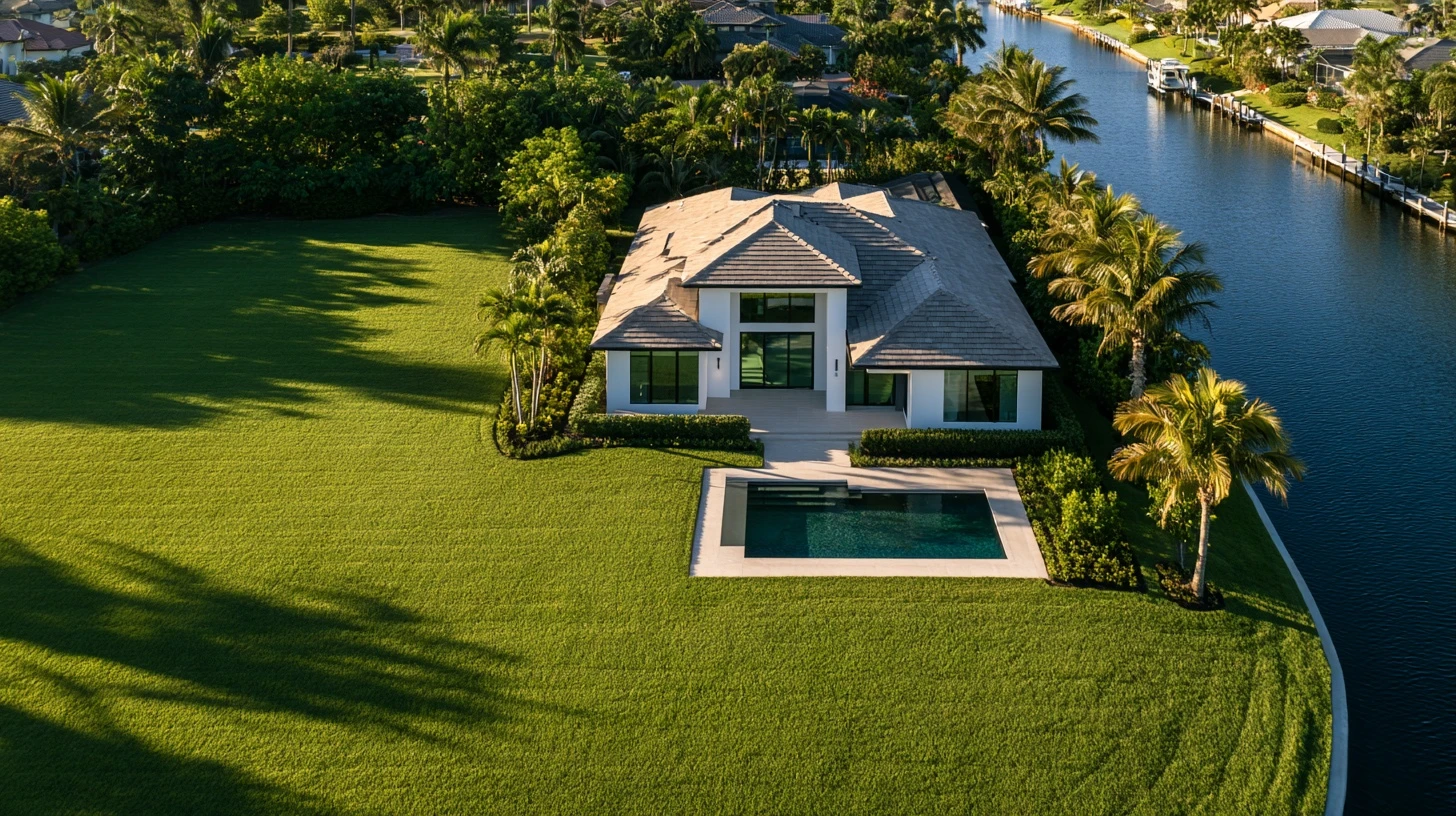
Automation: eyes on the pool from a thousand miles away
In most neighborhoods, automation is sold as comfort. In Park Shore it earns its keep as instrumentation. A modern system reports whether the pump ran, what the water temperature is doing, whether the salt cell or feeder is keeping up, and it does that to a phone in Ohio just as readily as to one on Park Shore Drive.
The value shows up in the gap between May and November. A pump that trips in May on a monitored pool is a notification, a phone call and a repair visit. The same trip on an unmonitored pool is six months of still water in a Gulf summer, and what that does to a finish and a filtration system is the expensive version of the story. An automation installation sized for a seasonal house is how you catch the May version.
The vacancy pattern is not unique to this neighborhood. It stretches north through Pelican Bay and the rest of the beachfront, and we set systems up the same way there. What is specific to Park Shore is the combination: the houses that most need remote eyes are also the ones whose equipment corrodes fastest, so the fault the system catches is more likely to happen here in the first place. If the house also changes hands between renters or family through the summer, we configure access so the property manager sees what the owner sees.
Nothing in Park Shore is far from salt water.
The equipment pad: corrosion runs ahead of symptoms
Walk the equipment pads along the streets west of Crayton and you can read the Gulf on them: bloomed fasteners, seams lifting on heater cabinets, green tint on copper bonding lugs. None of those pads has stopped working. That is the point. This close to open water, pad corrosion develops well ahead of any symptom, and the fasteners and cabinet seams show it first because they are the thinnest metal in the salt.
By the time something on the pad actually quits, the corrosion is rarely confined to the part that quit. A failed blower motor sits next to a contactor that is next, inside an enclosure whose door no longer seals, on a pad whose bonding connections have quietly gone green. Replacing the one dead part on a pad in that condition is a treadmill, which is why we look at Park Shore pads as a whole rather than as a parts list.
A pad rebuild here is also the natural moment to fix what the original layout got wrong for this exposure: equipment crowded against a wall where salt air pools and nothing dries, enclosures facing the weather, bonding runs spliced instead of continuous. The pad you rebuild a few blocks from the Gulf should not be a copy of the pad that failed there.
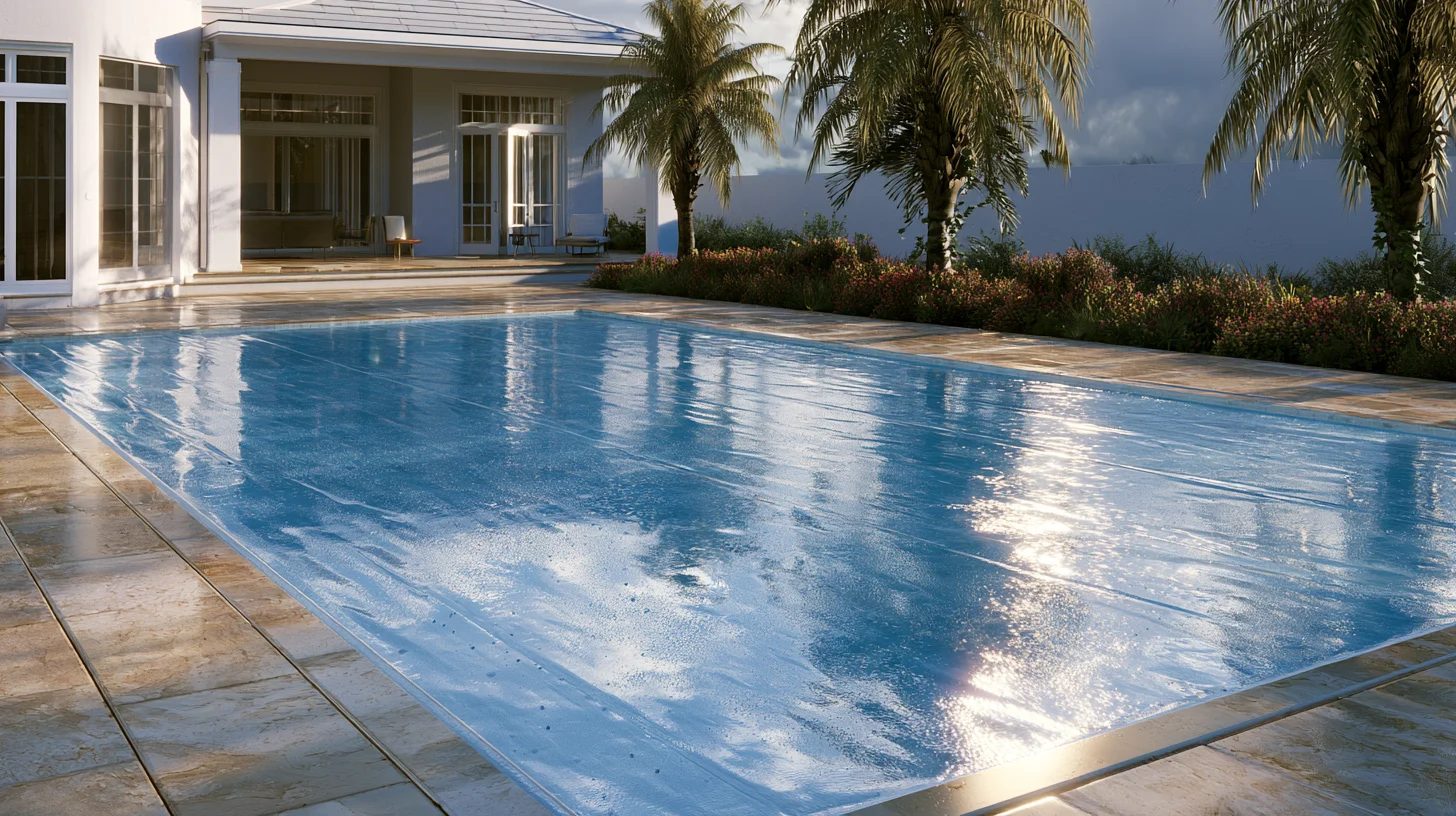
Heater repair: what fires-then-quits actually means
The most common heater complaint we hear from Park Shore is precise and repeatable: the heater lights, runs a few minutes, and shuts itself down. Owners reasonably read that as an ignition fault, since ignition is the part they can hear. It usually is not. A heater that fires then cuts out is often an exchanger fault or a flow fault, because the safeties that stop a running heater are watching temperature and flow, not the flame.
Salt air makes the exchanger the prime suspect on this street grid. The exchanger is the component where combustion heat meets pool water, its fins and tubes are the thinnest conductive metal in the appliance, and it corrodes in salt air faster than anything downstream of it. A scaled or corroded exchanger sheds heat badly, trips the high-limit, and produces exactly the fires-then-quits signature.
The seasonal rhythm matters here too. Park Shore heaters sit idle through the summer vacancy and are asked to perform the week the owner lands in November, which is precisely when a marginal exchanger announces itself. If the heater struggled at all last season, the time to have it diagnosed is before departure in April, while the fix is a scheduled job instead of a cold-pool emergency in the busiest week of the fall.
Filter repair: storm season happens while nobody is home
The Gulf summer does two things to a Park Shore filter at once. Daily storms strip leaves, seed pods and grit off the landscaping and put them in the pool, so the filter works its hardest load of the year. And the vacancy calendar means it does that work unsupervised, because storm season loads filters while nobody is home to notice the pressure gauge climbing or the debris slipping back through the returns.
Those are the two signatures worth knowing. Rising filter pressure with weak return flow means the element is loading faster than it is being cleaned. Fine debris reappearing in the pool shortly after a cleaning means the element itself has torn or a manifold has cracked, and water is bypassing the media entirely. On an occupied pool either one gets caught in a week. On an empty Park Shore pool, a torn element can bypass all summer, which is how an owner returns to cloudy water over a green-tinged finish despite the pump having run faithfully the whole time.
This is also the failure automation flags earliest, since flow and pressure are exactly what it watches. But the mechanical half still has to be right: an element that went into the summer worn, or a filter that was already undersized for the pool, turns the vacancy months into its last season. We would rather inspect it in April than replace the consequences in November.

Remodeling in Park Shore: heavier above the waterline
Put the pieces above together and a pattern emerges: what Park Shore does to a pool, it mostly does from the waterline up and at the pad. The shell below the waterline lives in balanced, treated water and ages at the ordinary Naples rate. The tile band, the coping above it and the equipment out in the salt air age faster. So a remodel scope here is typically heavier above the waterline and normal below it, which is a different project than the same-age pool inland would need.
That shape argues for bundling. Waterline tile cannot be rebuilt properly without draining the pool and working the bond beam, and once the pool is down and the beam is exposed, redoing tired coping and renewing the pad are marginal additions to a mobilization that has already happened. Doing them one at a time over three seasons means paying for the drain and the setup three times, and on a seasonal house it means three separate rounds of coordinating access from out of state.
The vacancy calendar is the other reason remodels concentrate here. The summer the owner is away is the natural construction window: the pool is not missed, the crew works unimpeded, and the owner returns to a finished project instead of a jobsite. Planning that scope in the spring, before departure, is the most useful hour a Park Shore pool owner can spend.
Plan the scope
What would your remodel actually touch?
Pick everything that bothers you about the pool. The tool shows which trades the fix involves and, more importantly, where they meet, because the seams are where split jobs fail.
Your scope so far
A new interior finish dies at the waterline. If the tile above it stays, the joint between old tile and new plaster is the first place the job shows its age.
Tile comes off with demolition that always disturbs the bond beam behind it, which is why tile-only quotes grow once the old mortar bed is open.
Coping sits on the same bond beam the tile hangs from, and the deck butts against its back edge. Three trades meet in a strip about a foot wide.
A settling deck is usually a base problem, not a paver problem. Relaying pavers over a failed base moves the same problem to next season.
The spillover is a plumbing calculation wearing a tile face. Retiling it without checking the flow behind it fixes how it looks, not how it runs.
A remodel is the cheapest moment to right-size the pump and filter. The plumbing is already open and the pool is already down.
More than one trade means sequencing decisions. What gets demolished first, what cures before what goes on top. One contract holds one company responsible for every seam above.
Service area
Park Shore and the neighborhoods around it
The marker on Park Shore is open. Click any other marker for what breaks pools there, because it is genuinely not the same everywhere in Collier County.
Where we work
Naples and Collier County, plus Marco Island, Bonita Springs and Estero. What fails is different in each, and that is what decides the work.
- Port Royal waterfront, architectural review, deck must match the house
- Old Naples pools built in the seventies and eighties, due for everything at once; original skimmers
- Aqualane Shores canal homes, deck movement near the seawall separates coping
- Park Shore Gulf Shore Boulevard salt air hits the tile line first; seasonal vacancy
- The Moorings direct salt air exposure, waterline tile failure
- Coquina Sands seventies and eighties pools; decks poured over uncompacted fill
- Royal Harbor canal homes, high water table hides leaks; coping separation
- Grey Oaks gated architectural review on anything visible from the street; spa additions
- Quail West natural stone decking matched to the house; spa additions
- Pelican Bay empty April to November; automation and heat pumps for year-round swimmers
- Lely Resort natural gas supply; builder decks aging out; year-round pump runtime
- Fiddler's Creek natural gas heater sizing; builder-era paver decks losing their base
- The Vineyards year-round swimming, heat pumps and variable speed payback
- Naples Park mature landscaping into pool plumbing; original skimmers; storm-loaded filters
- Pine Ridge Estates mature landscaping finds underground pool plumbing
- Vanderbilt Beach equipment pads corrode fast; storm season loads filters
- Golden Gate Estates well water iron staining on marcite; propane rather than natural gas
- Isles of Capri canal water table hides leaks; heavy equipment-pad corrosion
- Marco Island barrier island salt air corrodes heaters from the inside out
- Bonita Springs pool decks and patios on Southwest Florida soil
- Estero deck and patio base engineered for local soil
- Ave Maria newer east-county builds, patios and walkways matched to existing hardscape
What that usually means in Park Shore
In the order the causes above tend to drive the work, not in the order of what costs most.
- Waterline tile replacement, starting behind the tile Tile almost never fails on its own. What fails is the mortar bed behind it, and in Naples the salt air reaches that bed long before it touches the tile face. That is why tile set back onto the old bed comes loose again, and why every job here starts with what is behind the tile.
- Pool automation, for a house that sits empty half the year Plenty of Park Shore and Pelican Bay sits empty from April to November. Automation is what turns that from a risk into a non-event: the pump, the heater, the lights and the spa run on schedules you can see and change from a phone, and a fault gets noticed the day it happens rather than the day you fly back.
- Equipment pad rebuilds, so the next repair is a part swap Patching one fitting on a pad that is going is how you end up seeing the same contractor four times in two years. At some point the pad itself is the repair.
- Pool heater repair in Naples, diagnosed not replaced A heater that will not fire is usually a fault, not a funeral. Ignition, control board, pressure switch and gas supply all present the same way from the deck, and they are four different repairs.
- Pool filter repair, when it is not a chemistry problem Debris blowing back into the pool while the pressure climbs is not a water chemistry problem. It is a torn element, and no amount of balancing will fix it. This page is the triage: how to tell chemistry from circulation from media, and what Naples does to every interval printed on a filter box.
- Pool remodeling in Naples, handled as one project Most Naples pools do not fail one piece at a time. The interior finish goes, the waterline tile lets go, the coping sounds hollow, and the deck has been moving for years. Handling that as four separate trades is how a six week project turns into a season. We do it as one.
What to expect when we work in Park Shore
Most of the work we do in this neighborhood is scheduled around an absence, and we treat that as normal rather than as a complication. That means coordinating with whoever holds keys and authority while the owner is away, usually a property manager, a family member or a neighbor, and agreeing before departure on who can approve what. It also means photographic updates as the work proceeds, because an owner who cannot walk out to the pool deck should not have to take progress on faith, and a final walkthrough documented well enough that the pool's condition is verified before the return flight, not after it.
Access rules differ across the neighborhood. The condominium and association properties along Gulf Shore Boulevard have their own approval processes, contractor registration requirements, and rules about elevators, parking and working hours, and we handle that paperwork as part of the job rather than leaving it to the owner. The single-family streets west of Crayton have none of that, and work there is scheduled directly.
Either way, the sequence is the same one described above: diagnose the cause first, agree the scope with whoever is authorized to agree it, and finish before the season starts. A November return to a pool that is warm, clear and done is the entire point of doing the work in the quiet months.
ASK CLAYTON · PARK SHORE
Questions from Park Shore
These are specific to this area. The general ones are answered on the service pages.
Call 239-450-5933-
Tile keeps coming loose. Can just those pieces be re-set?
They can, and near the Gulf they tend to loosen again, because the piece that failed is the mortar bed rather than the tile. Where the bed is sound the local repair holds. Where salt has reached the bed along a run, replacing the run is the repair that lasts.
-
Is automation worth it on a house that sits empty half the year?
That is the case where it earns its keep. The value is not turning the lights on from a phone; it is knowing that the pump is running and the chemistry has not drifted while nobody is in the house. A fault caught in May is a different item than the same fault found in November.
-
What should a pre-departure check cover before we leave in April?
The filter element comes out for inspection, since a worn element will not survive storm season unattended. The heater gets run and watched, because a marginal exchanger shows itself under load. The pad gets looked over for corrosion that will progress over the summer, and the automation contacts and alerts get tested against the phone that will actually be answered up north.
-
Can the tile work be done while we are away, and who lets the crew in?
Yes, and summer is the best window for it, since the pool must be drained and nobody is missing it. Before you leave we agree on a local contact with keys and approval authority, usually your property manager. You get photographs at each stage, from stripped bond beam to finished band, and the refilled, balanced pool is documented before you fly back.
-
How fast does an equipment pad really corrode a block from the Gulf?
There is no honest fixed number, because it depends on how exposed the pad is, how the enclosures face the weather, and what the hardware is made of. What we can say from working this neighborhood is that the thin metal goes first, fasteners and cabinet seams ahead of the machinery, and that visible bloom on those parts means the process is already well along inside.
-
Is glass, porcelain or stone tile better on this exposure?
The honest answer is that the bed under the tile matters more than the tile, because the bed is what salt actually defeats here. Glass and dense porcelain are effectively inert and easy to keep. Natural stone is porous, so on a Gulf-side waterline it needs sealing and more attention. Pick the look you want from the first two, and put the money into the installation.
What is the same everywhere we work
The neighborhood changes what fails. It does not change how we work, and pretending otherwise would be the first dishonest thing on this page.
- No price before someone has looked at the pool.
- No schedule before we know what the shell needs.
- The cause gets diagnosed before the repair gets quoted.
- Ask for our license number and check it yourself at the DBPR licensee search. Ask the other quotes for theirs too.
Nearby, and similar
These share the same underlying conditions as Park Shore, which is why the work tends to look alike.
- Port Royal waterfront, architectural review, deck must match the house
- Old Naples pools built in the seventies and eighties, due for everything at once; original skimmers
- Aqualane Shores canal homes, deck movement near the seawall separates coping
- The Moorings direct salt air exposure, waterline tile failure
Talk to Clayton
Tell us what the pool in Park Shore is doing.
A sentence or two is enough. You get a call back from the person who does the work, not a dispatcher.