


Pelican Bay, Florida
Pool remodeling in Pelican Bay
A lot of Pelican Bay pools run for months with nobody in the house. That single fact drives most of what goes wrong here.
Why this area is different
The pool that runs unattended
Start with a distinction the maps do not make. The Gulf-front towers along the berm are association property, and their pools are association pools, run and remodeled by their boards. This page is not about them. It is about the single-family and villa streets behind the towers, where the pool belongs to the house, the equipment sits on a private pad, and every decision lands on one owner. That is who we work for in Pelican Bay.
Those streets have a datable history. In 1972, Coral Ridge Properties, a division of Westinghouse, partnered with the Collier family to develop 2,330 acres of beachfront land seven miles north of downtown Naples, and in 1979 Westinghouse bought out the Collier interest and the Pelican Bay Foundation was formed, per the community's own account at pelicanbay.org. The plan put single-family homes and low-rise villas in behind the beach, and the housing filled in over the decades that followed, which means the pools did too. A Pelican Bay pool is typically mature rather than old: built from the eighties through the two-thousands, often on its second or third interior finish, with equipment that tracks whichever generation last touched the pad.
The fact that actually drives the work here is simpler than any of that. A large share of these houses sit empty from April to November. A pool fault is cheap when somebody notices it the week it starts and expensive when it runs on alone, and in Pelican Bay the noticing is what is missing for seven months at a stretch. Storm season, when debris load and rain dilution are at their heaviest, falls entirely inside the empty window.
That changes the remodel itself. Equipment for a pool that is looked at daily and equipment for a pool that runs alone are two different specifications. The second rewards reliability over features, favors anything that can report its own condition, and treats remote visibility as the point of automation rather than a convenience bolted on top. A pump that has stopped should be a phone notification in May, not a discovery in November.
Salt is here too, carried off the beach into the westernmost streets, and it shows up on equipment pads and at the waterline the way it does everywhere near the Gulf. We look for it during any remodel. But it is not the headline in Pelican Bay. The headline is the seven months nobody is home. One more thing the history left behind matters to planning: the Foundation administers the community's master covenants, so exterior changes sit inside an approval layer, and that belongs in the schedule from the start rather than discovered mid-project.
April to November vacancy across much of the single-family and villa streets
Storm season falling entirely inside the empty months
Year-round swimmers who hold a water temperature for whole seasons
Pool automation for the seasonal home
Automation earns its place in Pelican Bay for one reason: it is the only part of a pool that can tell you something is wrong while you are fifteen hundred miles away. A controller at the pad that reports pump runtime and equipment faults, paired with chemistry feed equipment that holds sanitizer steady, changes the arithmetic of an empty house. Without it, a fault exists for as long as it takes someone to walk into the backyard. With it, a fault exists for as long as it takes you to read a notification and decide what to do about it.
What we install during a remodel is deliberately boring. A controller matched to the equipment actually on the pad, not the longest feature list in the catalog. Connectivity that survives a router reboot in an empty house. Alerts tuned to the failures that matter, because an owner who gets pinged for every hiccup stops reading the pings by June. The goal is that you can catch a problem from up north before it turns into a bigger one, then decide calmly whether it warrants a service visit now or attention when you land in November.
If your pool runs seven unattended months a year, this is the first line on the remodel scope, not the last. Everything else on this page works better when the equipment can report on itself.

Heat pumps for the year-round swimmers
Pelican Bay has a second kind of owner: the household that is here most of the year and swims straight through the winter. For them the heater question is not about recovery speed, it is about what it takes to hold a setpoint for months. A heat pump moves heat out of the Naples air rather than generating it by burning fuel, which is why it is the efficient choice for keeping water at a steady temperature through a mild winter. Gas still wins when the job is bringing a cold pool up fast for a weekend. For a pool held warm from December to March, the heat pump is the natural fit.
Sizing is where these projects go right or wrong. What matters is holding a temperature all winter, sized to your volume and usage: the pool's actual gallons, whether a screen enclosure or open exposure is losing heat overnight, and how warm you genuinely keep the water. An undersized unit runs continuously through every cold snap and still loses ground, which is how efficient equipment ends up with an inefficient reputation. Sized honestly, it just quietly holds.
Start with a distinction the maps do not make.
Filters through a storm season nobody sees
June through November is when Southwest Florida drops the most debris into a pool, and in Pelican Bay it is exactly the stretch when nobody is watching the pressure gauge. A filter loading up announces itself as rising pressure and falling flow. A filter that has torn announces itself the other way: pressure stays low and fine debris comes back through the returns. Both signatures develop quietly over a summer, and both are trivial to catch when someone reads the gauge weekly.
The re-opening pattern we see is consistent. An owner returns in November to cloudy water or a dusting of fines settled on the floor, and the cause turns out to be a cartridge that gave up in July. Because storm season loads filters while nobody is present, the honest fix happens before departure: pull and inspect the elements rather than assuming them, replace anything marginal even if it has a little life left, and set the automation to flag a pressure excursion. A filter element is a small purchase. Four months of unfiltered circulation is a resurfacing conversation.

A pump for a pool that runs alone
The pump is the single point of failure in an unattended pool. When it stops, circulation stops, and with it filtration and sanitizer distribution. In an occupied house that is a bad week. In an empty one it can be an entire summer, and what waits at the other end is staining, scale and sometimes an interior finish that a working pump would have protected.
So the specification changes. For these streets we favor a pump specified for a pool that runs unwatched: proven reliability ahead of feature count, a motor that talks to the controller so a stoppage becomes an alert instead of a secret, and priming behavior that recovers gracefully after a power blink rather than sitting dry and cooking its seal. Storm season delivers exactly those blinks, several times a summer. A pump that loses prime in an empty house and keeps trying to run dry is how a routine replacement becomes a bigger repair.
None of that costs much more than the alternative. It is mostly a matter of choosing for the actual operating condition, which here is solitude.
Leaks that get a seven-month head start
Most pool leaks announce themselves slowly, and an occupied house catches the announcement: the level drops faster than evaporation explains, or the autofill runs more than it used to. In an empty Pelican Bay house the autofill quietly covers for the leak all summer. The level never visibly drops, the pool looks fine on a camera, and the first real evidence is a water bill or a soft spot in the ground that has had since spring to develop.
That is why a slow leak that ran unattended since May tends to present as a bigger finding here than the same leak would in a house where someone is home. The detection work itself is the same careful sequence as anywhere: isolate the shell from the plumbing, pressure-test the lines, dye-test the suspect fittings. What is local is the timing advice. Test before you leave rather than after you return, and if the automation can watch autofill run time, have it do so. Fill frequency is the one signal a leak cannot hide from.
Remodeling on a seasonal calendar
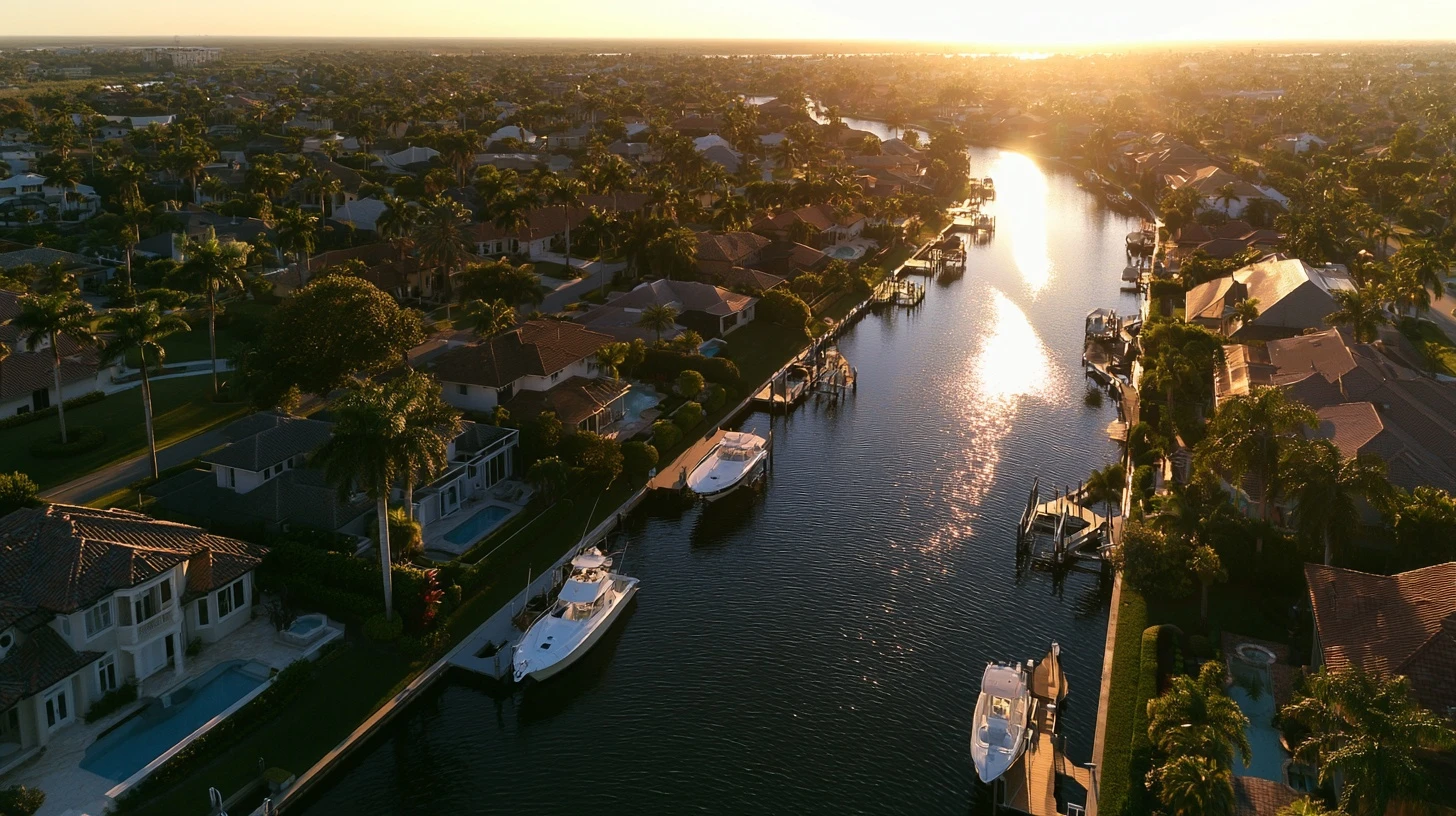
A full remodel in Pelican Bay is less about the finish palette than about the calendar. The pattern that works is one project, one schedule, timed to when you are here: scope agreed in person during the months you are in the house, the Foundation's approval layer engaged early enough that it never blocks the start, and the messy middle of the work placed where it collides with neither your occupancy nor the worst of storm season. Decisions about finish, tile and equipment go better made standing at the pool than by photograph from another time zone.
The contrast with our work in The Vineyards makes the point. Same services, opposite rhythm: those houses are lived in year-round, so remodels there are scheduled around daily use of the pool. In Pelican Bay we are usually scheduling around absence. The remodel that goes well is the one that treats your travel dates as fixed constraints from the first conversation. Tell us the dates. The rest of the plan hangs off them.
Plan the scope
What would your remodel actually touch?
Pick everything that bothers you about the pool. The tool shows which trades the fix involves and, more importantly, where they meet, because the seams are where split jobs fail.
Your scope so far
A new interior finish dies at the waterline. If the tile above it stays, the joint between old tile and new plaster is the first place the job shows its age.
Tile comes off with demolition that always disturbs the bond beam behind it, which is why tile-only quotes grow once the old mortar bed is open.
Coping sits on the same bond beam the tile hangs from, and the deck butts against its back edge. Three trades meet in a strip about a foot wide.
A settling deck is usually a base problem, not a paver problem. Relaying pavers over a failed base moves the same problem to next season.
The spillover is a plumbing calculation wearing a tile face. Retiling it without checking the flow behind it fixes how it looks, not how it runs.
A remodel is the cheapest moment to right-size the pump and filter. The plumbing is already open and the pool is already down.
More than one trade means sequencing decisions. What gets demolished first, what cures before what goes on top. One contract holds one company responsible for every seam above.
Service area
Pelican Bay and the neighborhoods around it
The marker on Pelican Bay is open. Click any other marker for what breaks pools there, because it is genuinely not the same everywhere in Collier County.
Where we work
Naples and Collier County, plus Marco Island, Bonita Springs and Estero. What fails is different in each, and that is what decides the work.
- Port Royal waterfront, architectural review, deck must match the house
- Old Naples pools built in the seventies and eighties, due for everything at once; original skimmers
- Aqualane Shores canal homes, deck movement near the seawall separates coping
- Park Shore Gulf Shore Boulevard salt air hits the tile line first; seasonal vacancy
- The Moorings direct salt air exposure, waterline tile failure
- Coquina Sands seventies and eighties pools; decks poured over uncompacted fill
- Royal Harbor canal homes, high water table hides leaks; coping separation
- Grey Oaks gated architectural review on anything visible from the street; spa additions
- Quail West natural stone decking matched to the house; spa additions
- Pelican Bay empty April to November; automation and heat pumps for year-round swimmers
- Lely Resort natural gas supply; builder decks aging out; year-round pump runtime
- Fiddler's Creek natural gas heater sizing; builder-era paver decks losing their base
- The Vineyards year-round swimming, heat pumps and variable speed payback
- Naples Park mature landscaping into pool plumbing; original skimmers; storm-loaded filters
- Pine Ridge Estates mature landscaping finds underground pool plumbing
- Vanderbilt Beach equipment pads corrode fast; storm season loads filters
- Golden Gate Estates well water iron staining on marcite; propane rather than natural gas
- Isles of Capri canal water table hides leaks; heavy equipment-pad corrosion
- Marco Island barrier island salt air corrodes heaters from the inside out
- Bonita Springs pool decks and patios on Southwest Florida soil
- Estero deck and patio base engineered for local soil
- Ave Maria newer east-county builds, patios and walkways matched to existing hardscape
What that usually means in Pelican Bay
In the order the causes above tend to drive the work, not in the order of what costs most.
- Pool automation, for a house that sits empty half the year Plenty of Park Shore and Pelican Bay sits empty from April to November. Automation is what turns that from a risk into a non-event: the pump, the heater, the lights and the spa run on schedules you can see and change from a phone, and a fault gets noticed the day it happens rather than the day you fly back.
- Pool heat pumps, which genuinely work in this climate Heat pumps have a mixed reputation nationally and a good one here, for one reason: they move warmth out of the air, and Naples air stays warm enough to keep giving it up through most of the winter.
- Pool filter repair, when it is not a chemistry problem Debris blowing back into the pool while the pressure climbs is not a water chemistry problem. It is a torn element, and no amount of balancing will fix it. This page is the triage: how to tell chemistry from circulation from media, and what Naples does to every interval printed on a filter box.
- Pool pump replacement in Naples, programmed not just installed A variable speed pump left running one fixed speed is an expensive single speed pump. The saving is in the programming, and the programming is the part that gets skipped.
- Pool leak detection in Naples, with a finding before a shovel A leak on a canal lot rarely shows itself. The ground takes the water, nothing goes soggy, and the first sign is the bill or the auto-fill running more than it used to.
- Pool remodeling in Naples, handled as one project Most Naples pools do not fail one piece at a time. The interior finish goes, the waterline tile lets go, the coping sounds hollow, and the deck has been moving for years. Handling that as four separate trades is how a six week project turns into a season. We do it as one.
What to expect in Pelican Bay
The Pelican Bay Foundation administers the community's master covenants, and exterior changes sit inside an approval layer. We say that plainly rather than pretending to speak for the Foundation: what needs review, and on what timeline, is theirs to define, and your own association may review changes as well. Our part is practical. Drawings and material specifications in a form a reviewer can act on, and a start date that assumes the review takes real time rather than hoping it will not.
Scheduling follows occupancy. The shoulder months, when owners have just arrived or have not yet left, are when scoping visits and in-person decisions happen, and they book up accordingly. If you want work finished before an April departure, or complete before a November return, the conversation should start a season earlier than feels necessary.
Storm season is a working constraint, not a talking point. Equipment-pad work and anything involving open plumbing gets planned around the likelihood of summer downpours. And if work will proceed while you are away, we agree up front how progress is documented and how decisions get made remotely, so the project never stalls waiting on an answer that needs you standing in the yard.
ASK CLAYTON · PELICAN BAY
Questions from Pelican Bay
These are specific to this area. The general ones are answered on the service pages.
Call 239-450-5933-
We leave in April and come back in November. What should be done to the pool before we go?
The valuable items are unglamorous. Confirm the pump and timer are doing what they are set to do, pull and inspect the filter elements rather than assuming them, balance the water properly, check for leaks while there is still time to fix one, and arrange for someone to lay eyes on the pool regularly. Automation adds remote visibility on top of all that. It does not replace the pre-departure check.
-
Would a heat pump actually hold the pool warm through a Naples winter?
Yes, if it is sized to the job. Naples winters are mild, and a heat pump holding a steady setpoint works with the climate rather than against it. The failures we see are sizing failures: a unit too small for the volume runs constantly through every cold snap and still loses ground. Sized to your gallons, enclosure and target temperature, holding warmth all winter is exactly what heat pumps do well.
-
Who watches the pool while we are north?
Honestly, often nobody, which is the problem this whole page circles. Automation watches the equipment and reports runtime and faults to your phone. A regular service visit watches the water itself. The strongest arrangement is both, because the controller notices the day a pump stops, and a person notices the things sensors cannot, like a torn screen panel lying on the pool floor.
-
Twice we have come home to a problem that clearly started months earlier. How do we make that stop?
Change what the equipment can tell you. Add a controller that reports runtime and faults remotely, put the pump and filter on it, and set alerts you will actually read. Then close the loop before each departure with a filter inspection, a leak check, balanced chemistry and a verified autofill. Problems will still start while you are away. The difference is they get found in days instead of months.
-
Do we need approval before remodeling a pool in Pelican Bay?
Exterior changes here sit inside the Foundation's covenant approval layer, and some associations within the community review changes as well. What needs review and on what timeline is theirs to say, so ask before assuming either way. Our part is to supply drawings and specifications in a form reviewers can act on, and to build the review period into the schedule from day one.
-
What does a pool remodel cost in Pelican Bay?
It depends on drivers, not on the neighborhood name. The scope of the interior finish, whether tile and coping are included, the condition of the equipment pad, what automation and heating are being added, and how much of the plumbing is worth renewing while things are open. A scoping visit turns those drivers into a written number. Guessing before that serves nobody.
What is the same everywhere we work
The neighborhood changes what fails. It does not change how we work, and pretending otherwise would be the first dishonest thing on this page.
- No price before someone has looked at the pool.
- No schedule before we know what the shell needs.
- The cause gets diagnosed before the repair gets quoted.
- Ask for our license number and check it yourself at the DBPR licensee search. Ask the other quotes for theirs too.
Nearby, and similar
These share the same underlying conditions as Pelican Bay, which is why the work tends to look alike.
- Grey Oaks gated architectural review on anything visible from the street; spa additions
- Quail West natural stone decking matched to the house; spa additions
- Lely Resort natural gas supply; builder decks aging out; year-round pump runtime
- Fiddler's Creek natural gas heater sizing; builder-era paver decks losing their base
Talk to Clayton
Tell us what the pool in Pelican Bay is doing.
A sentence or two is enough. You get a call back from the person who does the work, not a dispatcher.