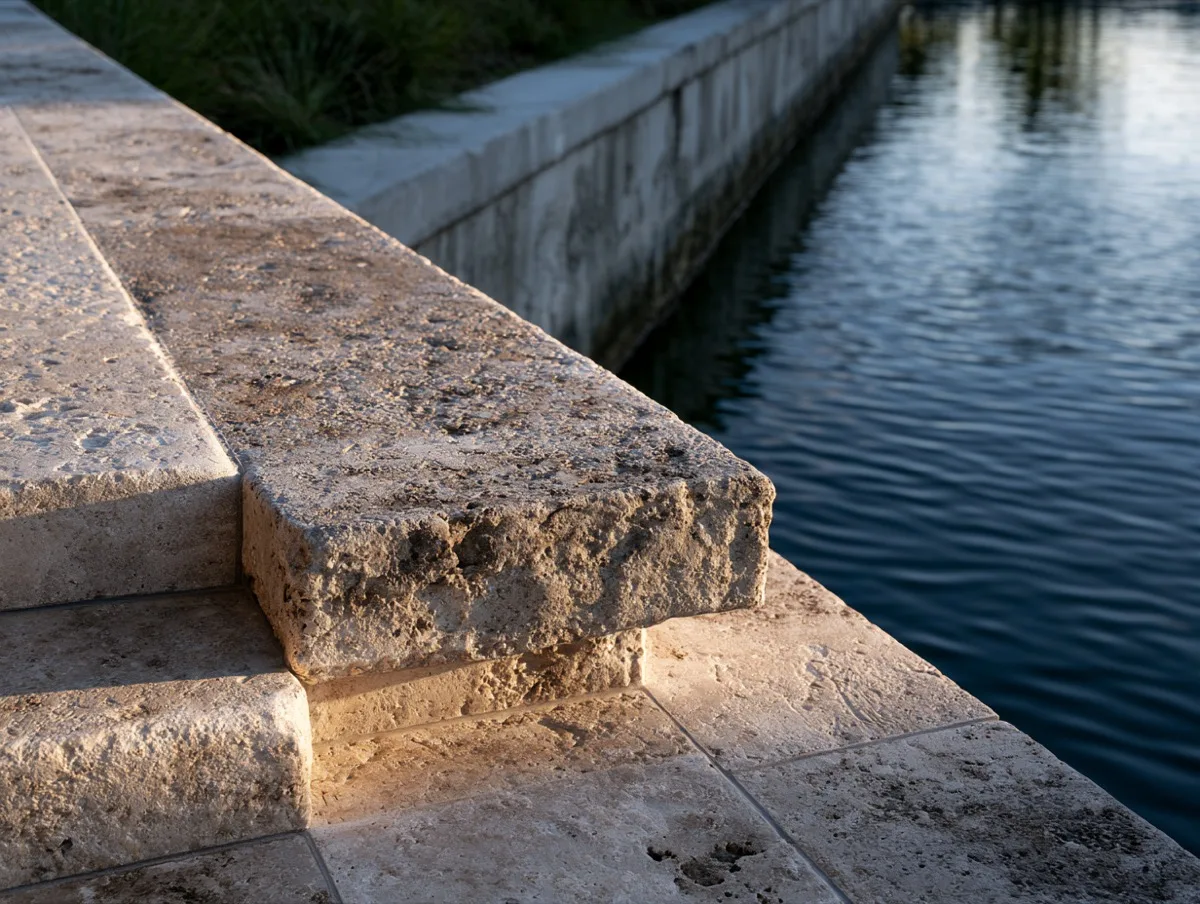


Royal Harbor, Florida
Pool remodeling in Royal Harbor
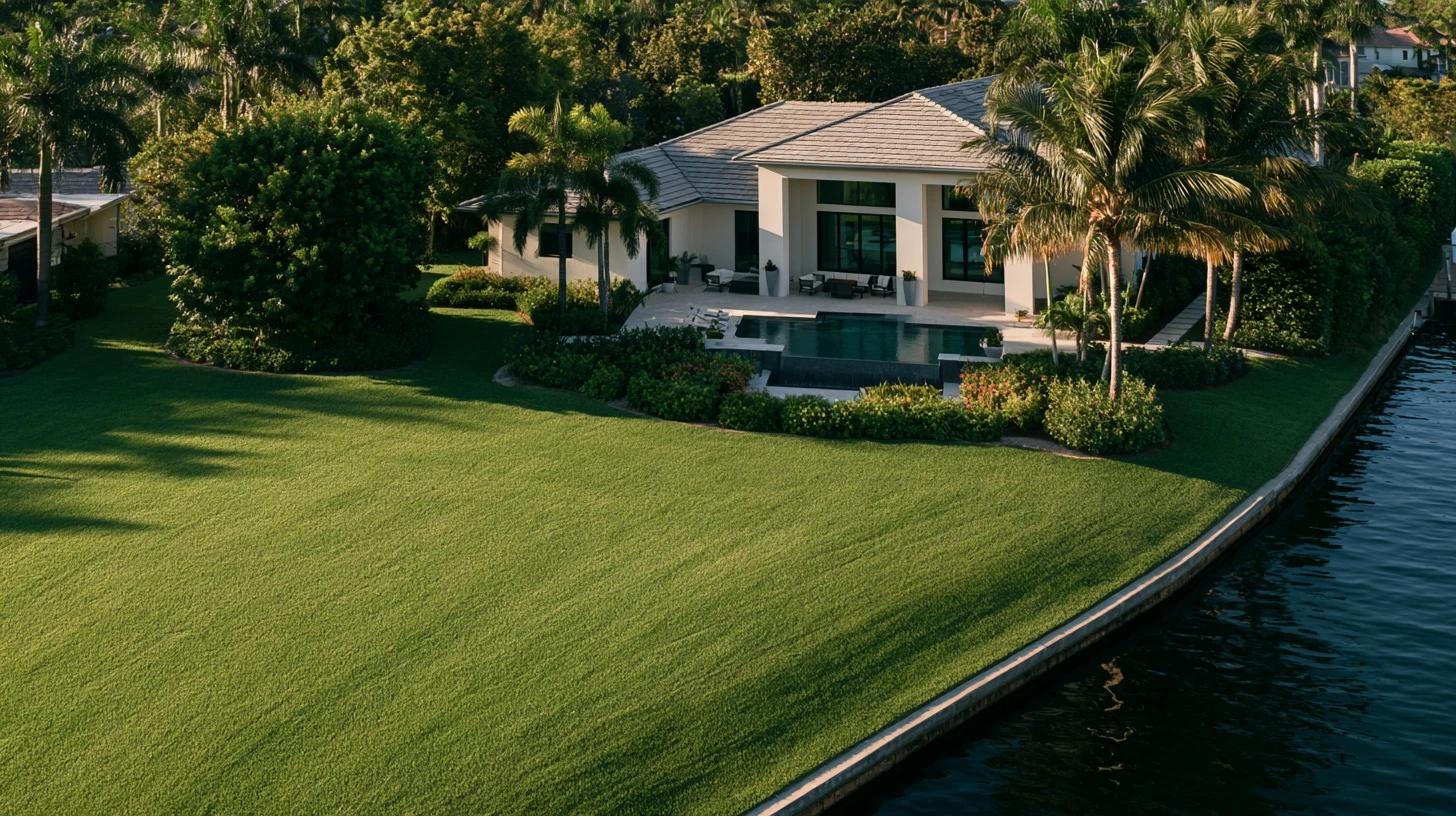
Royal Harbor sits on dredged land between Naples Bay and its canals. A pool here holds water in while the ground pushes water back, and nearly everything unusual about pool work in this neighborhood follows from that.
Why this area is different
Water on both sides of the shell
A swimming pool is a structure built to hold water in. On most lots, that is the entire job. On a Royal Harbor lot the ground is running the same project in reverse: the water table sits close beneath the deck, the canal is a short walk from the back door, and groundwater bears on the outside of the shell for much of the year. The pool is a wall with water on both sides of it. Hold that picture, and the three problems that define pool work in this neighborhood stop being mysteries and start being predictable.
This condition is not an accident of geography. It is how the neighborhood was built. Royal Harbor is dredge and fill land, cut and raised from the east shore of Naples Bay, with the first houses going up in the early 1960s. The homesites were made from the bay margin, and the water that was there first never left. It sits beneath the fill, a few feet down, connected to the canal and moved by tide and rain. Every pool here was built down into that, and every drained shell, opened trench, and returning crack answers to it.
The first consequence is that leaks go quiet. On an inland lot a leaking pool eventually confesses somewhere: a soft stripe of lawn, a stain that creeps across the deck, a patch of ground that never dries. Here the escaping water drops into ground already carrying water, and the ground swallows the evidence. Nothing at the surface changes. The level falls, an autofill can mask even that, and the water bill climbs while the yard looks immaculate. Finding a Royal Harbor leak means measuring and testing rather than walking and looking, because there is nothing to look at.
The second consequence is that a crack here can have an outside cause. A crack that reopens through fresh plaster is the shell reporting that whatever made it is still acting. On this side of the bay, one candidate that inland pools never face is the groundwater itself, loading the outside of the wall while all the patching happens on the inside. Cosmetic repair over a pressure driven crack is paint on a moving joint. It has nothing to resist the load with, so it opens again, usually along the same line, usually within a season or two.
The third consequence is the serious one. An empty concrete shell is, structurally, a boat, and boats float. Drain a pool here when the water table is high, with nothing relieving the pressure underneath, and groundwater can lift the shell, shift it, or break the floor. A floated pool is a rebuild, not a repair. This is why draining the pool to take a look is not a cautious first step in Royal Harbor. It can be the most expensive sentence in the whole project. Every drain in this neighborhood is a decision made with the groundwater, never in spite of it.
Saturated ground swallowing the surface evidence a leak would leave anywhere else
Groundwater load on the outside of the shell as a live cause of returning cracks
Drains, and the empty-shell windows inside remodels, planned around the water table
Leak detection when the yard will not help
Most leak calls from Royal Harbor start the same way. The level keeps dropping, the autofill runs more than it used to, or the water bill jumped, and the yard looks perfect. That is exactly what a leak on saturated ground looks like, so the first step is arithmetic rather than excavation. How much loss is honest evaporation depends on the month: the modeled South Florida rate runs about 0.095 inches a day in December to about 0.184 inches a day in May (SFWMD, 2010). Beyond the month you are actually in, it stops being weather. A bucket test on the steps separates the two in about a day, and it costs nothing.
Once real loss is confirmed, the investigation is instrumented from start to finish. The plumbing runs are isolated and pressure tested one at a time, because a line that will not hold pressure has already told you where the water is going without a single paver moving. The shell is dye tested at the usual suspects: the skimmer throat, the light niche, fittings, steps, and any visible crack. On a lot where the ground gives nothing away, the instruments are the entire investigation, and they are more precise than surface evidence ever was.
What we will not do is guess with a shovel. Our leak detection work in Naples ends with a written finding before we dig: what is leaking, where, how it was confirmed, and what the repair involves, all stated before anything opens. On dredged land, every trench dug in the wrong place meets groundwater and costs real money. The written finding is what keeps the digging small.

Crack and shell repair, cause first
A structural crack is an effect. Somewhere there is a load the shell could not carry, and in Royal Harbor the list of candidates includes one inland pools never contend with: water pressing on the outside of the wall. So before any repair, that question gets answered. Was this settlement in the fill, pressure from the ground, or trouble at the beam? The answer changes the repair, and skipping the question is how the same crack ends up patched three times by three different companies.
The repair itself is structural, not cosmetic. On our crack and shell work the order is fixed: identify the cause first, then staple stitch and seal. The crack is opened, staples are set across it so the two sides of the shell are mechanically tied back into one structure, and hydraulic sealing handles the water moving through and around the line. Plaster then goes on over a repair, never instead of one.
And if the cause was pressure, the plan addresses pressure, because stitching a crack while leaving the load in place just relocates the failure. That can mean relief measures at the shell, and it always means the drain required for the repair is planned around the water table rather than around the calendar. In this neighborhood the repair and the drain plan are the same conversation.
A swimming pool is a structure built to hold water in.
Coping repairs near the seawall
Royal Harbor decks end at seawalls, and ground near a seawall can move enough to disturb the pool's edge. When coping loosens, or drums under a knuckle tap, the stone is the symptom and the bond beam beneath it is the question. Our coping replacement follows one rule worth holding any contractor to: the beam is repaired before the stone goes back. Resetting coping over a compromised beam is a repair with a countdown running on it.
On this page, coping is deliberately the smaller item. Here, edge movement is one entry on a longer list of things wet ground does to a pool, and it rarely arrives alone. When coping trouble shows up alongside unexplained water loss or a crack that keeps returning, we look below the waterline first, because in Royal Harbor one cause frequently explains all of it.

Remodeling starts with the drain plan
Every remodel eventually needs the pool empty: for the new finish, for tile, for structural work at the beam. In most of Collier County that is a scheduling detail. In Royal Harbor it is engineering, which is why our remodels here run in what looks like reverse order: the drain plan comes before the design decisions. When can this shell safely be emptied, how long can it stay open, what relief keeps groundwater from lifting it, and what happens if a week of storms raises the table mid-project.
That plan shapes everything downstream of it. It compresses the empty window, so finish, tile, and any shell repairs are sequenced to happen inside one drain rather than two. It picks the season, because a drain planned for the dry months is a different risk than one improvised in September. And it protects the shell you already own, which is the most expensive single component in any remodel, before a dollar goes to the parts you can see.
None of this makes a Royal Harbor remodel slower or smaller. It makes it deliberate. The pools that get into trouble on these streets are the ones remodeled as if they sat on dry inland ground, drained on a whim and left standing open to the weather.
Plumbing repair below the water table
Much of a pool's plumbing on these lots runs at or below the level where groundwater sits, and that changes both the diagnosis and the repair. A failed suction line below the table can pull groundwater in rather than visibly losing pool water out, so the symptom is air in the pump basket, or a pressure test that will not hold, rather than any puddle. And every trench opened to reach a line starts taking on water while the work happens, which punishes exploratory digging brutally.
So our plumbing repairs here keep a strict shape: isolate the failed line and open the smallest possible area. Isolation testing pins the failure to one run before anything is disturbed. The excavation exposes that spot and nothing else, dewatering keeps the trench workable, and the repaired line is pressure tested again before the hole closes. Verifying before backfill matters everywhere we work. It matters double where reopening a trench means fighting groundwater a second time.
One more habit belongs on the record. The equipment pad gets ruled out before the ground is ever suspected. Valves, the pump seal, and the filter connections can lose water in plain sight, and checking them takes minutes. Underground work is never the first resort in Royal Harbor, precisely because underground here means wet. When the dig does happen, it happens once, at a located spot, with the finding already in writing.
Resurfacing and the empty-shell window
A resurface is the longest a pool ever stands empty on purpose: strip, prep, apply, cure. On this side of the bay, an empty shell and a high water table have to be managed together for every one of those days. The groundwater level is established before stripping begins, relief keeps pressure from building under the floor while the shell is open, and the schedule never leaves an empty pool waiting through a wet week for the next crew.
The start-up afterward earns equal attention. New finish cures under water, on a chemistry schedule, and a shell that has been standing open on damp ground gets filled and balanced promptly rather than whenever it is convenient. The fill is the finish's first weeks of life, and it is also what puts weight back into the shell and retires the hydrostatic question. Done in order, a Royal Harbor resurface is routine work. Done out of order, this neighborhood punishes it harder than anywhere inland.
Plan the scope
What would your remodel actually touch?
Pick everything that bothers you about the pool. The tool shows which trades the fix involves and, more importantly, where they meet, because the seams are where split jobs fail.
Your scope so far
A new interior finish dies at the waterline. If the tile above it stays, the joint between old tile and new plaster is the first place the job shows its age.
Tile comes off with demolition that always disturbs the bond beam behind it, which is why tile-only quotes grow once the old mortar bed is open.
Coping sits on the same bond beam the tile hangs from, and the deck butts against its back edge. Three trades meet in a strip about a foot wide.
A settling deck is usually a base problem, not a paver problem. Relaying pavers over a failed base moves the same problem to next season.
The spillover is a plumbing calculation wearing a tile face. Retiling it without checking the flow behind it fixes how it looks, not how it runs.
A remodel is the cheapest moment to right-size the pump and filter. The plumbing is already open and the pool is already down.
More than one trade means sequencing decisions. What gets demolished first, what cures before what goes on top. One contract holds one company responsible for every seam above.
Service area
Royal Harbor and the neighborhoods around it
The marker on Royal Harbor is open. Click any other marker for what breaks pools there, because it is genuinely not the same everywhere in Collier County.
Where we work
Naples and Collier County, plus Marco Island, Bonita Springs and Estero. What fails is different in each, and that is what decides the work.
- Port Royal waterfront, architectural review, deck must match the house
- Old Naples pools built in the seventies and eighties, due for everything at once; original skimmers
- Aqualane Shores canal homes, deck movement near the seawall separates coping
- Park Shore Gulf Shore Boulevard salt air hits the tile line first; seasonal vacancy
- The Moorings direct salt air exposure, waterline tile failure
- Coquina Sands seventies and eighties pools; decks poured over uncompacted fill
- Royal Harbor canal homes, high water table hides leaks; coping separation
- Grey Oaks gated architectural review on anything visible from the street; spa additions
- Quail West natural stone decking matched to the house; spa additions
- Pelican Bay empty April to November; automation and heat pumps for year-round swimmers
- Lely Resort natural gas supply; builder decks aging out; year-round pump runtime
- Fiddler's Creek natural gas heater sizing; builder-era paver decks losing their base
- The Vineyards year-round swimming, heat pumps and variable speed payback
- Naples Park mature landscaping into pool plumbing; original skimmers; storm-loaded filters
- Pine Ridge Estates mature landscaping finds underground pool plumbing
- Vanderbilt Beach equipment pads corrode fast; storm season loads filters
- Golden Gate Estates well water iron staining on marcite; propane rather than natural gas
- Isles of Capri canal water table hides leaks; heavy equipment-pad corrosion
- Marco Island barrier island salt air corrodes heaters from the inside out
- Bonita Springs pool decks and patios on Southwest Florida soil
- Estero deck and patio base engineered for local soil
- Ave Maria newer east-county builds, patios and walkways matched to existing hardscape
What that usually means in Royal Harbor
In the order the causes above tend to drive the work, not in the order of what costs most.
- Pool leak detection in Naples, with a finding before a shovel A leak on a canal lot rarely shows itself. The ground takes the water, nothing goes soggy, and the first sign is the bill or the auto-fill running more than it used to.
- Structural crack repair, starting with what is causing it A crack that keeps coming back through new plaster is not a plaster problem. Something is still moving, and until that is identified the repair is just a countdown.
- Pool coping replacement, and the beam underneath it Tap along your coping. Where it sounds hollow, the problem is not the coping and it is not the mortar. It is the bond beam underneath, and setting new stone on top of it changes nothing.
- Pool remodeling in Naples, handled as one project Most Naples pools do not fail one piece at a time. The interior finish goes, the waterline tile lets go, the coping sounds hollow, and the deck has been moving for years. Handling that as four separate trades is how a six week project turns into a season. We do it as one.
- Underground pool plumbing repair, with the smallest possible hole The cost of an underground plumbing repair is mostly the deck, not the pipe. Which is why the whole job is about finding the failed section before anything comes up, and why the crew that opens your deck should be the crew that can put it back.
- Pool resurfacing in Naples, including the part everyone skips Most resurfacing quotes cover chipping out the old surface and troweling on a new one. The part that decides whether it still looks right in ten years is the four weeks after the water goes in, and it is the part most owners are never told about.
What to expect when we work in Royal Harbor
Groundwater comes first. Before any drain gets a date, we establish where the water table sits on your lot, what the tide and recent rain are doing to it, and what relief the shell will need while it stands empty. No drain is scheduled until that answer exists, and if the answer is wait, we wait.
Leak work begins with instruments, not excavation. Pressure testing and dye testing come first, the written finding follows, and digging happens only at the located spot. On ground that hides everything, that order is not a preference. It is the only honest method available.
Canal-side staging is planned before the first truck arrives. Materials, demolition debris, and equipment stay clear of the seawall, and the job should leave no mark on the dock, the wall, or the canal. Where access is tight, the plan says so up front rather than improvising on the day.
Findings arrive in writing at each gate: what the test showed, what we recommend, and what it changes about scope or schedule. On work where the deciding facts are underground, the paper trail is how you stay in control of your own project. It is also something you can hand to a future buyer to show exactly what was done under the deck, and when.
ASK CLAYTON · ROYAL HARBOR
Questions from Royal Harbor
These are specific to this area. The general ones are answered on the service pages.
Call 239-450-5933-
Is it safe to drain the pool here?
Not without checking first. Where the water table is high, an empty shell can be pushed by groundwater pressure from outside, and that is a far worse problem than whatever the pool was drained to fix. On a Royal Harbor lot the hydrostatic situation is assessed before a drain is scheduled.
-
The same crack has come back twice. Why?
Because the cause is still acting. A crack is the shell responding to something, and patching the visible line does not remove the something. Near the water that is often hydrostatic pressure or movement in the surrounding soil, both of which are diagnosable and neither of which is fixed cosmetically.
-
How does a bucket test work when the ground here never looks dry anyway?
That is exactly why it works. The bucket test ignores the ground completely. A bucket of pool water sits on the steps, both levels are marked, and 24 hours later they are compared. Evaporation lowers both the same amount; a leak lowers only the pool. It measures the water itself, so saturated ground cannot hide anything from it.
-
We are right on a canal. Does dye testing still tell you anything?
Yes, because dye testing happens inside the pool, not in the ground. With the pump off and the water still, dye is released beside a suspect point, and if water is escaping there, the dye visibly pulls toward it. The canal changes what happens to water after it leaves the shell. It has no effect on watching where it leaves.
-
Can a leak under the deck be fixed without tearing up the whole deck?
Usually, and that is the point of locating before digging. Once testing pins the failure to one spot on one line, the deck is opened just there, the repair is made and pressure tested, and that small section is restored. The decks that get torn up are the ones where digging started before the leak was found.
-
The pool level seems to move with the tide. Is that possible?
Indirectly, yes. The canals are tidal, and the water table under a dredged lot is connected to them, so the groundwater rises and falls a little with the bay. That matters most for drains and open trenches, which get planned around it. If the level inside the pool is visibly swinging day to day, that is worth testing, because tide alone rarely explains real loss.
-
What does hydrostatic relief actually look like during a resurface?
It is the managed handling of groundwater while the shell is empty. Depending on the lot, that can mean opening the floor's relief point so water enters harmlessly instead of pushing, dewatering beside the shell, and monitoring levels through the empty window. The shell stays safe, the new finish goes on, and the refill puts everything back to normal.
What is the same everywhere we work
The neighborhood changes what fails. It does not change how we work, and pretending otherwise would be the first dishonest thing on this page.
- No price before someone has looked at the pool.
- No schedule before we know what the shell needs.
- The cause gets diagnosed before the repair gets quoted.
- Ask for our license number and check it yourself at the DBPR licensee search. Ask the other quotes for theirs too.
Nearby, and similar
These share the same underlying conditions as Royal Harbor, which is why the work tends to look alike.
- Port Royal waterfront, architectural review, deck must match the house
- Old Naples pools built in the seventies and eighties, due for everything at once; original skimmers
- Aqualane Shores canal homes, deck movement near the seawall separates coping
- Park Shore Gulf Shore Boulevard salt air hits the tile line first; seasonal vacancy
Talk to Clayton
Tell us what the pool in Royal Harbor is doing.
A sentence or two is enough. You get a call back from the person who does the work, not a dispatcher.