

NAPLES, FL · SHELL REPAIR
Structural crack repair, starting with what is causing it
A crack that keeps coming back through new plaster is not a plaster problem. Something is still moving, and until that is identified the repair is just a countdown.
In short
What this work actually involves
Structural crack and shell repair addresses cracking in the concrete shell of a pool, as distinct from cosmetic cracking in the surface finish. It involves identifying the cause, then repairing the shell by staple stitching, epoxy injection and hydraulic sealing rather than covering the line. Splash Pools LLC is a Naples, Florida pool contractor owned by Clayton Waggoner, serving Naples, Collier County, Marco Island, Bonita Springs and Estero.
Part one
Is it a structural crack or just the surface?
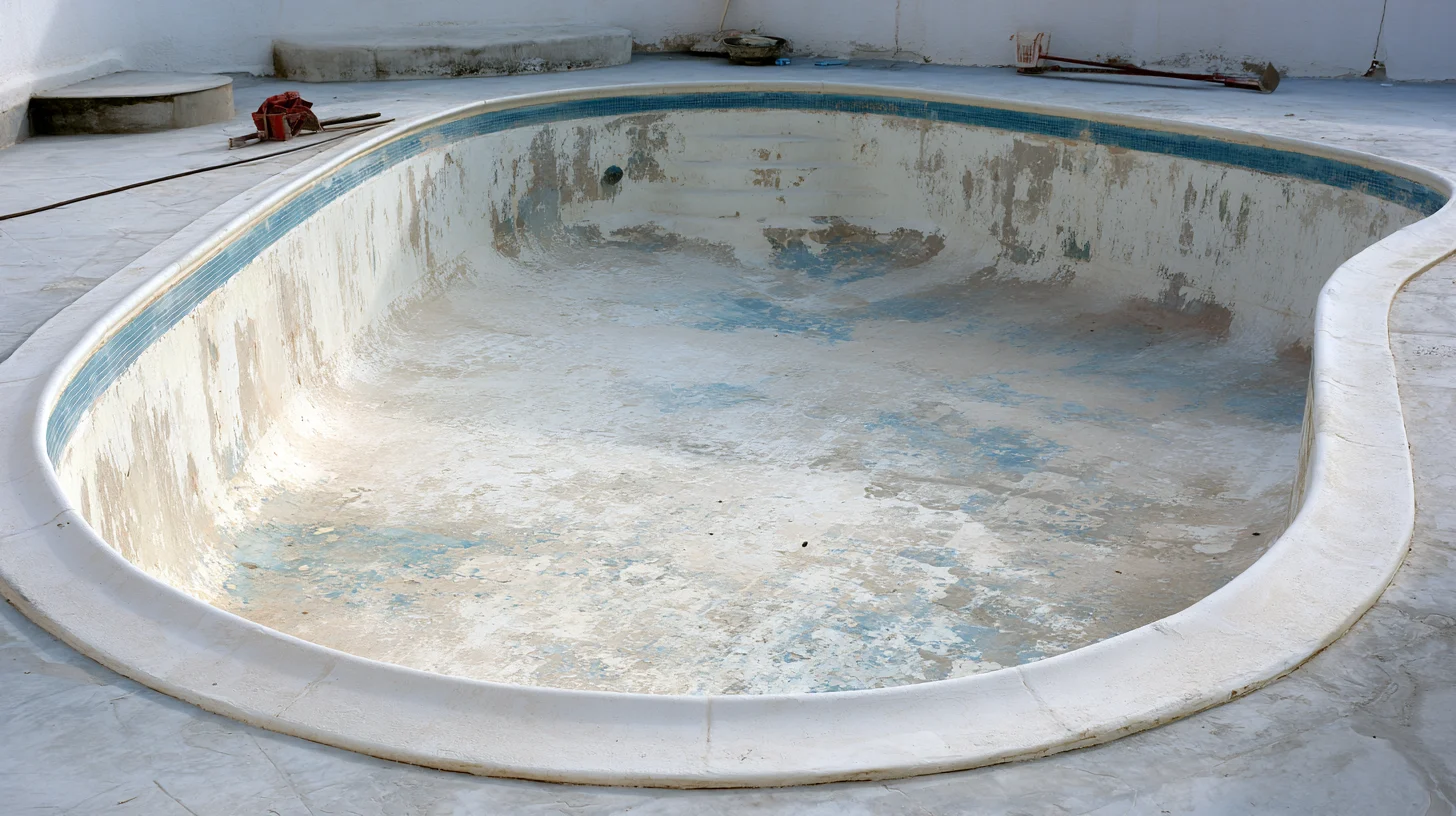
Surface crazing is fine hairline patterning in the finish and is largely cosmetic. A structural crack runs through the shell, often reappears after resurfacing, frequently loses water, and commonly runs in a consistent direction rather than a random web. The two need completely different work, which is why this question comes before any quote.
The tell most owners notice is repetition. A crack that has been patched twice and returned in the same place is telling you the cause was never addressed. The finish failed because it was stuck to something that moved, and new finish stuck to the same something will fail the same way.
Water loss is the other signal. A structural crack that goes through the shell will usually show up in the water level too, which is where leak detection and shell repair overlap. If the pool is dropping faster than evaporation explains for the month you are in, run the bucket test on our pool leak detection page before anyone quotes you for resurfacing. A crack that leaks has gone through the shell by definition.
Direction matters too. Crazing spreads as a random web across the surface, because shrinkage pulls evenly in every direction as plaster cures. A crack running consistently in one line usually reflects a force acting in one direction, which is a much more useful diagnostic than the crack width. Wide and shallow is often cosmetic. Narrow and directional is often not.
You can narrow this down yourself before calling anyone. We wrote up the full self-diagnosis, including the four checks that separate a finish problem from a shell problem, in our guide to whether a pool crack is structural or cosmetic. Follow the crack to its ends, check the water level, ask whether it has been repaired before, and tap the plaster beside it. The short self-check further down this page runs the same logic in about a minute.
Part two
Why do pools crack near Naples Bay and the Gordon River?
Hydrostatic pressure. Close to the water those pools sit near enough to the water table that groundwater exerts real force on the shell from outside. That is a load the structure was not designed to take indefinitely, and it becomes the actual cause of cracking rather than a contributing factor. The Florida Building Code treats that groundwater as a design condition.
This is not a contractor theory, and you do not have to take our word for it. The 2023 Florida Building Code, Residential, Section R4501.21.4 requires that in areas of anticipated water table an approved hydrostatic relief device shall be installed. Read that again slowly: the state building code treats groundwater as a force strong enough to act on a pool structure, and requires a pressure relief valve in the floor to manage it. The only pools exempted are liner pools, because they have no structural bottom for the pressure to lift. When groundwater near the bay is named as the cause of a crack, that is the code talking, not an excuse.
It is also why draining a pool in these areas is genuinely risky. A full pool resists the outside pressure with the weight of its own water. Empty the shell and that resistance is gone, and the shell can crack or float out of the ground entirely. A floated pool is a rebuild, not a repair. This is the single most important thing to know before letting anyone drain a pool near the water in Naples.
On canal lots there is a second mechanism working alongside the first: ground movement near a seawall. The deck settles toward the water, the settling deck loads the bond beam, and the shell edge picks up stress it was never designed to carry. We see the pattern most on canal lots in Royal Harbor and in Aqualane Shores canal homes, where the pools sit between a high water table below and a working seawall beside. The two mechanisms often appear together, and they leave different fingerprints.
Identifying which of these is at work changes the repair entirely. Hydrostatic loading wants the relief path checked and the shell stitched and sealed against water movement. Seawall-side movement wants the edge dealt with, or the shell repair inherits the same load that cracked it. That is why the diagnosis comes before the quote rather than after.
Part three
The crack that keeps coming back
A crack that returns through new plaster in the same place is not a failed repair. It is a successful report: the cause is still acting, and until it is identified every patch is a countdown. Two returns in the same spot near the river points at hydrostatic loading. Near a seawall it points at deck movement loading the shell edge.
This is the most common call we get about cracks, and it usually arrives with some frustration attached. The pool was resurfaced, or the crack was patched, sometimes twice, and the same line is back. The natural conclusion is that the work was done badly. Usually it was not. The plaster did exactly what plaster does: it followed the shell it was bonded to, and the shell is still responding to a force nobody ever looked for.
Read the crack as a report and it becomes useful. Where it returns tells you where the force is concentrated. When it returns tells you something about the cycle, because a crack that reopens in the wet season is pointing at groundwater, while one that tracks the deck is pointing at movement along the edge. What it does in between tells you whether the movement is ongoing or seasonal. None of that information survives being plastered over.
So the diagnosis follows a sequence rather than a glance. The plumbing lines are pressure tested first, because a pressurized line leaking near the shell can mimic and even cause structural symptoms, and it has to be ruled in or out before the shell takes the blame. The crack itself is dye tested with the water still, which answers whether water is moving through it and settles the structural question directly. Then the whole edge is read: deck, coping, tile, and how they sit relative to the waterline.
You get the finding in writing before you get a number. That order is the point. A written finding tells you what was tested, what was ruled out and what the crack is actually doing, and it is yours to keep or to take to another contractor for a second opinion. A quote without a finding attached is a guess with a number on it, and on a returning crack the guess has already failed at least once.
Part four
Stitching, epoxy injection, or a patch: which repair fits which crack

A cosmetic patch covers the line and suits a finish-only crack. Epoxy injection fills and bonds a stable structural crack against water movement. Staple stitching ties the two sides of a moving crack back into one structure before sealing. The wrong choice is not harmless: a patch on a structural crack fails on schedule, and the method must follow the diagnosis.
A cosmetic patch is finish repair. The line is ground out, filled and blended, and if the crack lives only in the plaster that is a complete and honest fix. Shrinkage cracks from the original cure are the classic case. The material moved once, finished moving years ago, and the repair has nothing working against it. The mistake is not the patch itself. The mistake is applying it to a crack that goes through the shell, where it covers the evidence without touching the cause.
Epoxy injection is structural repair for a crack that has stopped moving. The crack is sealed at the surface, ports are set along its length, and epoxy is injected under pressure until it fills the full depth of the break. Cured epoxy bonds the two faces of the concrete back together and blocks the path water was taking through the shell. It suits a crack whose cause has been found and dealt with, where the job is to restore the shell to one watertight piece.
Staple stitching is for the crack that is still under load. Slots are cut across the crack line, steel staples are set into them, and the assembly is locked in with anchoring compound, so the two sides of the shell are mechanically tied back into one structure that shares the load instead of splitting at the weak line. Hydraulic sealing then deals with the water movement through and around the repair. Stitching is what separates a structural repair from a structural cover: the staples carry force, and finish materials do not.
The plasterers’ own industry says the quiet part plainly. The National Plasterers Council, the trade body for cementitious pool finishes, notes in its technical bulletins that a pool is kept watertight by the concrete structure and the interior finish working together, not by the finish alone. A finish asked to hold back water across a structural break is being asked to do the shell’s job, and it cannot. That is why the method follows the diagnosis, never the quote: the crack’s category decides the repair, and finding the category is the actual work.
Part five
Reading the whole edge: deck cracks, hollow coping, loose tile
A shell crack rarely arrives alone. A deck crack running parallel to the pool, coping that sounds hollow when tapped, and tile releasing along the same stretch are usually one finding, not three problems: movement loading the bond beam. Repairing the shell while ignoring the edge leaves the cause in place and puts the new work under the old load.
Walk the pool before anyone quotes on the crack, because the edge is often reporting the same event. A crack in the deck running parallel to the waterline, a run of coping that thuds instead of ringing when tapped, tile popping or hairlining along one stretch: individually each looks like its own small job. Together, on the same side of the pool, they are one finding. Something moved, and everything attached to the bond beam recorded it.
The pattern is at its clearest on seawall lots. The ground between pool and seawall settles toward the water, the deck follows the ground, and the bond beam is caught between a shell that is not moving and a deck that is. Coping separates first because it sits directly on the joint. Tile follows because the beam behind it flexed. The shell crack, when it comes, is the same story finishing at larger scale.
The seam between trades matters here, and we keep it honest. This page owns the shell. Separated coping and a loaded bond beam are their own repair, covered under pool coping replacement, and a failed tile band is covered under waterline tile replacement. But the reading has to happen together, in one visit, because stitching a shell while the deck is still pushing on the beam is repairing the symptom in front of the cause.
This is also the honest reason a photograph is never quoted. A photo shows the crack. It cannot show whether the coping rings solid, whether the deck crack lines up, or whether the tile has started to release two meters away. Those are the observations that decide whether you have a shell repair, an edge repair, or one cause wearing two disguises.
Part six
How is a structural crack repaired properly?
By addressing the cause first, then stitching the shell back into one structure and hydraulically sealing it against water movement, with epoxy injection where the crack is stable. Plastering over it is not a repair; it is a cover, and the crack will telegraph through the new finish on its own schedule. Cause, structure, seal, finish, in that order.
The order is the method. First the cause: hydrostatic loading, edge movement, or a plumbing fault mimicking either, established by the pressure and dye testing described above. Then the structure: staples across the crack where the shell needs tying back together, epoxy injection where it needs filling and bonding. Then the seal, so water stops moving through the repair. The finish goes on last, because it is the one layer that was never structural.
At Splash Pools the person who diagnosed the crack is the person who stitches it. Clayton runs this work himself, and the finding, the repair and the follow-through sit with one contractor instead of being handed between a detection company, a repair crew and a finish crew who never compare notes. This is pool repair in Naples done as one scope, and on structural work that continuity is not a comfort feature. It is how the repair stays matched to the finding.
Because the pool is down and the shell exposed, this is also the sensible moment to deal with the surface honestly. A stitched and sealed shell needs its finish reinstated anyway, so pool resurfacing priced into the same project costs less than the same work bought twice. Some owners take the opportunity further and treat the repair as the start of a proper refresh through pool remodeling. Margaret G. in Lely Resort came to us with a neglected pool and had it fully transformed in one project rather than a chain of small ones, and that sequencing is the economical version of this work.
One more piece of homework before you sign anything, with us or anyone else. Structural shell repair is contractor-licensed work in Florida, and the Department of Business and Professional Regulation lets you verify any Florida pool contractor’s license in about a minute. Ask us for our number and look it up, and ask every other quote for theirs. Then, when you are ready, book a consultation and we will start with the cause, not the plaster.
Straight answers
Questions Naples owners actually ask
 Clayton Waggoner Owner, Splash Pools LLC
 Clayton · Owner
Structurally, most cracks are a repair rather than an emergency, and the pool does not need to be evacuated or drained while you decide. What cracks do reliably is get worse and lose water, and a crack that has been patched and returned is telling you the cause is still active. Treat it as a diagnosis to schedule, not a panic, and do not let anyone drain the pool in the meantime. Clayton · Owner
Please do not, especially near the bay or the river. A shell relying on the weight of its own water to balance outside groundwater pressure can crack or float out of the ground when drained, and a floated pool is a rebuild. The Florida Building Code requires hydrostatic relief devices here precisely because of that pressure. Draining is done as part of controlled work, never for inspection. Clayton · Owner
Because resurfacing covers it rather than repairing it. New plaster bonds to the shell, so if the cause is still acting the shell keeps moving and the crack telegraphs through the new finish on the same line. That is the single most common repeat problem in this trade, and it is why the structural question gets answered before any resurfacing quote is worth signing. Clayton · Owner
It is possible, but it is also the most expensive possible answer, so it deserves a second opinion. Most structural cracking is repairable by stitching, injection and sealing once the cause is identified, and a gunite shell that cracked from movement is usually still a sound structure. Replacement is a finding from testing, not an assumption. Get the diagnosis in writing before agreeing to it. Clayton · Owner
No. The staples, the injected epoxy and the sealing all sit behind the finish, so once the pool is resurfaced the structural work is invisible and the surface reads as one continuous finish. That is one reason crack repair and resurfacing are usually done as one job: the shell work has to be covered anyway, so the finish decision belongs in the same project. Clayton · Owner
It depends on three findings: what is causing the movement, how long the crack runs, and what the shell around it needs once exposed. A cosmetic patch, an epoxy injection and a stitched repair are different scopes, which is why the diagnosis comes before the number. You get the written finding first, then a quote that matches it. Call 239-450-5933. Clayton · Owner
Two patches in the same place near the river points strongly at hydrostatic pressure rather than a defect in the shell. Groundwater is loading the structure from outside, so a surface patch has nothing to resist and fails on schedule. That wants pressure and dye testing to confirm it, then stitching and sealing, and it also wants a look at drainage and the relief path around the pool rather than only at the crack itself.Talk to Clayton
Send the details, get a call back.
A sentence or two is enough. You get a call back from the person who does the work, not a dispatcher.
Service area
Where we work
Click any marker. What fails is genuinely different from one neighborhood to the next, and the card says which.
Where we work
Naples and Collier County, plus Marco Island, Bonita Springs and Estero. What fails is different in each, and that is what decides the work.
- Port Royal waterfront, architectural review, deck must match the house
- Old Naples pools built in the seventies and eighties, due for everything at once; original skimmers
- Aqualane Shores canal homes, deck movement near the seawall separates coping
- Park Shore Gulf Shore Boulevard salt air hits the tile line first; seasonal vacancy
- The Moorings direct salt air exposure, waterline tile failure
- Coquina Sands seventies and eighties pools; decks poured over uncompacted fill
- Royal Harbor canal homes, high water table hides leaks; coping separation
- Grey Oaks gated architectural review on anything visible from the street; spa additions
- Quail West natural stone decking matched to the house; spa additions
- Pelican Bay empty April to November; automation and heat pumps for year-round swimmers
- Lely Resort natural gas supply; builder decks aging out; year-round pump runtime
- Fiddler's Creek natural gas heater sizing; builder-era paver decks losing their base
- The Vineyards year-round swimming, heat pumps and variable speed payback
- Naples Park mature landscaping into pool plumbing; original skimmers; storm-loaded filters
- Pine Ridge Estates mature landscaping finds underground pool plumbing
- Vanderbilt Beach equipment pads corrode fast; storm season loads filters
- Golden Gate Estates well water iron staining on marcite; propane rather than natural gas
- Isles of Capri canal water table hides leaks; heavy equipment-pad corrosion
- Marco Island barrier island salt air corrodes heaters from the inside out
- Bonita Springs pool decks and patios on Southwest Florida soil
- Estero deck and patio base engineered for local soil
- Ave Maria newer east-county builds, patios and walkways matched to existing hardscape
Related services
Pool repair in Naples, diagnosed before it is quoted →Pool leak detection in Naples, with a finding before a shovel →Pool resurfacing in Naples, including the part everyone skips →Pool coping replacement, and the beam underneath it →Waterline tile replacement, starting behind the tile →From the insights
Can you make a Naples pool shallower? →How Fast a Naples Pool Actually Loses Water to Evaporation, Month by Month →What to Do With Pool Furniture Before a Storm, and What It Costs You →How much should you lower your pool before a hurricane in Collier County? →Should I resurface or remodel, and what decides which? →Remodeling or repairing a Naples pool: what to look at, layer by layer →Which waterline tile actually survives Naples water? →Why does waterline tile come off, and does re-tiling actually fix it? →Pebble, plaster or quartz: which pool interior actually lasts longest in Naples? →How long does pool resurfacing last in Naples, and what makes it fail early? →Why is my pool losing water, and is it a leak or evaporation? →Is that pool crack structural, or is it cosmetic? →Where this comes up most
Sources
Ready when you are
Tell us what the pool is doing.
A sentence or two is enough. You get a call back from the person who does the work, not a dispatcher.