
NAPLES, FL · SEALING
Paver sealing in Naples, and when to keep your money
Watch the joints, not the pavers. Empty joints are what let individual stones move, and stones that move are what turn a flat deck into an uneven one.
In short
What this work actually involves
Paver restoration is the cleaning, re-sanding and sealing of an existing paver surface. It replaces washed-out joint sand and protects the surface against fading and staining. Splash Pools LLC is a Naples, Florida contractor owned by Clayton Waggoner, serving Naples, Collier County, Marco Island, Bonita Springs and Estero.
Part one
Does a Florida paver deck actually need sealing?
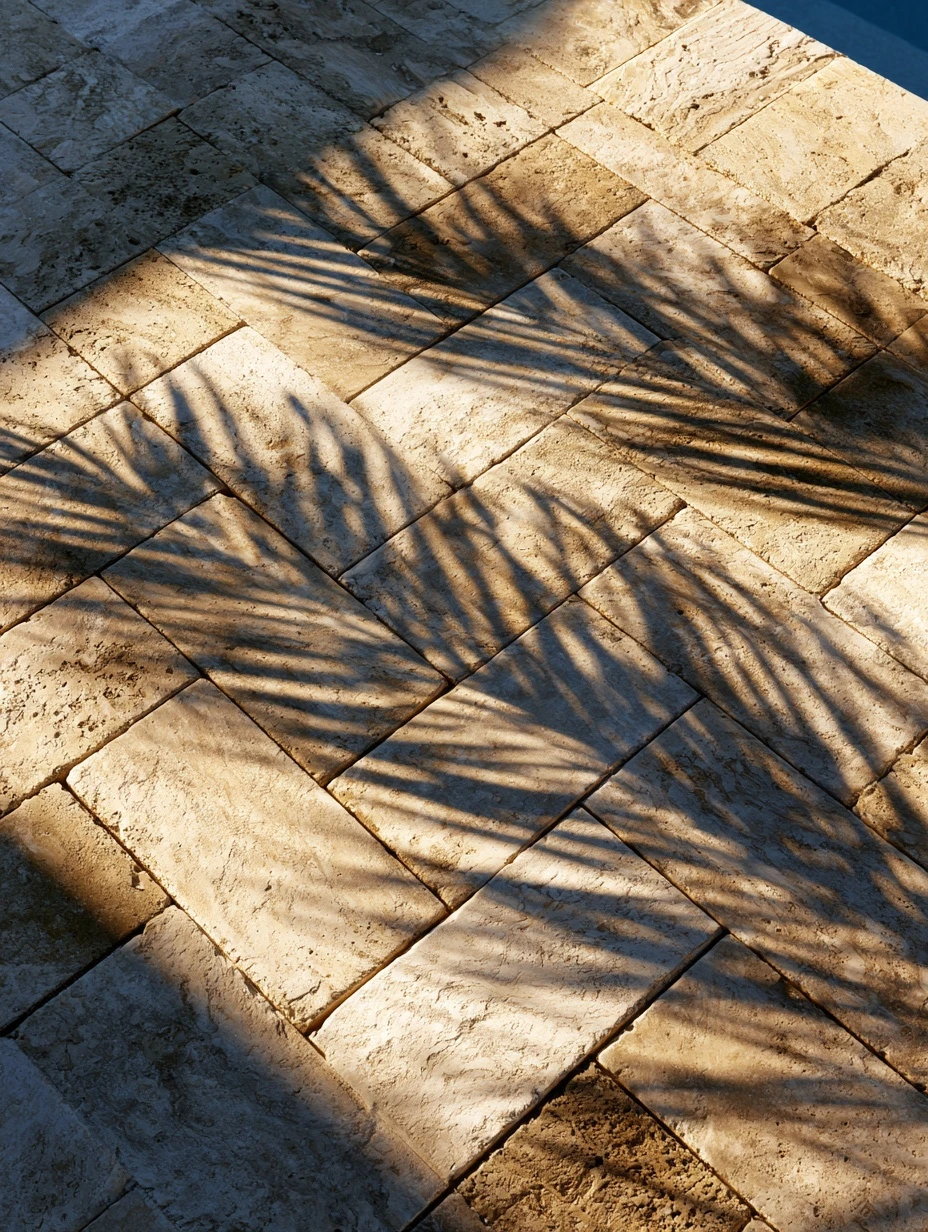
Not always, and anyone who says always is selling sealer. Sealing buys three things: stain resistance, slower joint sand washout, and deeper color. If your joints are full, your drainage is good and nothing stains the surface, an unsealed deck is not at risk, it is just unsealed. When one of those three is a live problem, sealing earns its cost. We will tell you which applies.
Take the three one at a time. Stain resistance matters when something actually stains: a grill, rusting furniture feet, irrigation water carrying iron, leaves left down through a wet week. Washout matters when your joints keep emptying. Color depth matters when the fade genuinely bothers you. A deck with none of those problems is not quietly deteriorating for lack of sealer. The pavers are the durable part of the system, and they do not need a coating to keep being pavers.
We hear a version of the same story often. A deck eight or ten years old, never sealed, honestly looking fine, and every company that quotes it insists it must be sealed every two years or it will be ruined. An interval quoted before anyone has looked at the joints is marketing. Our revenue is pools and decks, not sealer, so we have no reason to pretend otherwise: if the joints are full and nothing is staining, re-sand where needed and keep your money.
When one of the three is live, sealing stops being an upsell and becomes maintenance. That is the whole test. The rest of this page is about doing the job right when it is worth doing at all, because in this climate the wrong product fails in a specific and avoidable way.
Part two
Breathable or film-forming: which sealer suits this climate?
Film-forming sealers give the gloss and the wet look, and they trap moisture. In a climate with daily summer storms and a shallow water table, vapor rising through the paver meets the film and the finish blushes milky or peels. Breathable penetrating sealers let vapor through and fail by fading instead, which is a cheaper failure. The choice is appetite for gloss against exposure to moisture, decided deck by deck, not by default.
A film-forming sealer cures as a continuous layer on top of the paver. That layer is what makes the wet look, and it is also a lid. Naples sits on a shallow water table and takes an afternoon storm most summer days, so there is nearly always moisture under a deck working its way upward. When rising vapor meets the film it has nowhere to go. The finish clouds milky white, loses its grip on the surface, and eventually peels in flakes.
A breathable penetrating sealer, usually silane or siloxane chemistry, cures inside the pore structure instead of on top of it. Water beads at the surface, but vapor still passes through, which is the property the Concrete Masonry and Hardscapes Association tech notes point to for pavement with moisture underneath. Its failure mode is quiet: it fades over time and you simply apply again. No blushing, no peeling, no stripping.
So the real question is appetite for gloss weighed against exposure to moisture, decided deck by deck. An open pool deck that takes splash, storms and irrigation leans hard toward breathable. A covered lanai that stays dry can carry a film finish if you want the gloss. Natural stone is its own conversation, with an appearance trade-off that deserves its own page; see sealing decisions on travertine and natural stone.
Part three
What is the white haze on sealed pavers?
Usually efflorescence: moisture moving through concrete pavers carries dissolved salts to the surface. Unsealed, they rinse away. Under a film-forming sealer they are trapped as a white or cloudy haze, and sealing over it again locks in more. New pavers need time to shed these salts before first sealing, and a hazed deck usually needs stripping back, not another coat. It is cosmetic, but the fix is real work.
The chemistry is ordinary concrete behavior, not a defect. Cement produces calcium hydroxide as it hydrates. That compound dissolves in water, rides capillary action to the surface, meets carbon dioxide in the air and becomes calcium carbonate, a white mineral deposit. The industry tech notes are clear that it is an aesthetic issue rather than a structural one, and that the supply eventually exhausts itself. On an unsealed deck, rain and wear usually carry it off before anyone worries.
Sealing changes that. A film over the surface means the salts arrive and stay, trapped as cloudy patches that read as fading or water damage. We have seen the worst version of this story more than once: a company seals a deck, haze appears across the sunniest section, and they come back and seal over it again. Every additional coat locks in more mineral and pushes the real fix further away. If your sealed deck went cloudy and a second coat made it worse, this is almost certainly why.
The honest fix is stripping the failed film, treating the surface with an efflorescence cleaner made for concrete pavers, letting it dry properly, and resealing with a product suited to the exposure. Nobody enjoys quoting that, because it is more work than a coat of sealer. It is also the only version that stays fixed.
Part four
When should new pavers be sealed for the first time?
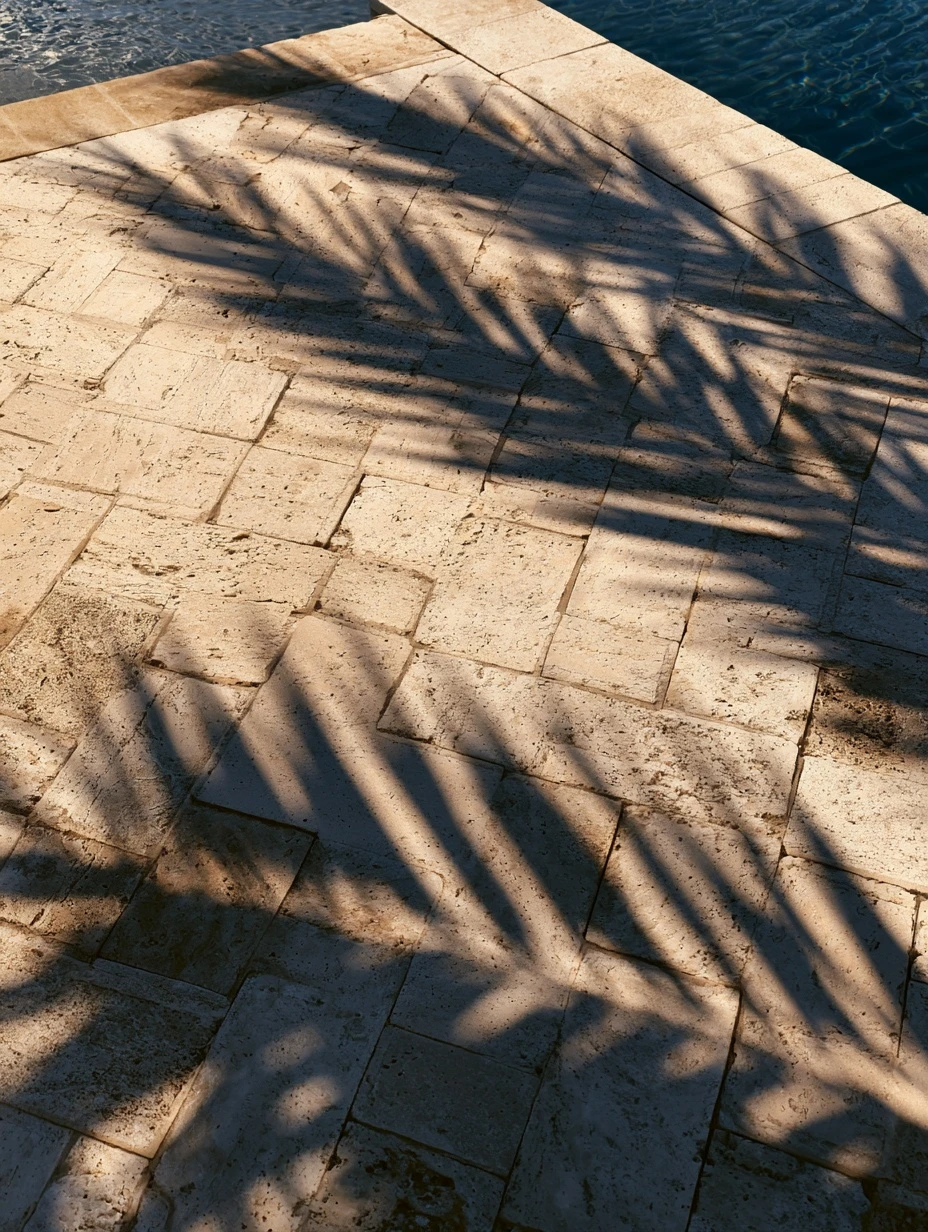
Not on installation day. New concrete pavers shed efflorescence in their first months as the cement finishes curing, and the industry guidance is to seal after efflorescence is under control, not before. Sealing a fresh deck traps that mineral bloom under the finish. Let a new deck weather, ideally through a wet cycle, then clean it and seal it. Patience here protects the money you just spent.
The tech note on cleaning and sealing puts peak efflorescence roughly inside the first two months of a new pavement, and notes that a deck installed in the dry season may not show it until the first run of wet weather. That is exactly the trap. A January installation can look pristine, get sealed in February, and bloom white under the film when the June storms arrive.
So a same-week sealing offer on a brand-new deck is a red flag, however confident the pitch. The joint sand needs to settle, any polymeric sand needs to fully set, and the pavers need time to shed their early salts. We install pavers ourselves, and we give our own customers the same advice about our own work: let it weather first.
The first seal, when it comes, follows the full sequence: efflorescence cleaned off, surface genuinely dry, sealer class chosen for the exposure. Done that way, a new deck starts its sealed life without a mineral bloom locked under the finish, which is the single most common way a good-looking new installation turns cloudy in its first year.
Part five
What does restoration involve?
Clean the surface and the joints, replace the joint sand, then seal. Skipping the cleaning seals dirt into the surface, and skipping the sand means sealing a deck that is still free to move. The order is the job, and the finished surface shows every step that was rushed.
Cleaning is the unglamorous part that determines the result. Sealing over an unclean surface locks in whatever is there, and it is not reversible without stripping.
Polymeric sand in the joints binds and resists washout far better than plain sand, which is what buys the interval between restorations.
Dryness is the step people skip. The industry spec calls for at least a full day with no rain and no surface dampness before sealer goes down, and in a Naples summer that window takes planning rather than luck. A deck washed in the morning and sealed the same afternoon, or sealed in June between the daily storms, is how moisture ends up under a finish looking milky within weeks. If that happened to yours, the product may have been fine and the timing wrong, or both.
Sealing changes appearance as well as protection. It is worth deciding deliberately what finish you want rather than accepting whatever comes as standard.
Part six
Can you seal the pavers yourself?
Some of it, honestly, yes. Topping up joint sand is a bag of sand and a careful afternoon, and we will say so. Sealing is where DIY jobs fail: a one-size product on the wrong exposure, sealer over a still-damp surface, or a heavy coat that puddles and cures like plastic. A failed coat has to be stripped, and stripping costs more than sealing ever did.
The common failures are all avoidable and all common. The box store sells one sealer for every deck in every state, and this climate is not every state. Pressure washing and sealing on the same day puts sealer over a damp substrate, which is the milky finish from the section above. Over-application pools in the low spots and cures as a shiny skin that peels. And sealing over dirt or early efflorescence locks it in until someone strips it back out.
What a professional job actually buys is judgment more than labor: a sealer class matched to your exposure, a genuine dry window, an even application at the right rate, and the ability to strip and recover when a previous coat has failed. Terry H. in Pine Ridge Estates described our work as neat, orderly and on time, and sealing is exactly the kind of job where that discipline shows.
Whoever you hire for work around a pool, verify rather than trust. Florida contractors are regulated by the Department of Business and Professional Regulation: ask us for our license number and check it at the DBPR licensee search, then ask every other quote for theirs.
Part seven
Why does joint sand keep washing out?
Sun and afternoon storms. Naples Park and Vanderbilt Beach get both in quantity: UV degrades the surface and storm runoff carries the joint sand away. Empty joints let individual pavers move and give weeds somewhere to establish, which is why the joints, not the stones, are what restoration is really protecting.
The order matters. Washout comes first, movement and weeds follow. That is why restoration done at the right time prevents a problem rather than treating one. Polymeric sand resists the washout, and a breathable sealer over the top slows it further; between them the joints stay full through more storm seasons, and full joints are the whole game.
Where movement has already started, restoration alone will not level it. That is a matter for pool deck repair. And if you are weighing the deck as a whole rather than just its joints, start with pool deck pavers in Naples.
Part eight
Is sealing worth it compared with repaving one day?
Think in cost per year, not cost per visit. A paver deck rarely wears out from the top down; it fails from empty joints and a disturbed base. Restoration renews exactly the parts that wear, while repaving pays again for excavation, base, bedding and laying, mostly to reinstall stones that were fine. Sealing earns its place when it stretches that cycle. It earns nothing when there is nothing to protect.
Here is the mechanism without a single number, because the numbers depend on your deck. The pavers themselves are the durable component and the expensive one to install. What actually wears is the joint sand, the surface color and, if washout runs long enough, the bedding underneath. Restoration replaces the sand and renews the finish, the cheap consumables, and leaves the expensive structure alone.
Repaving buys all of it again: demolition, disposal, base compaction, bedding, laying labor, and usually new pavers whether the old ones deserved retirement or not. Spread each path across the years it buys you and restoration on a sensible cycle is the cheaper cost per year by a wide margin, for as long as the base stays sound. Sealing serves that arithmetic by slowing washout and keeping stains from becoming permanent, which stretches every cycle it touches.
The same arithmetic cuts the other way. Sealing a deck with no live problem adds a recurring cost that buys nothing, and over-sealing builds up a film that eventually has to be stripped at your expense. The economics reward sealing at the right time, not sealing often. That is why we would rather look at your joints than quote you a schedule.
Part nine
How often should pavers be resealed?
By condition rather than calendar. The signal is the joints: when sand is visibly low, it is time. Exposure drives it, so an open deck in Naples Park takes it harder than a shaded inland patio, and a busy deck takes more traffic than a walkway.
We would rather tell you to look at the joints than quote an interval, because an interval quoted without seeing the deck is marketing. The industry maintenance guide gives one concrete trigger worth remembering: joint sand sitting more than about half an inch below the paver surface should be topped up immediately, before movement starts.
What due looks like depends on the sealer class. A breathable product simply stops beading water and fades, and you reapply. A film product going cloudy or flaking is past due in a worse way, and may need stripping rather than another coat.
Over-sealing has costs too, in appearance and in build-up. More is not better.
If the deck, patio and walkway are all due, doing them together is cheaper and keeps the appearance consistent. See paver patios and walkways.
Choose the surface
Which deck surface fits how you live outside?
Four surfaces do most of the work in Collier County. They differ less in looks than in how they behave in August, wet, and ten years in.
- Barefoot in August
- Among the coolest choices. The stone breathes, so it sheds heat instead of banking it.
- Wet grip
- Naturally textured surface; tumbled finishes grip well around spillovers and steps.
- Salt air
- Happy near salt, but it is porous, so sealing decides how it ages.
- Upkeep
- Periodic resealing. Skip it and the pores start holding stains instead of shrugging them off.
The default for a reason: barefoot comfort and a look that matches the Naples build era.
- Barefoot in August
- Cool underfoot, close to travertine. Light colors matter more than the stone.
- Wet grip
- Depends entirely on the finish. Polished marble near water is a mistake; sand-blasted or tumbled is not.
- Salt air
- Dense and durable, but acids etch it. Chlorine splash and the wrong cleaner both leave marks.
- Upkeep
- The most particular of the four. It rewards owners who keep to a sealing schedule.
The formal choice. Crisp veining and a brighter deck, for owners who will maintain it.
- Barefoot in August
- Runs warmer than stone in dark colors; pale tones stay reasonable.
- Wet grip
- Manufactured with a rated slip texture. The most predictable wet surface of the four.
- Salt air
- Effectively immune. Nothing for salt or chlorine to get into.
- Upkeep
- The lowest of the four. No sealing; rinse it.
The modern, low-maintenance pick. Clean lines and color that does not shift over the years.
- Barefoot in August
- The warmest of the four, especially in the popular darker blends.
- Wet grip
- Good texture out of the box; smooths gradually where the traffic is.
- Salt air
- Fine structurally, but color is a surface layer. Coastal sun and salt fade it first.
- Upkeep
- Sealing keeps the color; joint sand wants topping up every few seasons.
The workhorse. The widest range of shapes and patterns, and the easiest to repair one paver at a time.
Straight answers
Questions Naples owners actually ask
 Clayton Waggoner Owner, Splash Pools LLC
 Clayton · Owner
They do not have to be sealed, but the joints do need sand. Sealing slows washout and protects against fading and staining, which is what extends the interval between more expensive work. If the joints are full and nothing stains the surface, an unsealed deck is fine, and we will tell you so rather than quote a job it does not need. Clayton · Owner
Finish choice decides that, and a pool deck wants a product specified for wet barefoot traffic. Glossy film finishes are the slippery ones when wet, while breathable penetrating sealers leave the surface texture largely as it was. It is worth raising specifically rather than assuming, especially anywhere people walk barefoot between the pool and the house. Clayton · Owner
No, and anyone who offers to is selling you a problem. Cleaning comes first, because sealing locks in whatever is there and reversing it means stripping the surface. Weeds need the joints cleared and refilled with fresh sand, and stains need to come out before any coat goes down, or they become permanent features of the deck. Clayton · Owner
Usually it is a joint sand job with sealing after. Weeds establish where joints have emptied, so refilling with polymeric sand and sealing addresses the cause rather than the symptom. Pulling the weeds without refilling the joints just books the same problem for next season, which is worth knowing before she pays anyone twice. Clayton · Owner
Possibly. The three likely causes are sealing over a surface that was not clean, a product not suited to full sun here, or a film-forming sealer trapping moisture rising from below, which blushes milky and wears unevenly. Patchiness often means uneven absorption from residual dirt. The fix is usually stripping back rather than another coat over the top, which is worth knowing before anyone quotes one. Clayton · Owner
We quote after seeing it, because condition drives the number more than area: how much cleaning the surface needs, whether a failed or hazed sealer has to be stripped first, how much joint sand is being replaced, and which sealer class suits the exposure. Stripping is the item that changes a quote most, and we will tell you plainly if your deck does not need sealing at all. Call 239-450-5933. Clayton · Owner
Cleaning, re-sanding, sealing and stripping, from a contractor who also builds and repairs the decks, so the advice is not tied to selling sealer. Owner Clayton Waggoner, serving Naples, Marco Island, Bonita Springs and Estero. Useful to have ready: photos of the surface including any haze or patchiness, whether it was sealed before and roughly when, and what bothers you about it now. If nothing is wrong, we will say so. Phone 239-450-5933.Talk to Clayton
Send the details, get a call back.
A sentence or two is enough. You get a call back from the person who does the work, not a dispatcher.
Service area
Where we work
Click any marker. What fails is genuinely different from one neighborhood to the next, and the card says which.
Where we work
Naples and Collier County, plus Marco Island, Bonita Springs and Estero. What fails is different in each, and that is what decides the work.
- Port Royal waterfront, architectural review, deck must match the house
- Old Naples pools built in the seventies and eighties, due for everything at once; original skimmers
- Aqualane Shores canal homes, deck movement near the seawall separates coping
- Park Shore Gulf Shore Boulevard salt air hits the tile line first; seasonal vacancy
- The Moorings direct salt air exposure, waterline tile failure
- Coquina Sands seventies and eighties pools; decks poured over uncompacted fill
- Royal Harbor canal homes, high water table hides leaks; coping separation
- Grey Oaks gated architectural review on anything visible from the street; spa additions
- Quail West natural stone decking matched to the house; spa additions
- Pelican Bay empty April to November; automation and heat pumps for year-round swimmers
- Lely Resort natural gas supply; builder decks aging out; year-round pump runtime
- Fiddler's Creek natural gas heater sizing; builder-era paver decks losing their base
- The Vineyards year-round swimming, heat pumps and variable speed payback
- Naples Park mature landscaping into pool plumbing; original skimmers; storm-loaded filters
- Pine Ridge Estates mature landscaping finds underground pool plumbing
- Vanderbilt Beach equipment pads corrode fast; storm season loads filters
- Golden Gate Estates well water iron staining on marcite; propane rather than natural gas
- Isles of Capri canal water table hides leaks; heavy equipment-pad corrosion
- Marco Island barrier island salt air corrodes heaters from the inside out
- Bonita Springs pool decks and patios on Southwest Florida soil
- Estero deck and patio base engineered for local soil
- Ave Maria newer east-county builds, patios and walkways matched to existing hardscape
Related services
Pool deck pavers in Naples, built on a base that lasts →Pool deck repair in Naples, and whether resetting will actually hold →Travertine and natural stone pool decks in Naples →Paver patio and walkway installation in Naples, pitched the right way →Where this comes up most
Sources
Ready when you are
Tell us what the pool is doing.
A sentence or two is enough. You get a call back from the person who does the work, not a dispatcher.