

NAPLES, FL · POOL RESURFACING
Pool resurfacing, including
the part everyone skips.
Most resurfacing quotes cover chipping out the old surface and troweling on a new one. The part that decides whether it still looks right in ten years is the four weeks after the water goes in, and it is the part most owners are never told about.
Updated August 2026 · Splash Pools LLC · Clayton Waggoner, Owner
End of life, or just dirty?
How do you know a pool interior is at the end of its life?
A finish at the end of its life feels rough underfoot, holds stains that no longer brush out, shows mottling or blotching across the floor and walls, and in the worst spots wears thin enough to show the gray gunite underneath. The roughness is not dirt. It is the surface itself dissolving, and once that has started the finish does not recover.
The useful test is what happens when you brush. A stain that lifts with brushing or responds to a chemistry adjustment is a water problem, and water problems are fixable without a trowel. A stain that has become part of the surface is different. Old plaster is porous, and metals, organics and scale work their way into that porosity until they are no longer sitting on the finish but embedded in it. No stain remover reaches that.
Roughness has a mechanism too. Plaster is a cement product, and water that runs short of calcium takes it from the cement. What is left behind is the sand and aggregate the calcium used to bind, standing proud of the surface. Owners describe it as sandpaper on the feet, or notice the pool cleaner wearing through its shoes faster than it should. That is not wear and tear on top of the finish. That is the finish leaving the pool through the filter.
Naples has a deep stock of pools plastered in the eighties, nineties and early two thousands, and marcite of that age is usually well past the embedded-stain stage. In the worst spots it wears thin enough to read gray, which is the gunite shell showing through. Margaret G. in Lely Resort came to us with a pool that had been neglected for years and got a full transformation out of it; you can see what that looks like in our work in Lely Resort.
If any of this sounds like your pool, have us look at it before deciding anything. The consultation is free, and if the honest answer is that a drain and clean or a chemistry correction will do, that is the answer you will get. Call 239-450-5933.
Stain lifts with brushing
A water problem
Fixable with a chemistry correction, no trowel required. If that is the honest answer at the consultation, that is the answer you get.
Stain is part of the surface
A finish problem
Old plaster is porous; metals, organics and scale embed in that porosity until no stain remover reaches them. Naples marcite from the eighties and nineties is usually well past this stage.
Free consultation either way, 239-450-5933. If a drain-and-clean will do, you'll be told so.
Interactive · the part everyone skips
What actually makes a new pool finish fail early?
Water chemistry in the first month, more often than workmanship. The National Plasterers Council defines start-up as a 28-day process of testing, balancing and brushing a new finish, and specifies a Langelier Saturation Index between 0.0 and +0.3. Outside that range the water either etches the new surface or scales it, and the damage is permanent.
IN THE WINDOW, THE SURFACE CURES PROPERLY
0.0 to +0.3 is the working range for a new finish. Held here for 28 days, with testing, brushing and the equipment off, the surface sets to its full potential. This is what "managing the start-up" means.
Days 1–3
Fill water pre-balanced. Adjusting after the pool is full is already late.
Week 1
Daily testing and brushing out plaster dust. Automated equipment stays off.
Weeks 2–4
Balance held inside the LSI window while the surface cures.
Day 28
The surface has set properly, or it hasn't, permanently. We manage all of it.
The NPC start-up procedure is a 28 day process of caring for a new plaster finish after the pool is filled: regular testing, maintaining chemical balance, brushing out plaster dust and staying off automated equipment (National Plasterers Council, 2026). It is not a formality. It is the window in which the surface either sets properly or does not.
The number that matters is the Langelier Saturation Index. Balanced water sits at 0.0, and the working range for a new finish is 0.0 to +0.3 (National Plasterers Council, 2026). Negative water is corrosive and leaches and etches the surface. Positive water scales and discolors it. Both show up as blotching that no amount of later maintenance removes.
The part that surprises owners: the fill water needs enough pH, alkalinity and calcium hardness before the pool is full. Adjusting after it is filled is already late. That is a real consideration here, because Collier County delivered water averaged 67 mg/L hardness in 2024 (Collier County Water-Sewer District, 2024), which is moderate rather than high.
This is why we manage the start-up rather than handing you a sheet at the end. A finish is a twenty year decision being made in its first four weeks.
Three mechanisms, all local
Why is Naples water so hard on a pool finish?
A Naples pool runs all year, so it evaporates all year. Water leaves, calcium stays, and calcium based chlorine adds more, so hardness climbs in a closed system until the water starts scaling the surface. Near the Gulf, salt air works on the tile line from the outside. Out east, well water adds iron from the fill side. Three mechanisms, all local, all manageable if the specification accounts for them.
01
Calcium that only climbs
Evaporation never gets a winter off. Top-ups bring more calcium in; calcium-based chlorine adds more still. The fix is managing the trend and diluting before the water starts depositing scale on your finish.
02
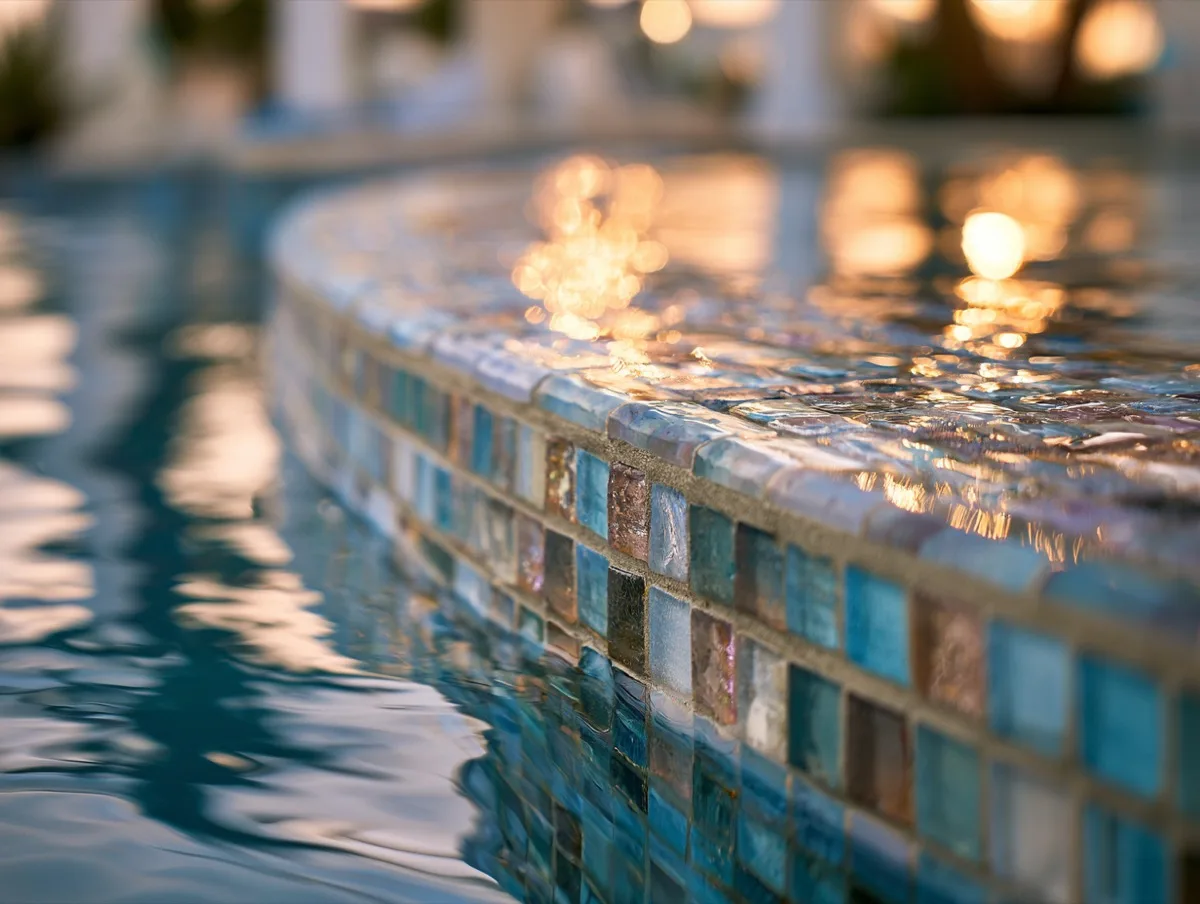
Salt air, from the other side
Airborne salt attacks the mortar bed behind waterline tile before the tile itself. Park Shore, The Moorings, anywhere off Gulf Shore Boulevard, strongest on Marco Island. We check before quoting.
03
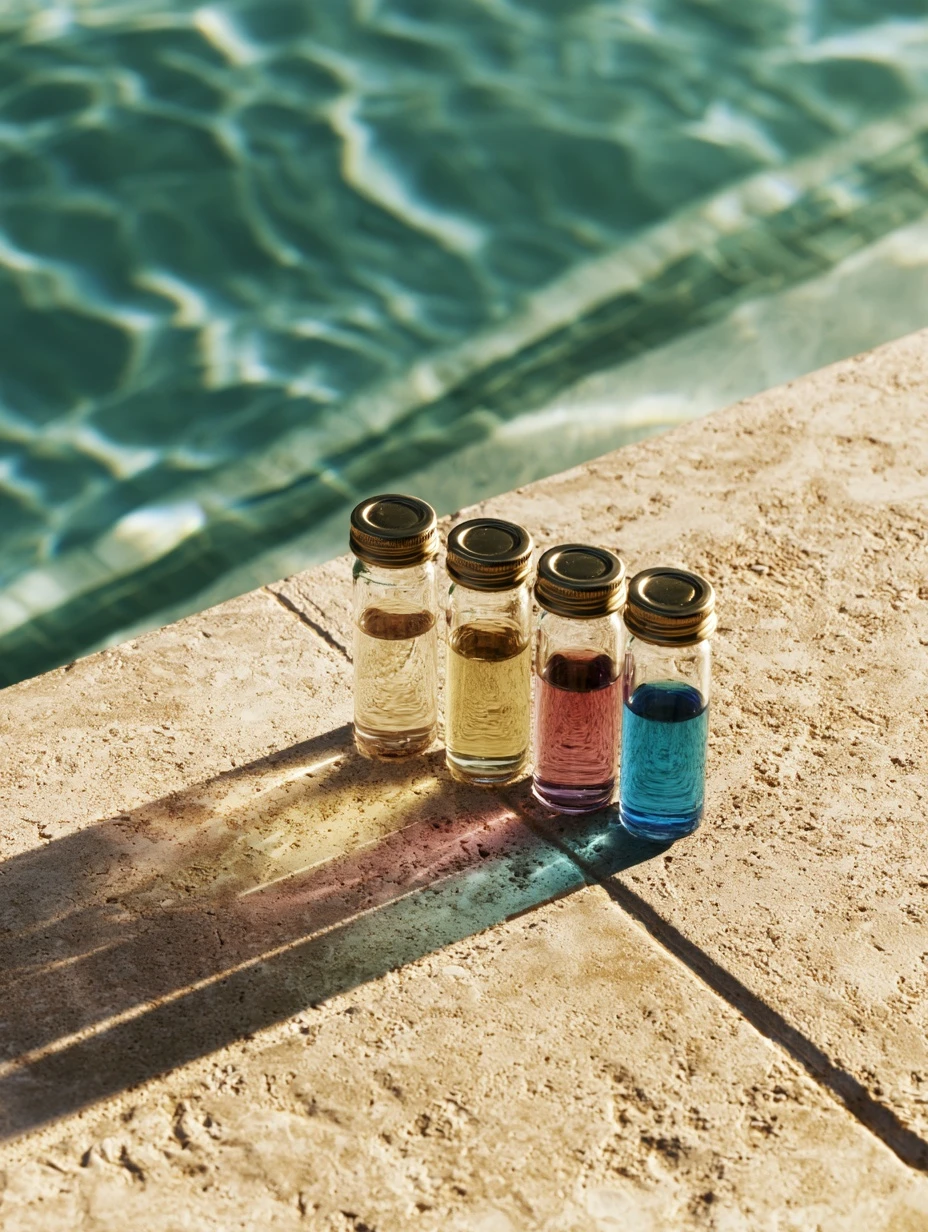
Iron from the well
Golden Gate Estates largely fills its pools from wells, and well water carries iron. The fill-water source belongs in the finish specification, not in the list of things discovered two years later.
Start with the calcium, because it explains the complaint we hear most. Collier County water arrives at the tap at moderate hardness, but a pool is a closed system in the sun. Evaporation takes pure water and leaves every dissolved mineral behind, and in Naples that evaporation never gets a winter off. Top up the pool, and the new water brings its own calcium in with it. Chlorinate with calcium hypochlorite, and you are adding more still. The hardness number only ever climbs.
This is why owners who genuinely keep their chemicals balanced still see white crust at the waterline and rough crystalline patches coming back. Balance is a moving target when the calcium is concentrating underneath it. Eventually the water crosses the line where it would rather deposit scale than hold its minerals, and the finish is where it deposits. The fix is not a better stain remover. It is managing calcium as a number that trends, and draining or diluting before the water gets there.
Salt air is the second mechanism, and it works from the other side of the waterline. Airborne salt attacks the mortar bed behind waterline tile before it touches the tile itself, which is why tile lines fail from behind in Park Shore, The Moorings and anywhere off Gulf Shore Boulevard. The effect is strongest out on Marco Island, where the Gulf is on three sides of you. Resurfacing against a tile line that salt has already undermined is a false economy, and we check for it before quoting.
The third mechanism belongs to the eastern service area. Golden Gate Estates largely fills its pools from wells, and well water carries iron. Iron stains a light plaster interior in a way that brushing does not touch, which is why the fill water source belongs in the finish specification, not in the list of things discovered two years later. If your pool fills from a well, say so at the first conversation and the finish recommendation will be built around it.
Interactive · the finish library
Pebble, quartz or plaster: which belongs in a Naples pool?
Pebble and quartz both outlast plaster and both resist the mottling and staining plaster shows. Pebble reads darker and textured, quartz smoother and brighter. The deciding factor here is usually the water source: on well water out east, iron will stain a light plaster interior in a way brushing does not remove.
Marcite is a cement based finish and it is the least expensive interior. It is also the least tolerant, because cement gives up calcium to water that is short of it and takes on scale from water loaded with it. In a pool that evaporates all year, calcium concentrates, and calcium hypochlorite chlorination adds more.
Pebble is the workhorse in this market. The aggregate is far less reactive than a troweled plaster surface, it hides the streaking and mottling plaster shows, and it copes better with the iron staining that comes with well water in Golden Gate Estates.
Quartz sits between the two: smoother underfoot than pebble, brighter than plaster, more tolerant than marcite. Color is the decision with the longest tail. A dark interior reads deeper and holds heat, which is welcome in January and less so in August, so it is worth deciding against your heater and how you actually use the pool rather than off a sample board.
It helps to hear the same three finishes as tradeoffs rather than a brochure. Plaster buys the smoothest feel and the lowest price, and pays for it with the least tolerance for chemistry drift and the shortest ceiling. Pebble buys the most durability and stain tolerance, and pays for it with texture underfoot that not everyone likes and a darker read that gains heat in high summer. Quartz splits the difference on nearly every axis, which is exactly why so many pools here end up wearing it.
And there are pools where plaster is the right call, whatever the market fashion says. A pool on city water inside a screen enclosure, owned by someone who keeps up with their chemistry and wants the classic smooth white interior, is a fair home for plaster. So is a pool being brought up to standard ahead of a sale, where the next owner will choose the long term finish. What we will not do is put a light plaster interior on well water and let the iron make the argument for us two summers from now.
What's involved
What is involved in resurfacing a pool?
Drain, chip out the failed surface, repair the shell where it is exposed, prepare and bond, apply the new interior, refill, then run the 28-day start-up. If the waterline tile or coping is also failing, that work belongs in the same visit rather than cutting into a new finish later to reach it.
The sequence, in plain language and rough spans rather than promises: draining takes a day or so, longer where the water table wants the water back. Chip-out is a day or two of the loudest work of the project. Shell repair runs from a same-day patch to considerably longer, depending entirely on what the chip-out exposes. Prep and bond coat follow, then the finish itself goes on in a single day, because a troweled interior cannot be half applied and resumed. The refill runs a day or two, and then the 28 day start-up begins. Weather can move any of it.
Chipping out properly matters more than it sounds. A new interior bonded over a surface that was not fully removed is a delamination waiting to happen, and it will lift in sheets rather than fail gradually.
The shell gets inspected while it is exposed, which is the only convenient moment. Cracks, hollow spots and a failing bond beam are all far cheaper to address now than through a finish you have just paid for. See structural crack and shell repair.
If the tile line is going, it goes now. Salt air attacks the mortar bed behind waterline tile before it touches the tile, particularly off Gulf Shore Boulevard in Park Shore and The Moorings, and setting a new interior against tile that is about to let go means reopening the work. See waterline tile replacement.
Resurfacing is often one part of a larger job. Where the finish, tile, coping and deck are all due, handling them as a single project is both faster and cheaper than four visits. See pool remodeling in Naples.
What drives the price
What drives the cost of resurfacing a pool in Naples?
The last factor is the honest wildcard: what the shell shows once the old surface is off. Hollow spots, cracks and a tired bond beam cannot be seen through the finish that is hiding them, which is why no responsible quote prices shell repair sight unseen, and why two identical pools can land far apart. It is also why the "starting at" figures published online tell you so little.
So we quote after seeing the pool, and the look costs nothing. One more piece of advice that costs nothing: whoever you invite to bid, verify the contractor’s license with the Florida DBPR before signing anything. Call 239-450-5933.
Why one owner
Why your finish, tile and coping should have one owner
The interior finish, the waterline tile and the coping all meet at the waterline, and that seam is where resurfacing jobs fail. When each element belongs to a different subcontractor on a different schedule, nobody owns the seam. Here the same contractor sets all three, in the right order, on one schedule, so the joint where the work actually fails has one accountable owner.
Look at where resurfacing problems actually show up years later and it is rarely the middle of the floor. It is the waterline: tile letting go above a sound finish, or a new finish feathered against a mortar bed that salt air had already emptied from behind. The finish, the tile and the coping are three trades in most companies, and the seam where they meet is the responsibility of none of them. See waterline tile replacement for how that line fails here.
Coping is part of the same joint. It caps the bond beam at the top of the shell and sheds deck water away from it, and when coping is loose or its joint has opened, water is reaching the beam that everything else is anchored to. Setting a new interior under compromised coping is stacking new work on a failing foundation. See pool coping replacement.
Here all three belong to one contractor, and the person accountable for the seam is Clayton, not a schedule of subcontractors. The tile and coping go in against a repaired beam, the interior is set against sound tile, and the sequence happens in the right order because one schedule owns it. When the finish, tile, coping and deck are all due at once, that is a remodel, and it is one project with one owner too. See pool remodeling in Naples.
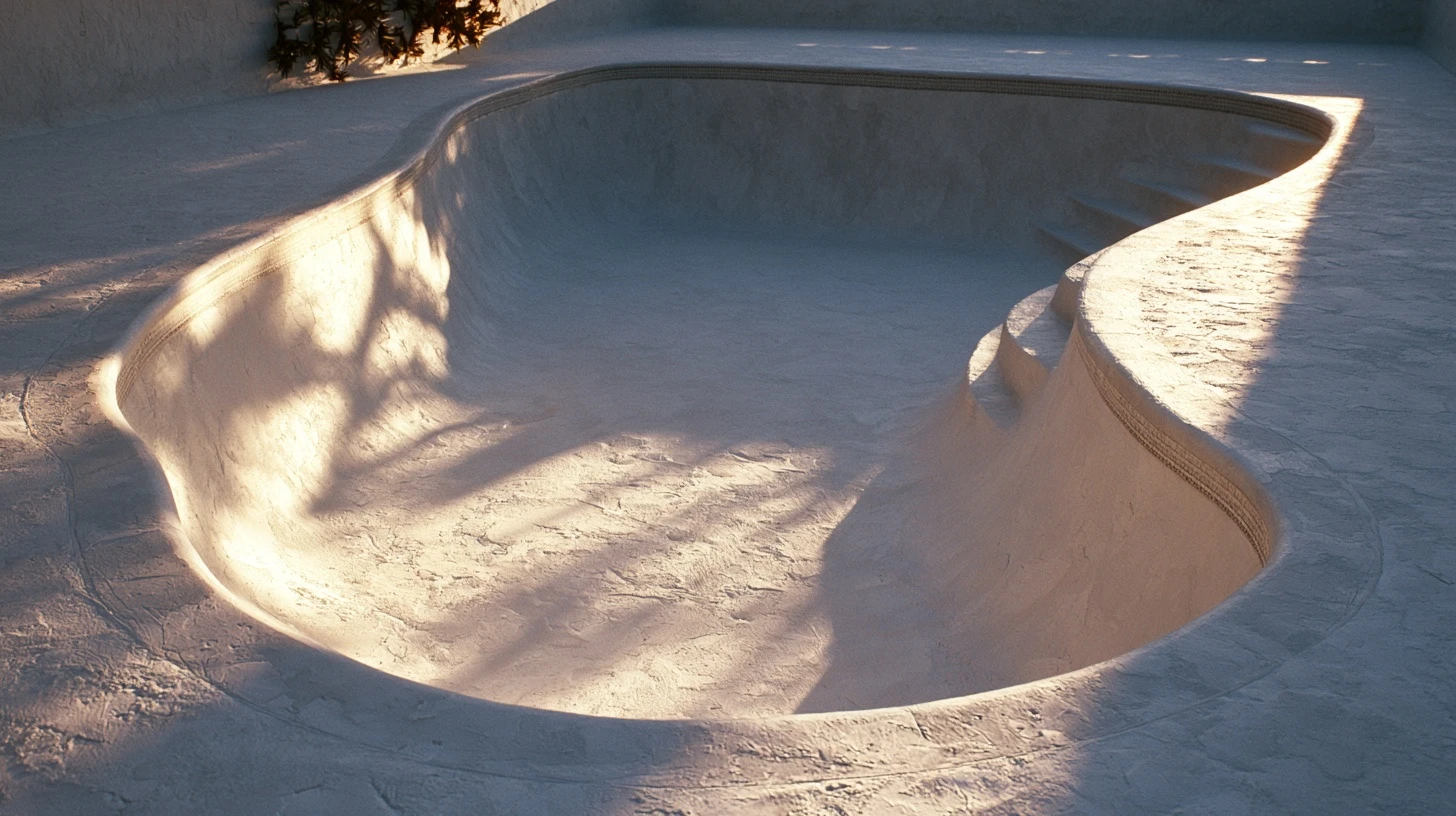
Surface area comes first because every square foot of interior is chipped, prepped and troweled by hand. It is also routinely underestimated. A pool is not its top-down footprint: walls, steps, benches, swim-outs and an attached spa all add interior area that the view from the lanai understates.
The finish class is the most visible lever. Plaster, quartz and pebble sit in ascending order of material cost, and the aggregate finishes also ask more of the crew applying them, which is labour as well as material.
How the pool drains matters more in Naples than most owners expect. Parts of this area sit on a high water table, and a shell in wet ground wants to float. Where groundwater is high, the job needs dewatering and a relief check before the pool is emptied, and that is real equipment and real time that a dry-lot quote does not carry.
The quote that tells you nothing
No responsible quote prices shell repair sight unseen. We look first, then we tell you.
The honest answer
How long does a resurfaced pool last?
Longer with pebble or quartz than with plaster, and longer again if the start-up was managed properly. The honest answer is that the finish material sets the ceiling and the water chemistry decides whether you reach it. A well cured plaster pool can outlast a badly started pebble one.
We are not going to publish a headline number of years, because the number depends on your water, your chemistry and how the pool is used, and any figure quoted without those is marketing rather than information.
What we will tell you is the mechanism. Pebble and quartz have far more surface durability than troweled plaster. But the NPC start-up window is what determines whether a new surface reaches its potential or is compromised in the first month (National Plasterers Council, 2026).
That is also the practical question to put to any resurfacing quote you receive: ask who manages the start-up, for how long, and to what LSI. A quote that has no answer is a quote for the trowel work only.
Interactive · plan the scope
What would your project actually touch?
Pick everything that bothers you about the pool. The read shows which trades the fix involves, and where they meet, because the seams are where split jobs fail.
Ask Clayton
Before you let anyone drain your pool
Tap a question. Clayton replies himself. Here, and on the phone.

Clayton · Owner, Splash Pools
The pool is usable well before the start-up finishes, but the finish is still curing for its first month. During that window it needs regular testing, balancing and brushing, and automated equipment stays off. We will tell you exactly what applies to your pool rather than handing over a generic sheet. Clayton · Owner, Splash Pools
Almost always start-up chemistry. Water below the balanced range etches and leaches the surface; water above it scales and discolors. The National Plasterers Council specifies an LSI of 0.0 to +0.3 for exactly this reason (National Plasterers Council, 2026). Once it has happened it does not brush out. Clayton · Owner, Splash Pools
It depends on four things: the size of the interior surface, the finish class you choose, with plaster, quartz and pebble in ascending order, whether the pool drains normally or needs dewatering, and what the shell shows once the old surface comes off. Repairs found under the old finish are the wildcard no honest quote can price sight unseen, so we quote after seeing the pool. Call 239-450-5933. Clayton · Owner, Splash Pools
Yes, and it should change the finish choice. Well water carries iron and iron stains a light plaster interior in a way brushing will not remove. Pebble and quartz handle it far better, so the water source belongs in the specification rather than being discovered afterwards. Clayton · Owner, Splash Pools
We do, and that is the right way to run it when nobody is at the property. The first 28 days need testing, balancing and brushing on a schedule, which is not something to leave to a neighbor with a test strip. Clayton · Owner, Splash Pools
The property address and gate code if there is one, a phone number for the decision maker, roughly when the pool was last resurfaced if known, and the symptoms: rough underfoot, stains that will not brush out, blotching, or loose tile. A site visit is required before any quote. Book at our booking page or call 239-450-5933, and we are happy to coordinate directly with an owner who is not local. Clayton · Owner, Splash Pools
Rough underfoot plus staining plus loose tile usually means the interior and the tile line are both at end of life, and loose tile often means the mortar bed or bond beam behind it has gone too. Resurfacing alone would leave the tile to fail into a new finish. That is a remodel rather than a resurface, and doing it as one project is cheaper than doing it twice.Or just call · 239-450-5933. It goes to Clayton, not a call center
Talk to Clayton
Tell us what the finish is doing.
A sentence or two is enough. You get a call back from the person who does the work, not a dispatcher.
Related services
Pool remodeling in Naples, handled as one project →Waterline tile replacement, starting behind the tile →Pool coping replacement, and the beam underneath it →Structural crack repair, starting with what is causing it →From the insights
Can you pay twice for a pool remodel in Florida? →Does a home inspection cover the swimming pool? →Should you replace your pool light during a remodel? →Can you make a Naples pool shallower? →Why does a salt cell fail early in a Naples pool? →What happens to a Naples pool while you are away for the summer? →Does Florida require a fence around your pool? →Should you add a sun shelf to a Naples pool remodel? →How do you check a Florida pool contractor's license before you sign? →Should a new plaster finish go in a salt pool in Naples? →How long does a pool remodel take in Collier County? →Does a screen enclosure change your pool permit in Collier County? →Why Collier County tap water is hard on a new plaster finish →What Well Water Does to a Pool Finish in Golden Gate Estates →Pool Staining in Southwest Florida Is Usually Not Your Water →Does Resurfacing a Pool Need a Permit in Collier County? →Where a drained pool can legally go in Florida, and the rule FDEP still cites wrong →What to Do With Pool Furniture Before a Storm, and What It Costs You →Florida's New $7,500 Permit Exemption and What It Does Not Cover in Collier County →Should I resurface or remodel, and what decides which? →Remodeling or repairing a Naples pool: what to look at, layer by layer →Which waterline tile actually survives Naples water? →Pebble, plaster or quartz: which pool interior actually lasts longest in Naples? →How long does pool resurfacing last in Naples, and what makes it fail early? →Is that pool crack structural, or is it cosmetic? → Tell us what the pool is doing.
A sentence or two is enough. You get a call back from the person who does the work, not a dispatcher.