


Fiddler's Creek, Florida
Pool remodeling in Fiddler's Creek
Fiddler's Creek was built out in phases, so whole streets share a build year and a bill of materials, and builder decks and equipment age out in waves. The pool itself is usually fine. The honest scope here is the deck, the heater and the pad.
Why this area is different
The pool is fine. The deck and the pad are the issue
Fiddler's Creek is a large master-planned community between Naples and Marco Island, and it was not built all at once. It went up village by village, phase by phase, over a long stretch of years. That construction history is not trivia. It is the single most useful fact about how pools age here, because every street that went in together shares three things: a build year, a builder, and a bill of materials. The same paver product over the same base specification, the same heater model on the same pad, the same pump plumbed the same way, repeated door after door down the street.
The mechanical consequence is that things do not fail randomly in Fiddler's Creek. They fail in waves. When one builder-grade deck starts to move, the decks that share its materials and its birthday are not far behind. When one original heater gives up, the identical heaters two doors down are living on the same clock. This is why a neighbor's project is genuinely useful information here in a way it is not in a neighborhood that grew lot by lot. Three deck restorations on your street this year is not a coincidence. It is your village reaching a mileage marker, and it tells you what to go outside and look at.
Here is the part that cuts the other way, and it is good news: the pool itself usually is not in the wave. A concrete shell is the longest-lived thing on the property, and on pools of this generation the interior finish often still has real life left too. The deck and the equipment have been working continuously since installation; the shell has mostly just been holding water. So the common scope in Fiddler's Creek is not a remodel of the pool at all. It is deck restoration plus equipment renewal, sometimes with a finish refresh added because the pool is already open. We would rather tell you the pool is fine than sell you a remodel it does not need, and in this community that is the honest answer more often than not.
One more thing the build-out era settled: natural gas runs through Fiddler's Creek. That turns heater replacement from a like-for-like swap into a real sizing decision. The original unit was chosen off a spreadsheet before anyone had swum a lap here. Twenty years of actual use is better data than any spreadsheet, and a heater sized to the pool and to how you genuinely heat it costs less to buy and less to run than one sized to be safe.
Villages built in phases, so decks and equipment reach end of life street by street
Natural gas supply, which makes heater replacement a sizing decision, not a swap
Shells and finishes often still serviceable while the deck and pad are not
Paver pool deck repair when the whole street ages together
Paver pool deck repair in Fiddler's Creek almost never begins with a dramatic failure. It begins with a deck that has quietly started to move: a unit that rocks underfoot near the steps, joints that have gone from sand to weeds, a shallow dip where chairs used to sit level. Because your deck shares its materials and its installation date with every deck on the street, those small signs mean more here than they would elsewhere. They are not a one-off. They are the leading edge of the same process that has already put a restoration crew in two of your neighbors' lanais.
Not every moving deck needs the same repair, and the difference matters for both scope and cost. Sometimes the problem lives in the joints and the surface, and sometimes the base gives out before the pavers do, which is a different job with a different price. What the phased build-out adds is timing: whichever failure your street's specification is prone to, the neighbors who got there first have already shown you what it looks like and roughly when it arrives. The useful move is to have the deck looked at while the cheap version of the repair is still on the table, rather than after the expensive version has become the only option.
The pavers themselves are usually the least of it. Builder-era paver product is generally still sound as a unit; it is what is under and between the units that has aged. That is why a Fiddler's Creek deck repair so often reuses most of the original material, lifted, corrected and relaid, which keeps the deck matching its village instead of announcing the repair.
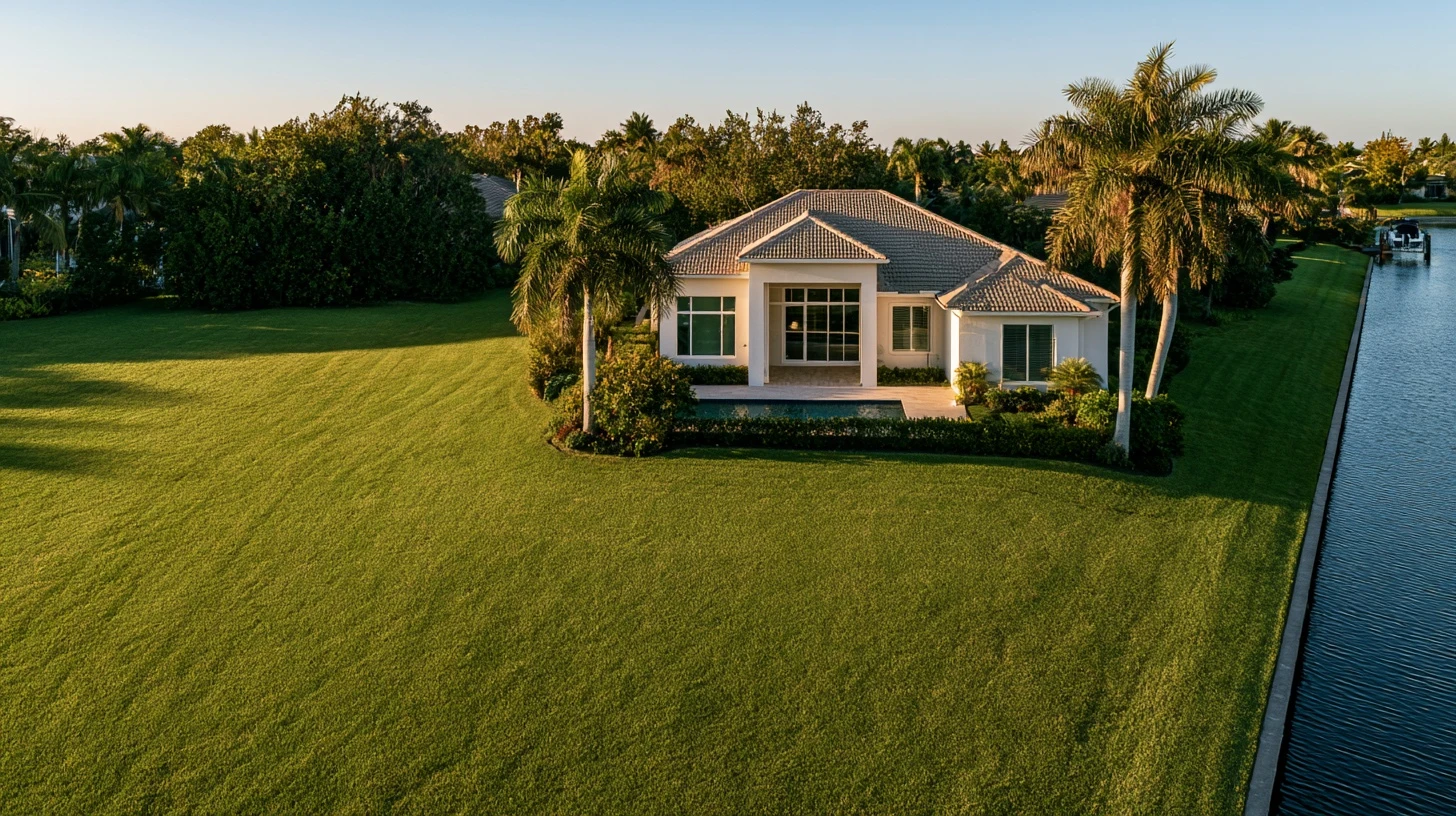
Paver sealing: meeting the wave before it reaches your deck
If the wave pattern has a silver lining, it is this: you get to see your deck's future on someone else's deck first, and there is a cheap intervention that changes the ending. Cleaning, re-sanding and sealing at a fraction of replacement is that intervention. Re-sanding restores the joints that rain and pool splash have been emptying since the deck went in, and sealing is what locks the new sand in place. Stabilized joints are what keep individual pavers from rocking and weeds from establishing, which is exactly the early-stage movement that grows into the failures your neighbors are paying to rebuild.
Timing is the local skill. Sealing a deck whose base has already let go accomplishes little; sealing a deck that is just beginning to open up buys it years. In a phased community you do not have to guess where that line is. When decks of your deck's exact age start going around you, that is the signal to act on yours while it is still on the right side of the line. The color improvement that comes with sealing is real, and on a builder deck it can be striking, but it is the secondary benefit. The functional half is the reason to do it.
Fiddler's Creek is a large master-planned community between Naples and Marco Island, and it was not built all at once.
Pool heater replacement with natural gas in Fiddler's Creek
Original builder heaters across Fiddler's Creek are reaching the end of their working lives on the same schedule as everything else from their build phase, and because the community has natural gas, what comes next is a genuine decision rather than a swap. The sizing assumptions behind the original unit are twenty years old. They predate your covers, your schedule, your winter habits, and possibly your ownership. Replacing like for like carries those assumptions forward unexamined. Sizing the new heater to the pool and to how it is actually used gets you a unit that costs less to buy and less to run, and heats the pool just as fast on the days you want it.
The heater is only half of a gas installation. The other half is the fuel run between your meter and the pad, and it is the half that gets skipped. An undersized supply line is the most common reason a brand-new, correctly chosen heater underperforms: the unit starves at full fire and never delivers its rated output. That is why our approach to gas heater installation is the full gas run checked, not just the unit connection. On a builder-era system, the original line was sized for the original heater, so any change in capacity makes that check mandatory rather than cautious.
One thing worth doing whoever you hire: ask who will make the fuel connection and under what qualification, then verify the answer yourself on the state's DBPR licensee search. An installer with the right answer never minds giving it.

The equipment pad: one rebuild instead of serial patches
Builder-grade equipment pads in Fiddler's Creek were assembled quickly, identically, and to a price, and they are reaching end of life the same way they were built: together. The pattern is familiar by now. A valve seizes one season, a length of brittle PVC cracks the next, a fitting weeps behind the filter the year after that. Each repair is small, each is reasonable on its own, and together they add up to re-plumbing a failing pad one emergency at a time, at emergency prices.
There is a point where the honest recommendation flips from repair to rebuild, and on pads of this generation many pools here are past it. One rebuild instead of another patch on failing pipe means the plumbing, valves and layout are renewed as a set, so the pad stops being a chain of oldest-surviving-parts waiting to fail. After a rebuild, every future problem is a component swap on sound plumbing rather than surgery on brittle pipe, which is a different and much smaller kind of repair bill.
The wave logic applies here with unusual force, because a pad is a system: its components share not just an installation date but each other's stresses. If your street's original pads have started producing weekly service calls, yours is not the exception. It is simply earlier in the same queue.
Pump replacement while the pad is already open
The original builder pump is usually the same age as the rest of the pad, which makes its replacement less a standalone decision than a scheduling one. If the pad is being rebuilt, replacing a pump that is near the end of its life at the same time costs a fraction of what the same swap costs as its own service call two years later, because the plumbing is already open and the crew is already standing there. Combining the work is the single easiest saving available on a Fiddler's Creek equipment renewal.
The replacement itself has an easy answer in this community. Variable speed pays back fastest where pools run twelve months a year, and Southwest Florida pools do. A pump that spends most of its day turning slowly and quietly uses a fraction of the electricity of one that runs flat out on a timer, and the difference compounds every month the pool operates. On a pool that never gets a winter off, the payback argument does not need embellishing. It just needs the electric bill.

Resurfacing: the honest add-on, not the headline
On most Fiddler's Creek pools the interior finish is not the emergency. Builder-era finishes here often have years left, and we will say so when they do. Where resurfacing earns its place is as a finish refresh added because the pool is already open: if the coping is coming up with the deck, or the pool is drained for other work, the marginal cost and disruption of renewing a genuinely tired finish at the same time is far lower than doing it as its own project later.
The discipline is in the order of that sentence. The deck and the equipment are the scope; the finish is the opportunity. If a proposal for a builder-era pool here leads with resurfacing, it is worth asking why the longest-lived surface on the property is at the top of the list.
Plan the scope
What would your remodel actually touch?
Pick everything that bothers you about the pool. The tool shows which trades the fix involves and, more importantly, where they meet, because the seams are where split jobs fail.
Your scope so far
A new interior finish dies at the waterline. If the tile above it stays, the joint between old tile and new plaster is the first place the job shows its age.
Tile comes off with demolition that always disturbs the bond beam behind it, which is why tile-only quotes grow once the old mortar bed is open.
Coping sits on the same bond beam the tile hangs from, and the deck butts against its back edge. Three trades meet in a strip about a foot wide.
A settling deck is usually a base problem, not a paver problem. Relaying pavers over a failed base moves the same problem to next season.
The spillover is a plumbing calculation wearing a tile face. Retiling it without checking the flow behind it fixes how it looks, not how it runs.
A remodel is the cheapest moment to right-size the pump and filter. The plumbing is already open and the pool is already down.
More than one trade means sequencing decisions. What gets demolished first, what cures before what goes on top. One contract holds one company responsible for every seam above.
Service area
Fiddler's Creek and the neighborhoods around it
The marker on Fiddler's Creek is open. Click any other marker for what breaks pools there, because it is genuinely not the same everywhere in Collier County.
Where we work
Naples and Collier County, plus Marco Island, Bonita Springs and Estero. What fails is different in each, and that is what decides the work.
- Port Royal waterfront, architectural review, deck must match the house
- Old Naples pools built in the seventies and eighties, due for everything at once; original skimmers
- Aqualane Shores canal homes, deck movement near the seawall separates coping
- Park Shore Gulf Shore Boulevard salt air hits the tile line first; seasonal vacancy
- The Moorings direct salt air exposure, waterline tile failure
- Coquina Sands seventies and eighties pools; decks poured over uncompacted fill
- Royal Harbor canal homes, high water table hides leaks; coping separation
- Grey Oaks gated architectural review on anything visible from the street; spa additions
- Quail West natural stone decking matched to the house; spa additions
- Pelican Bay empty April to November; automation and heat pumps for year-round swimmers
- Lely Resort natural gas supply; builder decks aging out; year-round pump runtime
- Fiddler's Creek natural gas heater sizing; builder-era paver decks losing their base
- The Vineyards year-round swimming, heat pumps and variable speed payback
- Naples Park mature landscaping into pool plumbing; original skimmers; storm-loaded filters
- Pine Ridge Estates mature landscaping finds underground pool plumbing
- Vanderbilt Beach equipment pads corrode fast; storm season loads filters
- Golden Gate Estates well water iron staining on marcite; propane rather than natural gas
- Isles of Capri canal water table hides leaks; heavy equipment-pad corrosion
- Marco Island barrier island salt air corrodes heaters from the inside out
- Bonita Springs pool decks and patios on Southwest Florida soil
- Estero deck and patio base engineered for local soil
- Ave Maria newer east-county builds, patios and walkways matched to existing hardscape
What that usually means in Fiddler's Creek
In the order the causes above tend to drive the work, not in the order of what costs most.
- Pool deck repair in Naples, and whether resetting will actually hold Resetting pavers on a base that has failed is a repair with an expiry date. The question worth answering before anyone quotes is whether the base is sound.
- Paver sealing in Naples, and when to keep your money Watch the joints, not the pavers. Empty joints are what let individual stones move, and stones that move are what turn a flat deck into an uneven one.
- Gas pool heater installation, sized to the whole run The most common reason a brand new heater never quite gets the pool warm is not the heater. It is the gas line feeding it, and it was undersized before the unit ever arrived.
- Equipment pad rebuilds, so the next repair is a part swap Patching one fitting on a pad that is going is how you end up seeing the same contractor four times in two years. At some point the pad itself is the repair.
- Pool pump replacement in Naples, programmed not just installed A variable speed pump left running one fixed speed is an expensive single speed pump. The saving is in the programming, and the programming is the part that gets skipped.
- Pool resurfacing in Naples, including the part everyone skips Most resurfacing quotes cover chipping out the old surface and troweling on a new one. The part that decides whether it still looks right in ten years is the four weeks after the water goes in, and it is the part most owners are never told about.
What to expect when we work in Fiddler's Creek
Fiddler's Creek has a community approval layer for some visible exterior work, and the specifics belong to your village's own documents rather than to any contractor's summary of them. So we will not recite a procedure here. What we will say is practical: before committing to a deck material or color change, confirm what your village requires, and build that step into the schedule at the start rather than discovering it mid-project. Like-for-like restoration generally raises fewer questions than a visible change, which is one more argument for repairing and re-laying original material where it is sound.
Scheduling works the way it does across seasonal Southwest Florida: the calendar fills when residents are back and thinking about their pools, and the same work books more easily in the quieter months. Deck and equipment work does not require the pool to be closed, so there is no swimming season to protect; the constraint is crew availability, not water.
And one habit worth adopting in a phased community: treat your neighbors' projects as your inspection schedule. When a pool identical to yours in age and build gets its deck restored or its heater replaced, that is not just their news. It is a free, highly specific forecast of your own pool's next few years, and the owners who act on it consistently get the cheaper version of every repair.
ASK CLAYTON · FIDDLER'S CREEK
Questions from Fiddler's Creek
These are specific to this area. The general ones are answered on the service pages.
Call 239-450-5933-
Three houses on our street have redone their pool decks this year and ours looks fine. Is it just a matter of time?
Treat it as information, not a verdict. Your deck shares a build year and a bill of materials with theirs, so their failures show you where yours is in its life. Walk it now and look for the early signs: rocking units, joints losing sand, shallow dips near the pool edge. Caught at that stage, the fix is stabilization rather than rebuilding, and the difference in cost is large.
-
Our original builder heater died and the house has natural gas. Should we just replace it like for like?
No, treat it as a sizing decision. The original unit was sized from a spreadsheet before anyone had used the pool, and twenty years of actual use is better data. Covers, schedule and habits all changed. We also check the gas run itself, because an undersized supply line is the most common reason a correctly chosen new heater underperforms.
-
Do we actually need a full remodel, or just the deck and the equipment?
In Fiddler's Creek, usually just the deck and the equipment. On builder-era pools the shell and often the finish still have life left, while the deck and the pad have been working since installation. We would rather scope that honestly than sell a remodel the pool does not need. If the finish really is tired, refreshing it while the pool is already open is the efficient time.
-
What decides the cost of this kind of work in Fiddler's Creek?
Scope, mostly. Whether the deck needs stabilizing or rebuilding, how much of the equipment pad comes due at once, the length and size of the gas run to the heater, and how much work shares one mobilization. Combining jobs that use the same access and the same open plumbing is the reliable way to keep the total down.
-
Is sealing the pavers worth doing, or is it just cosmetic?
Both, and the functional half matters more here. Re-sanding restores the joints and sealing locks the new sand in place, and locked joints are what keep pavers from rocking and weeds from establishing. On a builder deck the same age as your neighbors', it is the inexpensive intervention that can meet the wave before it reaches you.
-
Can the deck and equipment be done without opening the pool?
Yes, and in most cases they should be. Deck work and equipment work separate cleanly from pool work, and a sound shell is a good reason to leave the water alone. The one shared piece is the coping, which belongs to both pool and deck and is cheapest to resolve while the deck edge is already open.
What is the same everywhere we work
The neighborhood changes what fails. It does not change how we work, and pretending otherwise would be the first dishonest thing on this page.
- No price before someone has looked at the pool.
- No schedule before we know what the shell needs.
- The cause gets diagnosed before the repair gets quoted.
- Ask for our license number and check it yourself at the DBPR licensee search. Ask the other quotes for theirs too.
Nearby, and similar
These share the same underlying conditions as Fiddler's Creek, which is why the work tends to look alike.
- Grey Oaks gated architectural review on anything visible from the street; spa additions
- Quail West natural stone decking matched to the house; spa additions
- Pelican Bay empty April to November; automation and heat pumps for year-round swimmers
- Lely Resort natural gas supply; builder decks aging out; year-round pump runtime
Talk to Clayton
Tell us what the pool in Fiddler's Creek is doing.
A sentence or two is enough. You get a call back from the person who does the work, not a dispatcher.