
Insights · Pumps, heaters and automation
What does a variable speed pump actually change?
This is usually argued as a payback calculation, as though the choice were still open. For most in-ground pools it is not: the federal standard that took effect in 2021 sets an efficiency floor that single-speed technology does not reach. The more useful question is what the standard measures, because the unit it is written in explains what a pool pump is actually for.
 Clayton Waggoner, Owner and Managing Member · Published August 8, 2026 · 12 min read
A pool pump exists to turn the water over, which is a question of gallons moved rather than pressure produced. The federal efficiency metric reflects that: it is expressed in thousand gallons per kilowatt-hour. A variable speed pump earns its rating by moving those gallons slowly, over more hours, instead of quickly over fewer.
The short version
Is a variable speed pump still a choice, or has that been decided?
The rule is specific about the date. Each dedicated-purpose pool pump that is not a submersible pump and is manufactured starting on July 19, 2021 must have a WEF rating that is not less than the value calculated from a published table (10 CFR Part 431, Subpart Y)1.
The table is not a single number. It scales the requirement with hydraulic horsepower, so a larger pump is held to a proportionally different figure rather than being exempted for being bigger (10 CFR 431 Subpart Y)1.
This came out of a Department of Energy rulemaking on pool pumps and pool pump motors, adopted on the finding that the standards would result in significant conservation of energy and were technologically feasible and economically justified (DOE final rule, RIN 1904-AF27)4.
Not everything is swept in. The regulation covers a defined set of varieties: self-priming pool filter pumps, non-self-priming pool filter pumps, waterfall pumps, pressure cleaner booster pumps, integral sand-filter and integral-cartridge filter pool pumps, and storable and rigid electric spa pumps (10 CFR 431 Subpart Y)1.
So the practical position for an owner replacing a failed pump on a typical Naples in-ground pool is that the market has moved. The decision is less about whether to buy the technology and more about whether it gets set up to do anything.
That last part is where most of the money is won or lost, and it is almost never discussed at the point of sale.
What does the efficiency rating actually measure?
The minimum allowable WEF score is published in kilogallons per kilowatt-hour (10 CFR Part 431, Subpart Y)1. Read that unit slowly, because it reframes the machine.
A pool does not need pressure for its own sake. It needs its volume passed through the filter often enough to stay clear, which is a quantity of water over a period of time.
Horsepower is a measure of how hard the motor can work, not of how much water arrives. Two pumps of the same horsepower can deliver very different quantities of filtered water per unit of energy, and the rating exists to expose that.
For years the industry sold horsepower because it is a number everyone recognizes, and bigger sounded better. It is the wrong axis, and the standard quietly says so by measuring something else entirely.
This is also why the old habit of upsizing a replacement pump was so costly. A bigger motor on the same plumbing moves more water per hour at a much worse rate per kilowatt-hour, and the pool needed gallons, not haste.
If the pad has accumulated mismatched equipment over the years, the pump is only one part of that arithmetic, which is the argument behind an equipment pad rebuild rather than a one-for-one swap.
Why is the rating called weighted, and why does that matter to me?
The word weighted is doing real work. A single-speed pump has one operating point, so one number describes it. A variable speed pump has a range, and a rating that sampled only the top of that range would describe a machine nobody should be running.
The definition sets out how wide that range must be. A variable-speed dedicated-purpose pool pump is one capable of operating at a variety of user-determined speeds, with speeds separated by at most 100 rpm increments over the operating range, and the lowest operating speed no more than one third of the maximum operating speed and greater than zero (10 CFR Part 431, Subpart Y)1.
One third of maximum is the important clause. The efficiency case for these pumps rests on the bottom of the range being genuinely low, not on a nominally adjustable motor that spends its life near the top.
The regulation also requires such a pump to include a variable speed drive and to be distributed with a user interface or control capable of changing speed (10 CFR 431 Subpart Y)1. The control is part of the specification, not an accessory.
ENERGY STAR defines the same components plainly: a variable speed drive is equipment capable of varying the speed of the motor, and a pool pump timer is a control that automatically turns the pump off after a run-time of no longer than 10 hours (ENERGY STAR Pool Pumps, Version 3.0)2.
Put those together and the intent is unmistakable. The saving is not in owning the motor. It is in the motor spending most of its hours at the bottom of its range.
What it is for
How many hours should the pump actually run?
- 2,190hours a year of pump run time the federal efficiency model assumes, six hours a day
- 10hours, the longest a compliant pool pump timer runs before switching off
The model carries explicit assumptions. It uses a pump run time of 2,190 hours a year, described as six hours a day, and a purge time of eight hours a day used for sizing the pump capacity (ENERGY STAR Portfolio Manager Technical Reference, 2023)3.
Those are modeling inputs for a benchmarking tool rather than a prescription for your pool, and they are useful precisely because they expose the logic: hours and flow rate together produce turnover.
The same document assumes a pump efficiency of 70 percent and a head loss figure that accounts for straight friction, bends, fittings and the filter, noting that head loss is site specific (ENERGY STAR, 2023)3.
Site specific is the phrase to hold onto. Two pools of identical volume with different plumbing runs, different filters and different fittings do not need the same pump hours, because the resistance the pump is working against is different.
Which is why a schedule copied from a neighbor, or from a manual written for the whole country, is a starting point rather than an answer. The pool tells you whether it is right by staying clear or not.
The practical method is to lengthen the low speed hours and shorten or remove the high speed ones, then watch water clarity over a couple of weeks. On a salt pool the run time also feeds the chlorinator, which is one of the reasons a salt cell fails early. High speed is for tasks that genuinely need flow, such as vacuuming, backwashing and running a heater or a spa.
Where does a variable speed pump not help?
A heater is the clearest case. It cannot move heat into water that is barely moving, so running a heater on the pump's lowest speed defeats both machines, which is part of why a pool can seem to have a heater that will not keep up when the real constraint is flow.
Pressure-side and suction-side cleaners have a minimum they need to operate. Below it they stall, wander or simply stop picking up, and the pool looks neglected while the pump runs economically.
Spa jets are a volume demand by definition. The whole point of the fixture is moving a lot of water quickly, and no efficiency setting changes that.
Water features and spillovers behave the same way. They are visual, they are optional, and they cost what they cost while they are running.
The regulation itself acknowledges that not every pump is the same problem, which is why pressure cleaner booster pumps are named as their own variety within the standard rather than being folded in with filter pumps (10 CFR 431 Subpart Y)1.
None of that is an argument against the technology. It is an argument for programming it around what the pool actually has to do, which is a conversation about the whole pad rather than about one motor, and it is the same discipline described in pool pump replacement.
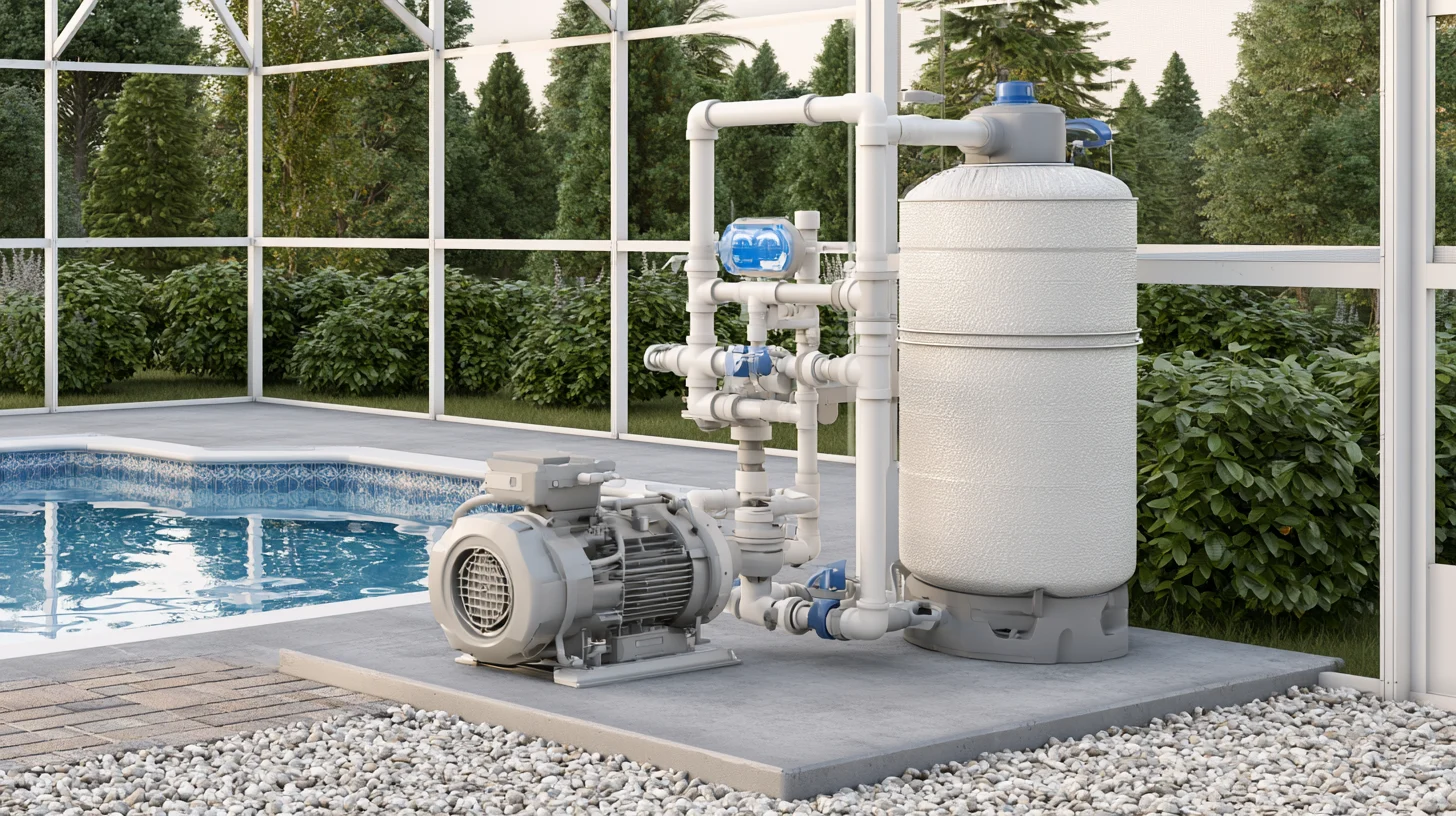
What should I ask before a pump is replaced?
Ask for the schedule in writing. A pump handed over on factory defaults is a pump nobody has thought about, and defaults are set conservatively high for exactly that reason.
Ask what forces high speed and when. Heating, cleaning, spa use, backwashing and any water feature all belong on that list, and each of them is a block of hours you are paying for at the expensive end of the range.
Ask about the control. The regulation expects a variable speed pump to ship with a means of changing speed, and a pump whose schedule can only be altered by pressing buttons on the pad in the sun will not be altered.
Ask what happens after a power cut, because a pump that reverts to a default high speed and stays there quietly undoes the entire case for buying it.
That is a buying conversation. Where the existing pump is failing rather than being upgraded, the first question is whether it is repairable at all.
Then ask the question almost nobody asks, which is whether the plumbing suits the pump at all. Undersized pipe raises the resistance the pump works against, and the model treats head loss as site specific for good reason.
A pump chosen well and programmed badly is the most expensive outcome available here. The hardware is now largely mandated, so the remaining variable is whether anyone sets it up to do what the standard assumed it would.
The same is true of the pad as a whole. Equipment decisions are cheapest while something else is already open, which is part of the sequencing case in resurface or remodel.
Interactive · Before the pump is swapped
Will your new pump actually save anything?
The hardware is largely settled by regulation. What is not settled is whether it gets programmed to do the thing it was designed for. Four questions, all answerable before anyone takes the old pump off the pad.
Ask Clayton
Questions this article usually prompts
Tap a question. Clayton replies himself, here and on the phone.
Clayton Waggoner Owner and Managing Member · Splash Pools Online Tap a question to ask
If this is the situation you are in
Pool pump replacement in Naples, programmed not just installed →Equipment pad rebuilds, so the next repair is a part swap →Pool automation, for a house that sits empty half the year →Pool filter repair, when it is not a chemistry problem →References
- U.S. Department of Energy, 10 CFR Part 431 Subpart Y: Pumps (definitions for dedicated-purpose pool pumps, variable-speed pumps, and the minimum weighted energy factor table)
- ENERGY STAR Program Requirements Product Specification for Pool Pumps, Eligibility Criteria Version 3.0
- ENERGY STAR Portfolio Manager Technical Reference, Swimming Pools and the ENERGY STAR Score in the United States and Canada (August 2023)
- U.S. Department of Energy, Energy Conservation Program: Energy Conservation Standards for Dedicated Purpose Pool Pump Motors, final rule, RIN 1904-AF27, docket EERE-2017-BT-STD-0048

The article is general.
Your pool is specific.
Tell us what the pool is doing, a sentence or two is enough. The person who wrote this is the person who calls back.